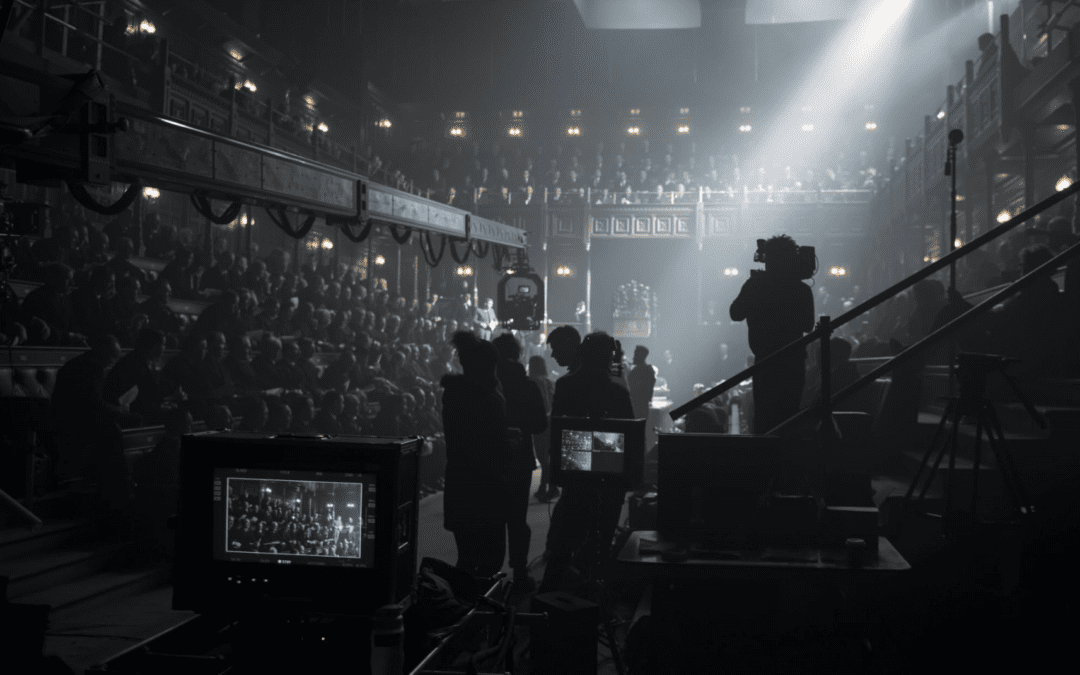
On 11 April 1890, Joseph Merrick was found dead in his room at the London Hospital. Ninety years later, his life was immortalised in David Lynch’s The Elephant Man (1980), where, in one of cinema’s most famous final scenes, Merrick lies down to sleep ‘like normal people’ without the excess pillows he needs to stay alive, dying peacefully, finally freed from a life of spectacle. The reality of Merrick’s death, and indeed his life, was far more complicated.
Hospital records show that Merrick had been awake that morning and spoken to the Sister of Blizard War, who dropped by to see him, and that a ward maid had arrived with his lunch at 1:30pm and left it for him to eat. It was not until just after 3pm when Merrick was found lying dead across his bed, his lunch untouched.
The circumstances of Merrick’s death have been debated ever since, pointing to a much larger truth. That while Merrick’s name and story are recognisable to many, he remains one of the least understood figures of the Victorian era.
That shouldn’t be a surprise, after all, throughout his life Merrick was interpreted and reinterpreted by the people around him. Showmen turned him into the “Elephant Man”. Doctors transformed him into a medical curiosity. Victorian philanthropists made him an object of public sympathy. Modern geneticists continue to be fascinated by his case and to this day debate the condition that caused his deformities. Most famously, of course, David Lynch immortalised him as a symbol of humanity winning out over cruelty.
There are elements of truth to each version of his story, yet all are incomplete.
Drawing on conversations with historian Nadja Durbach, geneticist Leslie Biesecker, and material held by the Royal London Hospital archives, HistoFlick explores the man behind the myth, in search of that simple question – who was the real Joseph Merrick?
John Merrick: David Lynch’s “Elephant Man”
For most people, Joseph Merrick is David Lynch’s John Merrick, the so-called “elephant man” at the centre of the legendary director’s massively influential 1980 film.
Within the context of Lynch’s filmography, The Elephant Man stands out as the late director’s most commercially accessible film, not possessing the otherworldiness of cult classics Blue Velvet (1986) or Mulholland Drive (2001). It received widespread critical acclaim, including eight Academy Award nominations, including Best Picture and brought Lynch two nominations, for Best Adapted Screenplay and Best Director.
-The film introduced Merrick’s story to a new audience, with John Hurt’s Academy Award-nominated performance, beneath significant prosthetics and makeup, embodying people’s perceptions of Merrick ever since. Alongside him, Anthony Hopkins’ turn as Dr Frederick Treves helped propel the now Hollywood megastar towards international stardom.
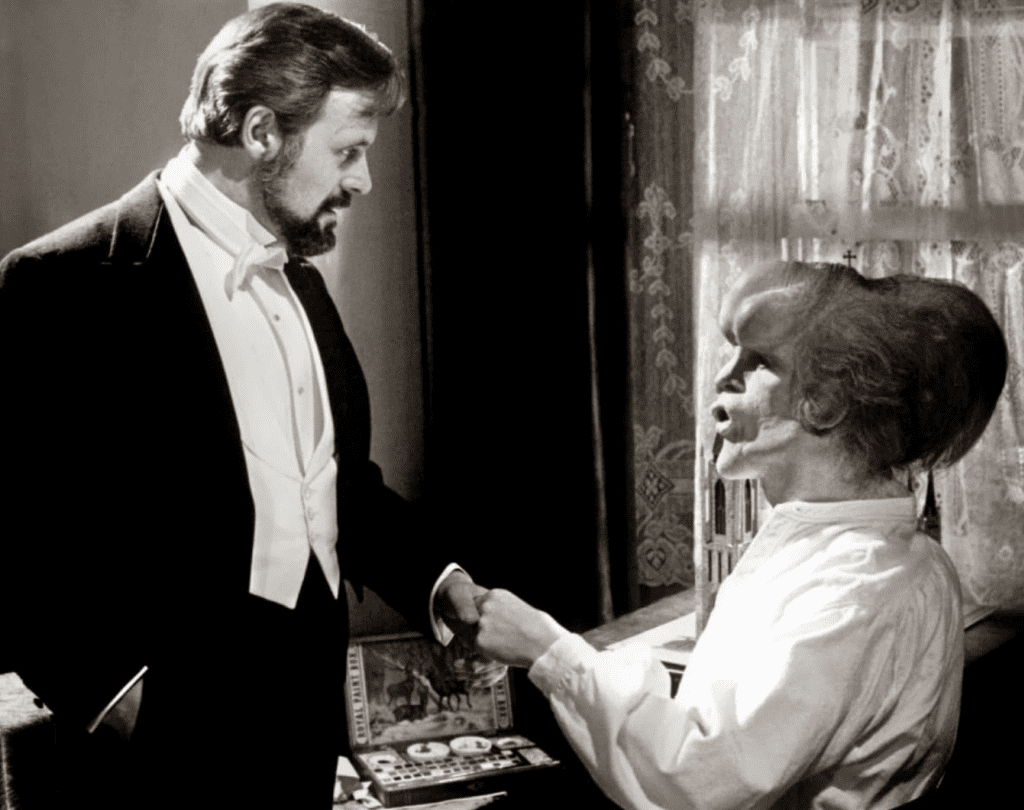
There are few scenes in all of cinema as moving as Merrick’s impassioned cries of “I am not an animal! I am a human being! I am a man!” amidst a mob attack at Liverpool Street train station. That emotional centre of the film means that it has rightly endured for over forty years as a heartbreaking, tragic narrative, transforming Merrick’s tale into a universal story about the human right to dignity and the triumph of humanity over cruelty.
Yet, whilst its effectiveness as a drama should not be dismissed, it fails to reflect the reality of Merrick’s life in full.
Joseph Merrick becomes John Merrick. It was an error first made by the real Frederick Treves, an error which Lynch failed to rectify, and yet an error which has now, by so many, been accepted as historical truth. Even Merrick’s name reaches most audiences through somebody else’s version of his life.
Historian Nadja Durbach argues that the film’s legacy now outweighs the historical reality.
“I think the movie has become the story, without it, I don’t think anyone would have known who he was. He would have completely disappeared had it not been for that David Lynch movie.
“He appears in that movie to be such a pathetic, sentimental figure, and I think morally people feel good about watching that. It makes them feel good about themselves, to be able to recognise someone who was terribly exploited, and I think the harder thing to recognise is the way he was exploited by science.
“That’s something that Hollywood has reshaped history, and so many people get their history from film, and so many people think they understand the past because they saw a movie about it, and that’s what happened for Joseph Merrick with The Elephant Man.”
In many ways, David Lynch’s film did not simply tell Merrick’s story. It became Merrick’s story.
Joseph Merrick: The Victim of Entertainment?
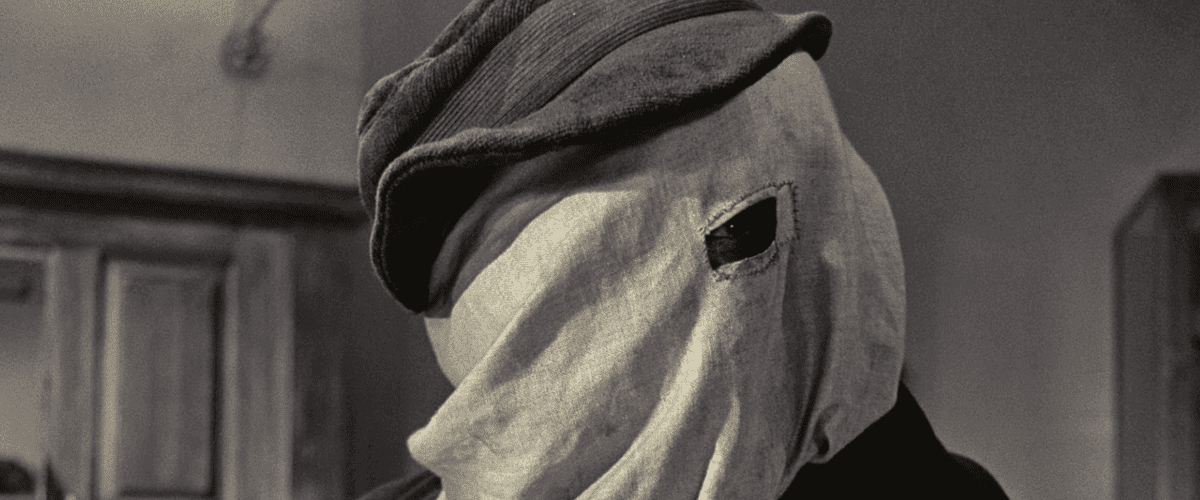
David Lynch’s film first introduces us to Merrick in a Victorian freak show in the East End of London. There, he is kept by the brutish, alcoholic ringmaster Mr Bytes, who views Merrick as intellectually disabled and treats him as subhuman, keeping him hooded outside of shows. Bytes ultimately sells Merrick to Treves, who takes him to the hospital for examination, saving him from a life of oppression at the freak show.
This traditional view of Victorian freak shows as oppressive and cruel, leaving the so-called freaks as victims, has increasingly been challenged by historians such as Durbach.
“I really resist the idea that they were purely exploitative. I think that’s really simplistic. I see them as part of a longer history of wonder. Humans have always been fascinated with the unusual, the wondrous, the thing we can’t explain, the otherworldly, so I think they’re part of that longer history of just being fascinated with unusual things.
“I think it’s more profound than exploitative, and I think we have to remember that freaks actually made a pretty good income. Working class people made very little money working in manual labour jobs like factories, and freaks made much more money than that, and the work itself was much less taxing than the kind of 14-hour-a-day manual labour jobs that most working class people held.”
For Durbach, much of that misunderstanding of Merrick and other ‘freaks’ degree of agency stems from a misunderstanding of the nature of freak shows themselves.
“Freak shows were exciting and different because they really troubled the very Victorian perception that you would divide the world into binary categories.
“So audiences would ask: ‘Is it a man or is it a woman? Is it a person or is it an animal? Is it an elephant or is it a person?’ They’re always playing with these boundaries and I think that’s really presenting a challenge to this scientific view of the world that’s trying to take over.”
The idea that so-called ‘freaks’ like Merrick possessed agency over their own lives and were not simply victims is further backed up by the historical records. The records show that he had travelled widely in order to earn money from displaying himself when his deformities became pronounced. While there were few other alternatives for him to earn money at the time, there was at least an element of choice in how and for whom he did this.
Durbach argues that Merrick chose to work for Tom Norman – the Bytes figure in The Elephant Man – and was treated with relative humanity by Norman, who was far from the alcoholic brute in Lynch’s film.
“Yes it is true that Norman presents him in his showman’s way as ‘the elephant man’, but in [Norman’s] memoir, he recalls that he would say ‘he is a man, if you prick him, he will bleed’.”
None of this means that Victorian freak shows were egalitarian spaces, nor that Merrick was free from exploitation. But it does challenge the notion that he was merely a passive victim as portrayed in Lynch’s film. As Durbach argues, the world of the freak show offered many performances, economic opportunities and a degree of independence unavailable elsewhere. For Merrick, Tom Norman may not have been an exploiter, but one of the few people willing to provide him with work.
Joseph Merrick: The Victim of Science?
If Norman was not the straightforward villain of the story, then perhaps Frederick Treves was not quite the straightforward hero either.
In Lynch’s film, the story hinges on a simple moral contrast. Where Norman exploits Merrick, using him for financial gain, Treves rescues him, attempting to help him out of his predicament and find a cure to Merrick’s disease. The transition from freak show to hospital is presented as a movement from cruelty to compassion.
Yet at the centre of this is an unreliable source. The film is adapted from Treves own memoirs The Elephant Man and Other Reminiscences released in 1923, and as a result it is Treves own account which has seen him become the narrator of Merrick’s life.
The version of Merrick that survives is largely Treves’ version, and as a result, mistakes made by Treves – such as misnaming Merrick as John – went unnoticed in subsequent interpretations of Merrick’s life, most importantly in Lynch’s film.
That Treves would misname Merrick is perhaps most revealing of the holes in Treves’ narrative, indicating that Treves may have embellished his own role to become Merrick’s unimpeachable saviour, and to suggest that, in turn he is the hero of Merrick’s story rather than Merrick himself.
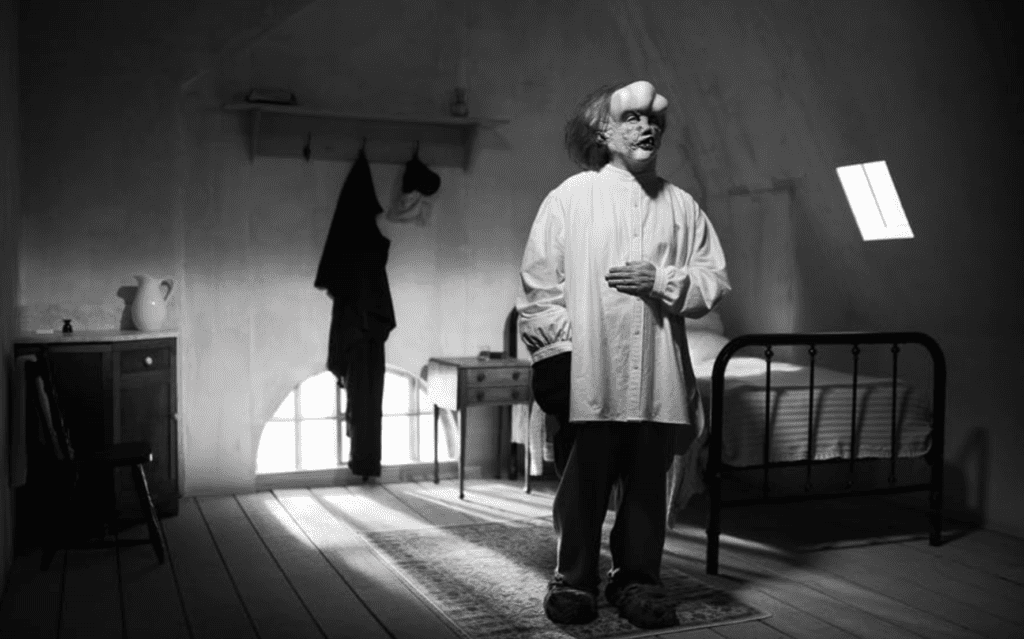
“The harder thing to recognise is the way he was exploited by science,” says Durbach. “His bones were boiled down; they remain in the pathological museum at the London Hospital.
“But then after that, they just buried him, what was left of him, the skin, the organs, in an unmarked grave. You’d think if Treves cared for this man, if he had a relationship to him, if he was so important to him, then he wouldn’t just abandon him.
“They say the hospital couldn’t afford to bury him but that’s garbage. You’re just basically disposing of him and keeping only his skeleton.”
If Treves’ narrative relegates Merrick to but a supporting character in his own life, then it is only natural that Lynch’s film should follow suit with similar inaccuracies. That his life has been so misremembered speaks to the fact that he was so rarely allowed to speak for himself, with the postscript to Merrick’s life possessing even less agency than he had enjoyed whilst alive.
Joseph Merrick: The Victim After His Death
Central to this misunderstanding is how Treves, and consequently Lynch depicted Merrick’s death. In the film Merrick’s death, though no doubt heartwrenching, strips him of all agency over his own life. He is innocent and childlike in his naieve want to sleep like ‘normal people’, falling asleep and to death whilst picturing the mother whom he never met.
For Durbach, this is one of the biggest issues with how Merrick is exploited by the screen to be portrayed almost exclusively as a victim.
“The end is completely based on Treves’ vision of what must have happened. This idea that he has laid down so he could sleep like a so-called normal person, then he goes off to his death thinking of his mother. It’s so infantilising.
“I think it’s pretty clear that he committed suicide. He knows he can’t sleep that way, and we actually know that Tom Norman had this device made for him that was like a yoke that sat on his shoulders, which kept his head up so that he could recline without his neck getting into that position. We don’t know what happened to it, it didn’t seem to follow him to the hospital.
“Merrick made a very clear choice, I think he felt a lack of control and like a charity case and like a child trapped in this place and he just chooses the way out. He made a choice, he didn’t just fall asleep for a nap or something, he’s an adult man. So I think that the movie really gets that wrong.”
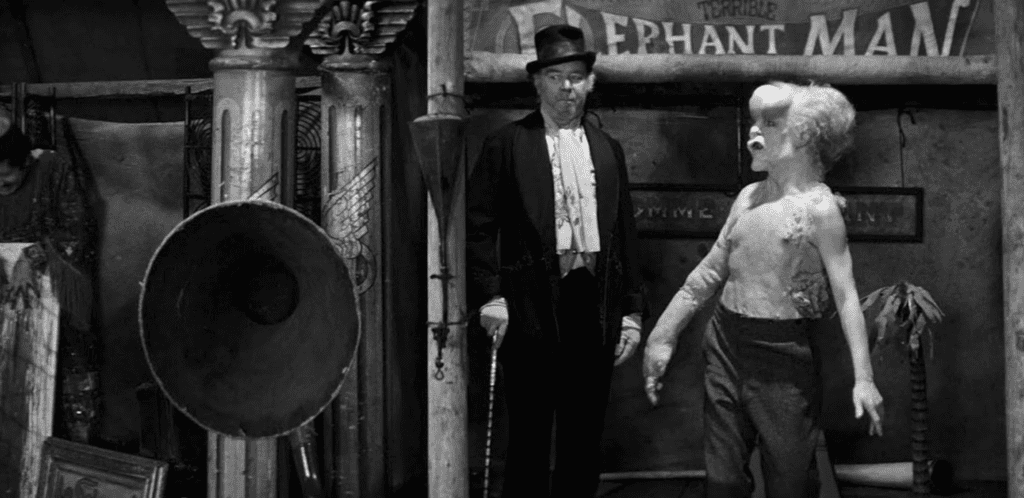
The ending of The Elephant Man becomes symbolic of the entire film. Treves and Lynch repeatedly remove Merrick’s agency, no more so than in his ultimate demise.
Joseph Merrick: The Medical Mystery
For all the debates surrounding Joseph Merrick’s life, perhaps the greatest mystery remains the one that first brought him to public attention – what exactly was wrong with him?
During his lifetime, Merrick’s condition was often described as elephantiasis, a diagnosis now widely dismissed. In the decades following his death, attention shifted towards neurofibromatosis, a genetic disorder that can cause tumours to grow on nerve tissue. Yet by the late twentieth century, a growing number of researchers argued that Merrick’s symptoms were more consistent with Proteus syndrome, a rare disorder characterised by disproportionate overgrowth of bones, skin and other tissues.
Among those researchers is clinical geneticist Leslie Biesecker, who has spent decades studying Proteus syndrome and helped to identify its genetic cause in 2011. While he believes it remains the most likely explanation for Merrick’s condition, he is careful to stress the limitations of any historical diagnosis.
“When the story that Treves provided was reviewed wuth a modern understanding of what neurofibromatosis is and is not, it’s pretty clear that there’s no mention of many of the more common features of neurofibromatosis,” Biesecker explains. “It seems to be a better match to Proteus syndrome than it is to neurofibromatosis.”
But “better” does not mean certain.
“We have to be humble about our ability to make a historic diagnosis,” he says. “Proteus is the best assessment that we can make at the current time, given what we know and don’t know about Mr Merrick, but it is not at all certain that he had Proteus syndrome.”
The problem is a lack of evidence. Modern diagnosis depends upon detailed clinical examination and genetic testing. Neither is possible in Merrick’s case. Attempts to extract DNA from preserved remains have proven unsuccessful, while photographs and nineteenth-century medical descriptions can only tell researchers so much.
In many ways, that uncertainty is fitting for Merrick, who throughout his life was repeatedly defined by others. Showmen marketed him. Doctors studied him. Filmmakers mythologised him. Even today, discussions of his life often begin with attempts to explain his body.
Biesecker himself is cautious about the language commonly used to describe Merrick. Although “The Elephant Man” remains the phrase most audiences recognise, he deliberately avoids using it whenever possible.
“It’s kind of unseemly to use a descriptor of an animal to describe a human being,” he says.
More than a century after his death, medicine still cannot definitively explain Joseph Merrick. Yet perhaps that uncertainty is less important than the questions his story continues to raise. Not simply about disability or diagnosis, but about dignity, representation and the ways society chooses to view those who are different.
Joseph Merrick: The Man
David Lynch’s The Elephant Man rescued Joseph Merrick from obscurity; without the film it is entirely possible that Merrick would have faded from public memory altogether. Yet the film’s success has come with a consequence. For many people, David Lynch’s John Merrick has become inseparable from the historical Joseph Merrick.
The reality is more complex. The historical Merrick was not simply the helpless victim presented on screen. He was a working-class man who sought ways to earn a living in a society that offered him few opportunities. Tom Norman was not merely a villain in his story, just as Frederick Treves was not simply a hero. The relationships that shaped Merrick’s life were more ambiguous, uncomfortable and human than the film allows.
Even the questions that continue to fascinate modern audiences remain unresolved. How exactly did Merrick die? What condition did he have? How did he truly view his own life?
Perhaps that is why Merrick continues to endure in the public imagination. The real Joseph Merrick remains frustratingly out of reach despite the numerous attempts by people, both during his life and subsequent to his death, to explain him.
In the end, the greatest tragedy of Joseph Merrick’s story may not be one that he experienced in life, but the way that he has continued to be misinterpreted in death.