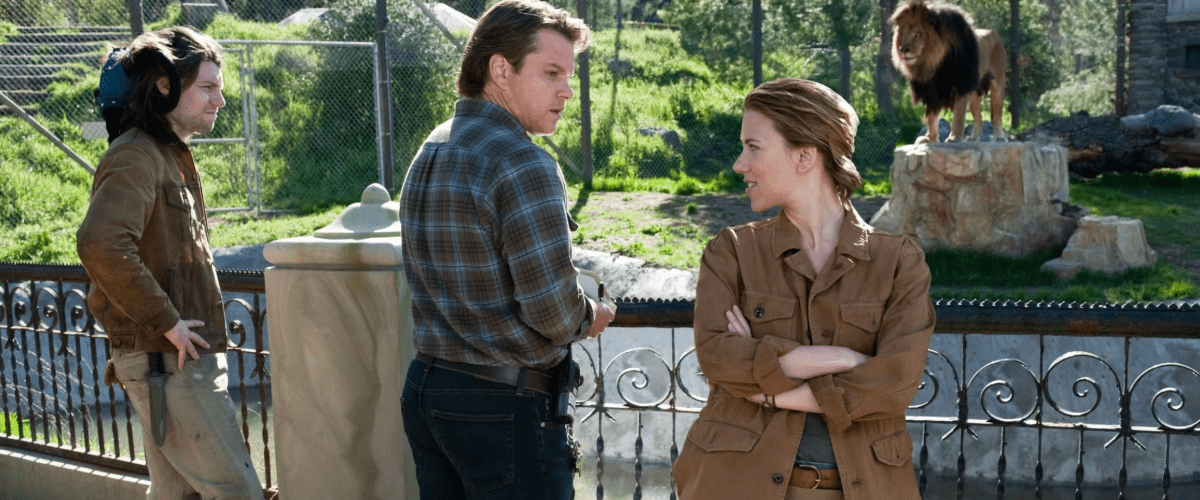
When Cameron Crowe adapted Benjamin Mee’s memoir into We Bought a Zoo (2011), years of hardship, loss and struggle were transformed into a feel-good Hollywood drama. Mee reflects on the changes, the emotional truth that survived, and why the zoo’s greatest achievements came long after the film ended.
Few zookeepers can claim to have been played by Matt Damon in a multi-million dollar Hollywood movie, but Benjamin Mee can.
“It’s not really history, is it, bloke buys a zoo, it’s a real tiny blip,” he says, perhaps selling himself short on the magnitude of the task and the significance of his story being adapted for Hollywood.
For millions of viewers, Benjamin Mee’s story does not involve Dartmoor Zoo in Devon, but instead involves Matt Damon and Scarlett Johansson and is set in sunny California, free from the real-life weather problems which hindered Mee’s actual purchase of the zoo in 2006.
“The film is obviously a much simpler version of the story,” Mee says, “I remember in the beginning trying to get my head around it. I likened it to if I’d made a wax sculpture of a little village, carved all the tiles on the roofs and all the details into the buildings. That wax sculpture was my book.
“Hollywood took it, and kind of put it on a stove, and it melted into something a lot simpler. It’s still beautiful in its own right.”

Characters were merged together, events compressed and years of hardship condensed into a more streamlined narrative. Mee points to the portrayal of his brother Duncan as one of the clearest examples.
“My brother Duncan was absolutely instrumental in helping us buy the zoo and then keeping it going in those early years. In the film, he’s cast as the voice of all naysayers.
“There were infinite numbers of people saying. ‘Don’t do it. What are you doing? This is mad.’ The filmmakers thought. ‘How do we simplify this?’ So Duncan became all of them.”
The biggest alteration, however, concerned the death of Mee’s wife, Katherine.
In reality, Katherine died shortly after the family moved to the zoo. The film shifts that tragedy before the main story begins, transforming We Bought a Zoo into a tale of healing and recovery.
Mee still remembers the conversations with the producers about those changes.
“The biggest one, I guess, is that Katherine died here within a few months. In the movie, they couldn’t do that. I remember talking to the producer about how she was going to modify the story, and she said, very politely but firmly, ‘Ben, I hope you don’t mind, but we can’t have Catherine dying in the movie. It’s too sad.’
“I was like, ‘But she did die in the middle of it. That was the catastrophe.’ They said, ‘No, that’s too sad. We’re going to make it about recovery. That happens off-camera somewhere else, and then you come to the zoo and regenerate it, and it becomes a happy story.’
“Which is also sort of true. We did do that. But it wasn’t really a happy story in real life. It was catastrophic at the beginning. There was so much rain, so much financial hardship, rats everywhere. We were really under siege at the beginning.”
Despite these changes, Mee harbours little resentment towards the filmmakers.
A journalist, before buying the zoo, understood that adaptation inevitably requires compromise. What interested him most was seeing how Hollywood’s priorities differed from his own.
“When we visited the film set, everybody was incredibly kind. The props people would bring things over and say, ‘We think you might have had a table like this. They were really respectful.’
“But it also felt a bit like I was a supplier visiting. To us, it’s our story. To them, they’ve got this huge machine, and they need certain ingredients. One of those ingredients is some words. I supplied some words, which were then modified by somebody else, and now they’re mixed together with actors and logistics and all the other things that make a film.
“It’s interesting because the writers are right down the pecking order in that food chain. It’s interesting to them that it was based on reality at some point, but that’s gone now. There is no reality. This is reality.”
For all the liberties taken with the facts, Mee believes the film succeeded in preserving the emotional core of the story.
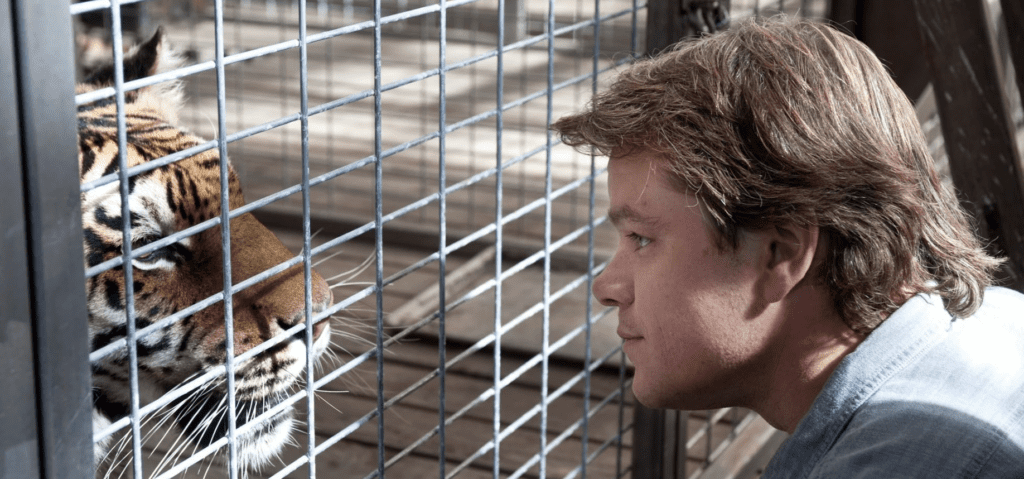
One sequence in particular remains difficult for him to watch. Using real family photographs as inspiration, the film recreates moments from Mee’s life with Katherine before her death.
At the film’s premiere, the scene left his daughter, Ella, in tears.
“Poor little Ella,” Mee recalls. “She burst into tears when she saw it. The next time we watched it, I was looking across to make sure she was okay. She was absolutely fine, but everyone else on the row was crying.”
Matt Damon, meanwhile, impressed Mee with the seriousness he brought to the role. The actor told him he had been drawn to the script as a husband and father, fascinated by the question of how somebody rebuilds their life after losing a partner.
The strangest moments came when reality briefly resurfaced in unexpected places.
Years before the film, Mee had written about being chased by a porcupine while collecting quills inside an enclosure. It was a small anecdote buried in the memoir. Then, sitting in the cinema, he watched Matt Damon recreate it.
“That happened. That was me. I did that thing, and I wrote that down, and it made it onto the screen.”
More than a decade after the film’s release, its impact can still be felt at Dartmoor Zoo. Visitors continue to arrive with copies of the book to sign and memories of the film that first introduced them to the story.
But for Mee, the most important legacy lies elsewhere.
Today, the zoo operates as a conservation charity. It has successfully bred critically endangered Amur leopards and supports a wide range of programmes for veterans, young people and children with special educational needs.
“I’ve noticed the effect this place has on people. Veterans with post-traumatic stress. Children with special educational needs. Young people who come here with really difficult backgrounds.
“When they first arrive, they’re often chaotic. But by the end of six months, they’re part of a team. They’re building things, learning skills, and taking responsibility.
“Over the last seven years, 93% of the young people who’ve come through those programmes have gone into employment. That’s higher than the national average.
“I just find it amazing that this place can have that effect on people again and again. It’s a conservation charity, it’s a business, it’s all those things. But it also mends people and changes their lives.”
While for audiences, We Bought a Zoo ended with the closing credits, for Benjamin Mee, the story continues, the gates of Dartmoor Zoo continue to welcome thousands of visitors each year, and his story continues to uplift and inspire.