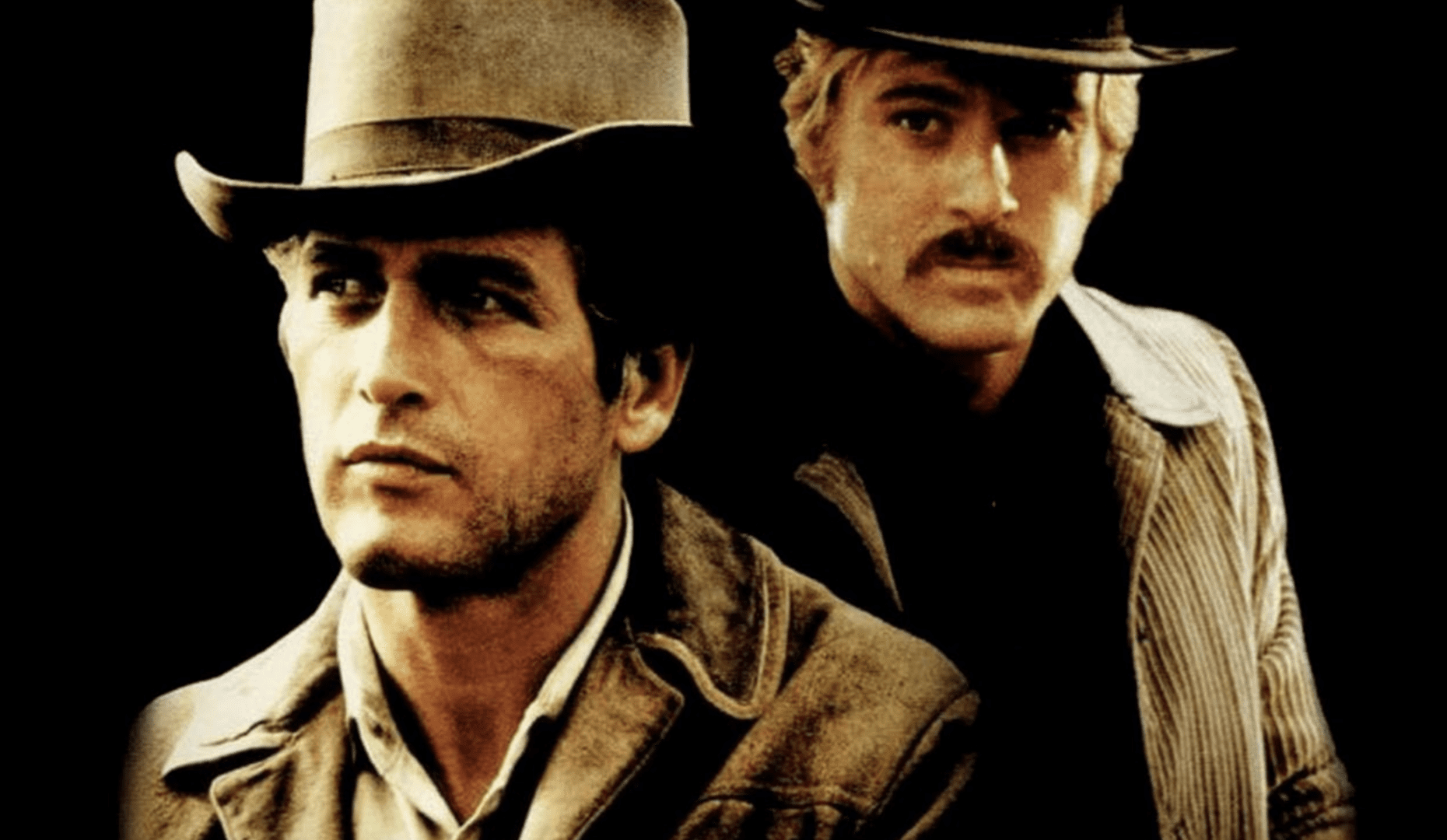
There are arguably no historic figures more associated with the Western genre than Butch Cassidy and the Sundance Kid (1969). Yet until George Roy Hill’s eponymous 1969 classic, there was very little substance to their story, much of which remains shrouded in mystery to this day.
Unlike historical figures such as Jesse James, whose numerous cinematic adaptations have been strictly bound by the rigid necessities of specific settings, times and post-Civil War issues, the historical record for Butch Cassidy and the Sundance Kid remains remarkably thin.
“The advantage that the Butch Cassidy story has is that the record is very thin,” says historian of the American West Richard Slotkin, “nobody is even sure whether Butch died in Bolivia or whether he came back.”
This historical void gave legendary screenwriter William Goldman almost unlimited freedom to indulge in creative liberties to spin their own mythology about Butch and Sundance.
Rather than being weighed down by precise details, the filmmakers spun an entire “legendarium” out of a personality dynamic and a core relationship that was largely fabricated.
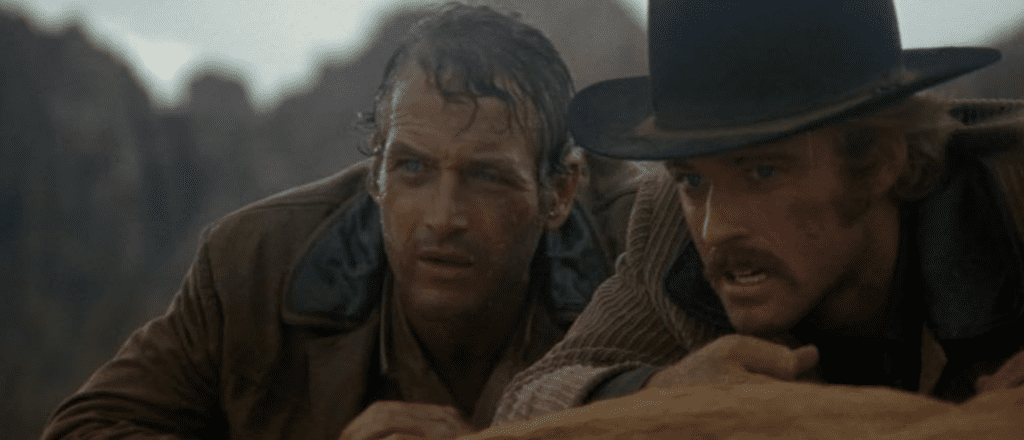
By comparison, at the time of the film’s release, there had already been eleven screen portrayals of another famous outlaw, Jesse James, and the absence of other Butch and Sundance interpretations is something that Richard Slotkin thinks allowed the filmmakers to birth a new myth in their story.
“There was a lot more room for fantasy in the making of the Butch Cassidy story, whereas with Jesse James, you’re really stuck with a historical setting, a physical setting, and a set of issues that belong to that period,” says Slotkin.
“Now you have a personality and a relationship, a story of a relationship, which has, as far as we know, no serious basis in fact. But this whole legendarium has been spun out of it.”
Of what is known of Butch Cassidy and the Sundance Kid, nothing is excluded from the narrative. Cassidy leads the Hole-in-the-Wall Gang on a string of train robberies, bringing them to the attention of a crack posse of lawmen.
Unable to lose the lawmen, Butch and Sundance flee to Bolivia with Etta Place, Sundance’s lover. Finding the living conditions in Bolivia intolerable, they once again resort to crime, drawing the attention not just of the local lawmen, but the US government as well.
However, the actual wise-cracking, fast-talking dynamic between the pair is mere speculation, whilst their use of violence is generally accepted to be exaggerated, and symbiotic of the Western genre as a whole
As Slotkin outlines: “They become almost self-parodies. Heroic self-parodies, but self-parodies by the end of the story.”
Without the need to fit within its own time period, Butch Cassidy and the Sundance Kid sits alongside other grittier Westerns in the late 1960s and early 1970s, such as Hombre (1966), The Wild Bunch (1968), and High Plains Drifter (1973), as allegories to the Vietnam War.
“By the time we get to the 1960s, we establish the premise that the Western is also an allegory for contemporary history, which is why Butch Cassidy goes to Bolivia.
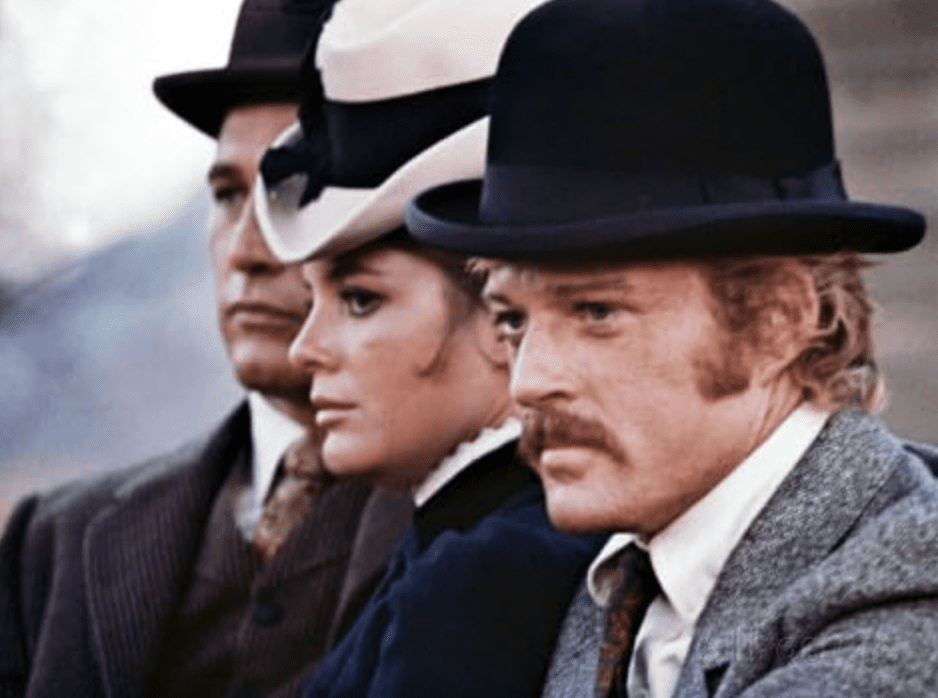
“There, the actual history of Butch and Sundance allows them to take the tradition and make that shift, and by projecting them into the third world landscape where they’re fish out of water, it becomes a kind of Vietnam parable by the end of it, transferring the outlaw to a Vietnam-like setting all the while blurring fact and fiction.”
The blurring of fact and fiction extends all the way to the film’s iconic freeze-frame climax in Bolivia. Rumours have endured for decades that the iconic duo survived the infamous shootout, with some scholarly accounts and family lore suggesting that Butch secretly returned to the US under an alias.
In that sense, the story of Butch Cassidy and the Sundance Kid was a film that lent itself almost perfectly to the period of its release. Allowed to blur reality due to the absence of any legitimate historical record, but free to use that historical record when needed to suit the contemporary situation.