Harold Holzer is an Abraham Lincoln expert who has produced and published articles, books and served as an advisor on Steven Spielberg’s Lincoln. I spent an evening with him to see if we could find the truth, the exaggerations and the behind-the-scenes.
“I’m born in New York, never lived anywhere else, nowhere else, not even once,” except for one scandalous summer at Harvard Summer School for six weeks, which he assured me doesn’t count.
Harold Holzer is not just your regular Jewish New Yorker working out of the famous Roosevelt House on East 65th Street.
A New Yorker is defined by a few things: the love of the city, the piercing accent and the unique rhythm they hold. His rhythm is all about Abraham Lincoln.
If you haven’t heard of the name, he is the Lincoln guy. With his published work dating back to 1984, Holzer has been the voice on Lincolnian iconography. With contributions to film as the man who whispered in Steven Spielberg’s ear and kept Tony Kushner’s imagination in check.
You have spoken about how art is to go to those “impossible places that history avoids”. When working with Spielberg and Kushner, how did you find that line?
“I don’t think that dramatists are any more obliged to follow precisely recorded history anymore than Shakespeare was. Tony Kushner is like a modern Shakespeare. He is the one person I could think of in the world who could write as well as Lincoln.
“I’ll tell you that the Lincoln community are deeply protective of holding things to a higher standard to the recorded sources. I just don’t feel that way.
“I knew that Tony Kushner, who wrote the screenplay, had exacted a promise from the director to include the Gettysburg Address and at least part of the second inaugural, and I think that’s all there was an obligation to do.
“You heard real phrases creep in and out, or alleged phrases like, “I’m President of the United States, cloaked with immense power.”
“That’s not a 100% provable quote. It’s an overheard quote. So I’m not a stickler for authenticating the source of every creative line.
“When I took on the role as historical advisor to the Spielberg project, I was in no way expecting that all of the dialogue would be Lincolnian. My role was to lecture them about what was possible. If something seemed totally absurd, that would cause people to chat in the middle of the movie and say, “Did you see that? What was that?” I would alert them to it.
“They didn’t listen to everything I suggested, even when I was right.”
Did that cause issues…
“They got in trouble for one of the things they ignored, real trouble. I actually think they lost one of the Oscars that they could have contended for because of their insistence on the superior dramatic potential of a fake scene over something that could have easily been fixed.”
What was it?
“It was the voting in the House of Representatives on the 13th Amendment. When I had one of my meetings with Kushner in my old office, he was sitting on a big leather couch that I wish I still had.
“I said, ‘there’s something wrong with this scene. You have the congressmen voting by state. How does Connecticut vote? How does New York vote?’ And I said: “Tony, you’re confusing it with an American political convention where people do vote by state.”
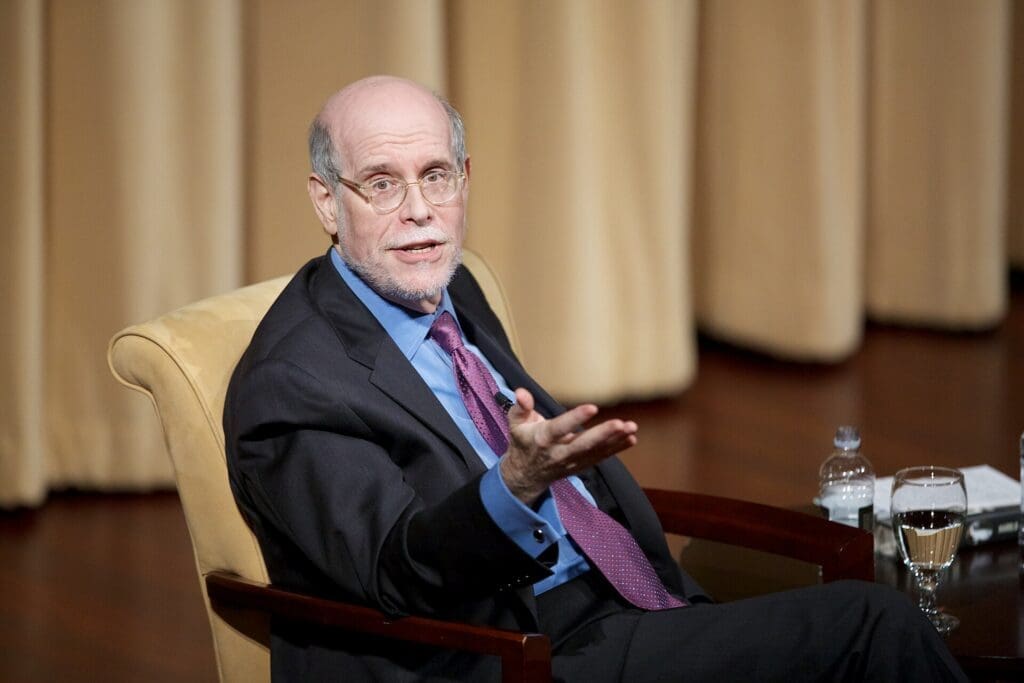
And how did our ‘Modern Shakespeare’ take that news?
“He literally slid off the couch. He was so upset.
“I said, It’s alphabetical. This is before the days when you just press the button. They have a roll call. He said, ‘Are you sure?’ and I said, ‘Yes, I worked for a member of Congress.’
“He called me from the set months later and said: “Stephen [Spielberg] doesn’t like your idea.” And I said: ‘It’s not my idea!’ Kushner then replied: ‘He doesn’t think it’s dramatic, he wants the states.'”
And the aftermath?
“Some overzealous congressman from Connecticut objected to the fact that Connecticut was portrayed as divided on the vote when they had been more united than the film suggested.
He went on television and demanded that Spielberg take back all of the free DVDs that he [Spielberg] had given to high schools at his own expense across the country.
“It was embarrassing, unnecessary and avoidable, but drama wins, right?”
Then what was your main reason to hop onto the film as the go-to historical advisor, other than keeping the record straight?
“The chance to meet Daniel Day-Lewis, which I finally did. And it was not on set.
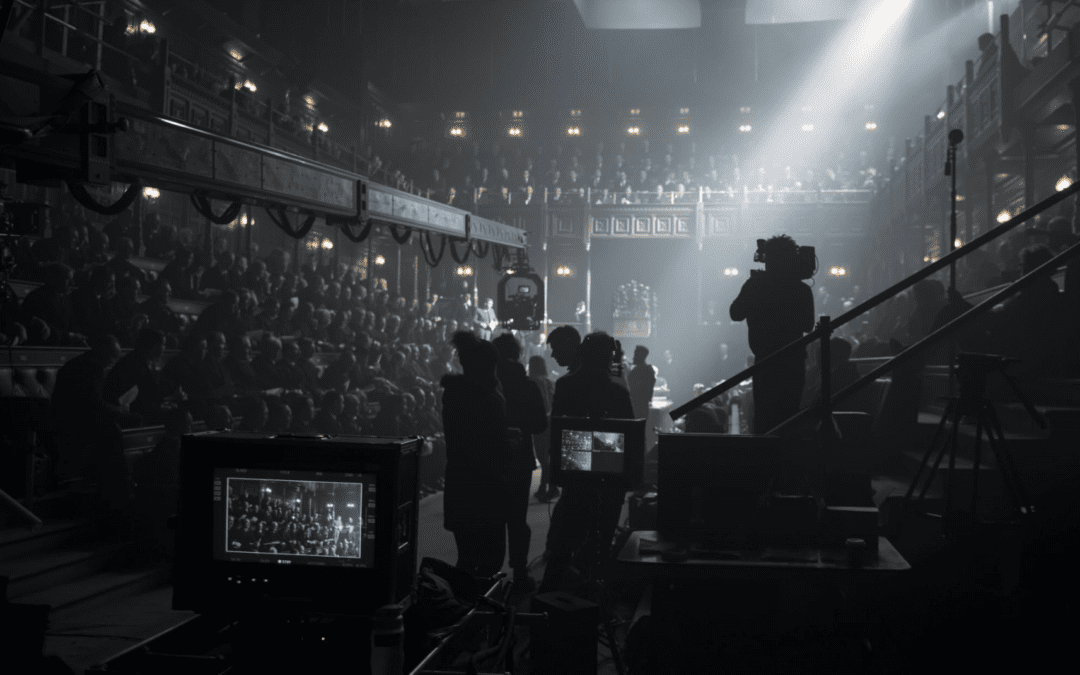
“He [Daniel Day-Lewis] banned people from the set. So I never got to go as promised. I was invited to spend a few days in Richmond, Virginia, to watch the production, and since there were two bearded Jewish guys already on set, Spielberg and Kushner, I think that was the absolute limit. He never said that, but maybe it was just the beard and the hats.
“I got to meet him in the United States Capitol when there was a screening for the Senate, and he couldn’t have been more dazzling. He is an extraordinary person, as you can imagine.”
What did you make of his interesting vocal performance?
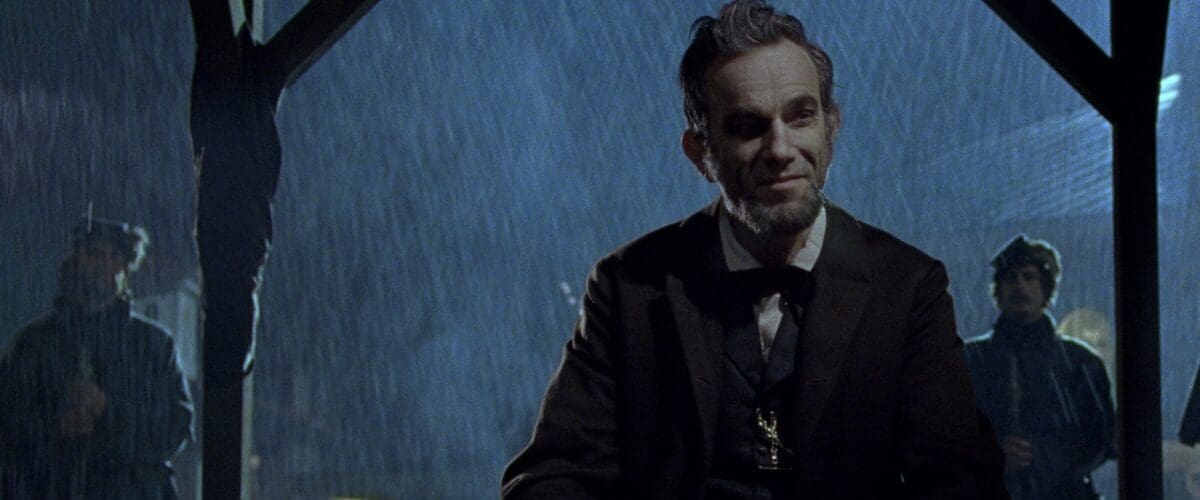
“He read and calculated the register that he thought, and we all know how deeply involved he gets in his characterisations. Supposedly, he didn’t bathe when he did The Last of the Mohicans, but what I’ve heard about the voice is that he recorded it in a cassette tape recorder, but he was so technically deficient that he couldn’t extract the cassette.
“So he went to his FedEx office and mailed the entire tape recorder to Spielberg and said: ‘Here’s the voice.’ Spielberg listened to it and said, ‘Wow, it’s perfect.’”
“You’ve got Gregory Peck, who had a bass voice, which was absurd. What Daniel Day-Lewis conveyed was that there was volume to the voice. So he made a great guess at the pitch.”
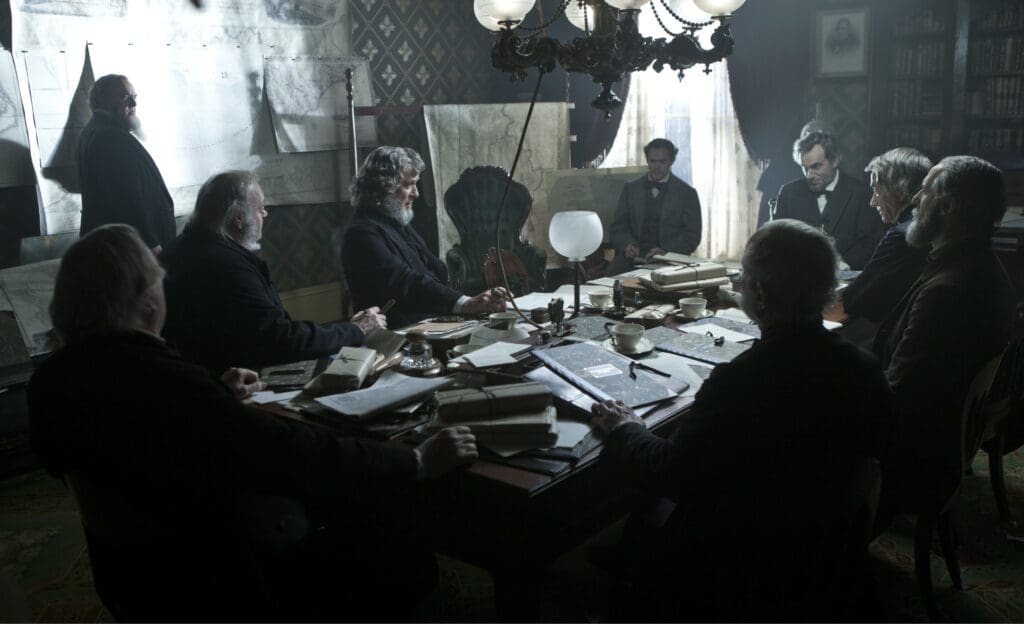
Lincoln’s temper. What did you make of it?
“That surprised me, both in the script and portrayal, the displays of temper, which I think was a very daring and creative thing.
“Lincoln was known to have a temper, especially when he was younger, maybe not so
much as president. In one scene, he pounds on the cabinet table when the cabinet is meeting, and his spectacles bounce up in the air. That was one take. One take. Which is extraordinary.”
And the famous slap against Robert?
“Well, he pounds on the table, and then he slaps his son in public, and he was an infamously permissive parent, but whether it would have exploded into being smacked by your dad. Lincoln was very, very strong, so I’m not sure that he could have hauled [Robert] off like that without knocking him to the ground.
“Lincoln had a disciplinarian for a father whom he didn’t get along with and was not at all close to. But Lincoln said that “Love is the chain that binds a child to his parent, not discipline.” So I’m not sure he would have smacked Robert, even though Robert was the most annoying of his children in many ways.”
What is your favourite fact about him, the one people don’t get to see in the movies?
“There was always a discrepancy about his appearance, his dignity, his clothes, his
manner, and I think his informality has been exaggerated almost to the point of slovenliness. I think he was very together as president. He was dignified. He presented himself as the president. I think the film got that accurately.”
It’s awe-inspiring that you know so much.
“I do dream about him. That might sound a little weird, but after 50 years, I’d be surprised if I didn’t. He is the most endlessly fascinating person in American history.”
Then how does a kid from New York end up dedicating his life to Lincoln?
“It was a fifth-grade assignment in New York, our teacher brought in a hat full of folded-up names, and we were each to pick a name and do some reading in our school library, then write, what we called 65 years ago, a “composition” about the person, and I picked Lincoln. So it was fate intervening.”
I can tell you never stopped…
“I’ve never taken the seven-step programme and cured the addiction. It’s a
very happy thing to be focused on. I got wonderful advice from one of the older
Lincoln scholars, I used to correspond with when I was 18 or 19 years old, and the person said to me, “Find a speciality that you enjoy and that you think no one else has addressed and make that your speciality” and I decided the Lincoln image would be my speciality.”
As you’ve been studying Lincoln for 50 years. Does the current political climate make it harder to look back at that era with optimism?
“I’ve met Donald Trump several times. He is the reason I’m reluctant to travel to Europe right now. I don’t want to have to apologise when people hear my New York accent. I think the world is furious at us, with good reason. Lincoln represents a paradigm of appropriate, inspiring leadership that the world still recognises. There are Lincoln societies in India, Korea, and Japan. There’s even a town in Argentina named Lincoln because a local dictator loved him. The contrast with today is… mortifying
“We have had presidents who behaved like kings. Though until recently, we haven’t had presidents who deny that their term is up.”