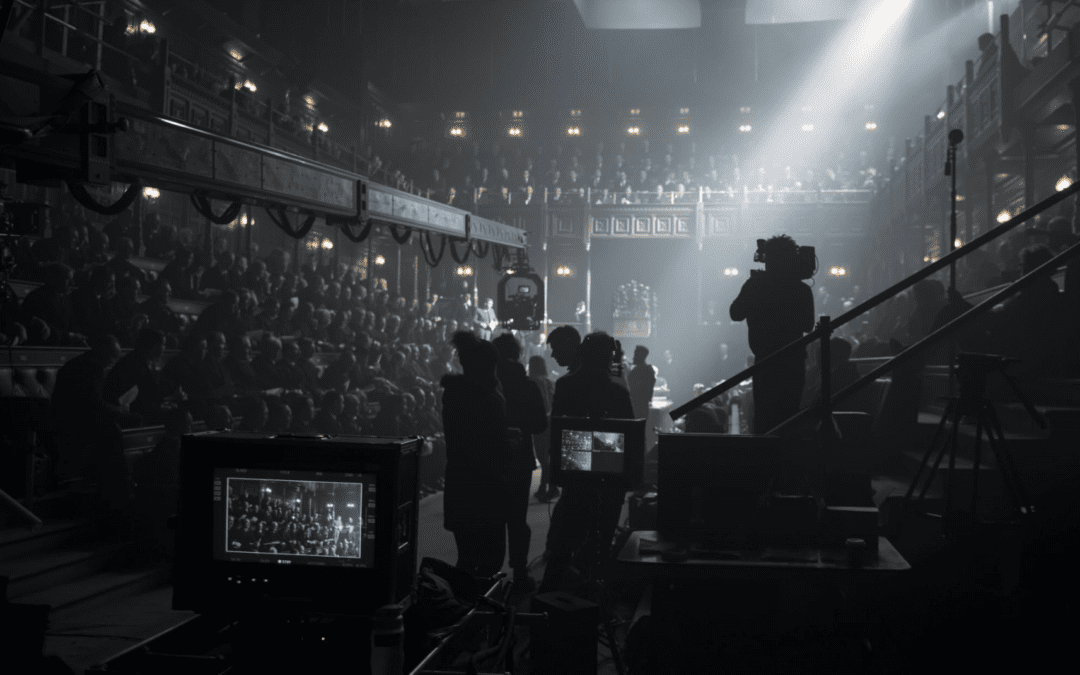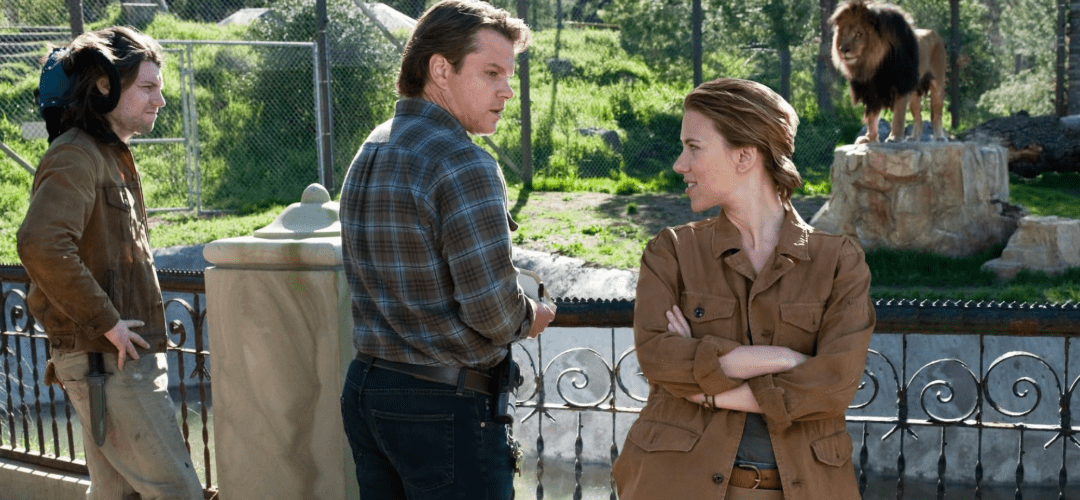

For over two decades, Janty Yates has been central to creating the look and feel of some of cinema’s most monumental historical epics. From the leather tunics and sandals of Gladiator (2000) and its 2024 sequel, to the heavy chainmail of Kingdom of Heaven (2005), and the thousands of embroidered uniforms and regalia of Napoleon (2023), her costumes have defined eras of history for a generation of moviegoers.
To understand Yates’ impact on the historical film genre, one must look back to the late 1990s, an era when the sprawling ancient epic was considered out of fashion. When famed director Ridley Scott took on the challenge of resurrecting ancient Rome with Gladiator, the world of military costume design was still an aggressively male-dominated field.
Yates, who had spent the first fifteen years of her career navigating the fast-paced, high-volume world of British television commercials, broke into the feature film world almost by accident. After a breakthrough opportunity filling in for a designer on a short film, she found herself working with director Jake Scott on the gritty eighteenth-century crime film Plunkett & Macleane (1999) in Prague. It was there that her work caught the eye of Jake’s famous director father.
“This is how I got to work with Ridley,” Yates recalls. “And that was extraordinary, we were in Prague, and Jake would come in on Mondays, saying ‘Oh, Dad saw the rushes over the weekend. He thinks they’re really great.’ I thought, I can’t believe this. Ridley was my hero. I couldn’t believe Ridley was looking at our rushes.”
When the elder Scott began assembling his crew for Gladiator, he raided his son’s production, taking the director of photography, the hair and makeup heads, and Yates. The transition from independent period films to one of the biggest studio epics of all time was a baptism by fire.
“I took a flyover to meet Sir Ridley Scott,” Yates says, “frankly for me, it was the best day of my entire life to actually go and meet him. He never really offered me the job, he kind of just assumed I was doing it, which was amazing. I don’t know why he chose me, a girl, it’s a very masculine field, military costume design. It was very much a bloke’s thing back in those days, it still is somewhat. Anyways, I muddled through.”
“Muddling through” is an understatement for a job that ultimately earned her an Oscar. The scale of the production was intoxicating, grueling, and entirely overwhelming.
“Terrified! I was terrified every day of my life,” she admits. “We prepped in Shepperton Studios and then we went and shot in Bourne Woods near Farnham. We did the whole of the first battle against Germania in Bourne Woods, but we were still establishing a huge amount of the costumes. Then we travelled to Morocco, where we just shot in sandstorm after sandstorm, and then we moved to Malta which is where obviously the Colosseum was built, and then built for a second time three years ago [for Gladiator II]. They had to take it down and rebuild it.”
All that fear more than paid off when Gladiator became a global phenomenon, culminating in Yates winning the Academy Award for Best Costume Design. For a young designer navigating her first massive historical film, the golden statuette brought a profound sense of impostor syndrome.

“I so felt I didn’t justify it,” Yates confesses, gesturing to the gold statuette on her desk. “I so felt I was such a newbie, and I had 189 people working for me and I thought they all deserved it more than I did. To this day, I still do, just because my name was on it, I went and collected it and it sits with me, but it doesn’t really feel like mine.”
The win completely changed her life, though she never expected a follow-up call from Ridley Scott. “Oh Christ, I was on my honeymoon,” she laughs. “I got married directly after the Oscar, within months, and I was in Melbourne on my honeymoon, and they kept ringing me and ringing me, asking when I was going to be home, telling me they needed to send me all this material. Finally, I picked up the phone and I couldn’t believe it.”
The material was the script and research for Scott’s next project, Black Hawk Down (2001). The producers simply took it for granted that Yates would immediately jump onto the next plane. “Branko Lustig, the Oscar-winning Schindler’s List and Gladiator producer, sent all this stuff for Black Hawk Down, and I had to turn him down. I was committed to another film. They just took it for granted that I’d be there and I’d be doing it, and I didn’t do it. I was glad in a way, it was all military, although it’s a very, very good film.” Instead, she chose to apply her post-Oscar momentum to Charlotte Gray (2001), a period drama set in occupied France starring Cate Blanchett.
Years later, the legacy of her foundational work on Gladiator continues to dictate her career. Having established the look and feel of the Roman cinematic revival, returning to that world for Gladiator II brought a massive full-circle moment, earning her and her team subsequent award nominations. “We got nominated for Napoleon, and then for Gladiator II as well. It’s pretty good going.”
When resurrecting the fashion and feel of a world thousands of years in the past, a designer must satisfy the need for historical accuracy while ensuring that an actor can swing a sword or sprint through a marsh in their costume. According to Yates, you cannot successfully break the rules of history until you fully understand them.
“Everything. Everything. Everything,” Yates emphasises when asked about the obstacles of historical accuracy. “You have to research the granny out of it. You have to know it inside out, and then you can take a little bit, maybe a step to one side and say ‘Well we can get away with that.’ But you can’t do things in orange or purple; they have to bear some resemblance.”
This deep respect for authentic textiles, silhouettes, and construction methods provides the gravity that grounds Ridley Scott’s heightened cinematic worlds. The textures must look real, the wool must look heavy, the linen must look worn, and the leather must look cured. The audience must implicitly trust the history that is being presented to them. Yates is adamant that shortcuts by using modern materials ruin the historical illusion.
“Ridley doesn’t mind you taking a little bit of extra time to get it right; he’s a great collaborator in actual fact,” Yates explains. “He would do a tiny drawing, and you would just work with that. It’s fantastic, and he’s very flexible, but you can’t take the piss. You can’t make things out of Perspex or something like that. It just doesn’t work; you can’t. You’ve got to do it in the proper fabrics.”
Scott’s quick, evocative sketches serve as the foundational blueprint for entire empires. This shorthand allows he and Yates to bypass hours of corporate studio notes to focus entirely on the texture of the history that they are building.
The bulk of this work in grand historical epics comes not from outfitting the stars, but from outfitting the army of extras who make up the background of pivotal scenes. In films like Kingdom of Heaven (2005) or The Last Duel (2021), Yates had to balance distinct visual identities for warring factions. This meant designing hundreds of the intricate, protective chainmail and heavy surcoats for the Christian Crusaders in Kingdom of Heaven as well as hundreds of flowing, sun-deflecting, detailed coats of armour for Saladin’s Saracen forces. To achieve this, she has frequently relied on longtime collaborations with military costume experts like David Crossman, who co-designed the military elements of Napoleon and Gladiator II.
“Obviously I did Gladiator on my own, but these last two I had David, who is my dear friend, and Ridley loves him as well. So I was allowed to do just civilian clothing on Gladiator II, but I’d set the precedent for the military outfits in the first Gladiator. We did all the Saracens and Christians together, and spent an age working on the chainmail. It was wonderful to do it with him, and he’s always wonderful to work with. I’ve worked with him since Enemy at the Gates, which we did back in 2001, and I’ve known him since he was 18. He’s now in his 50s, so we get on well. We get on just fine.”
The logistics of costume designing on such a scale is staggering. A single battle scene requires outfitting hundreds of distinct individuals, ensuring that every layer is correct, from the under-tunics to the outermost plates.
“There are always sort of 200 or 300 peasants, then there are 200 or 300 warriors who are galloping behind the action,” Yates notes. “There’s always a million different things that you’ve got to consider. Even the dead have to be dressed. I suppose that’s the unique challenge of historical films.”
While she’s helped to define the historical epic, Yates’s filmography also features sharp pivots into more recent eras of historical style. The core methodology behind her work, however, remains the same; whether she is dressing a Roman emperor or a modern-day drug kingpin, the goal is always to manifest character through clothing.
For Ridley Scott’s American Gangster (2007), Yates was tasked with outfitting Denzel Washington as the real-life Harlem kingpin Frank Lucas. To capture the character’s immense wealth and calculated, professional swagger, Yates sought out Leonard Logsdail, one of the finest Savile Row tailors operating in America.
“Well, Denzel is a wonderful actor, an amazing guy,” Yates says. “I had something like 70 outfits made for him. Luckily, I found the best Savile Row tailor in America, Len Logsdail, to suit him. So Denzel really looked like the dog’s bollocks, he really looked fantastic. He was dressed in cashmere and silk, and he couldn’t have looked better.”
The same pursuit of luxury exuberance was pushed even further with House of Gucci (2021), a film that tracks decades of the iconic fashion brand in the late 20th-century. The production was a whirlwind of massive Hollywood egos, endless fittings, and the unique pressure of working alongside a contemporary fashion icon like Lady Gaga.
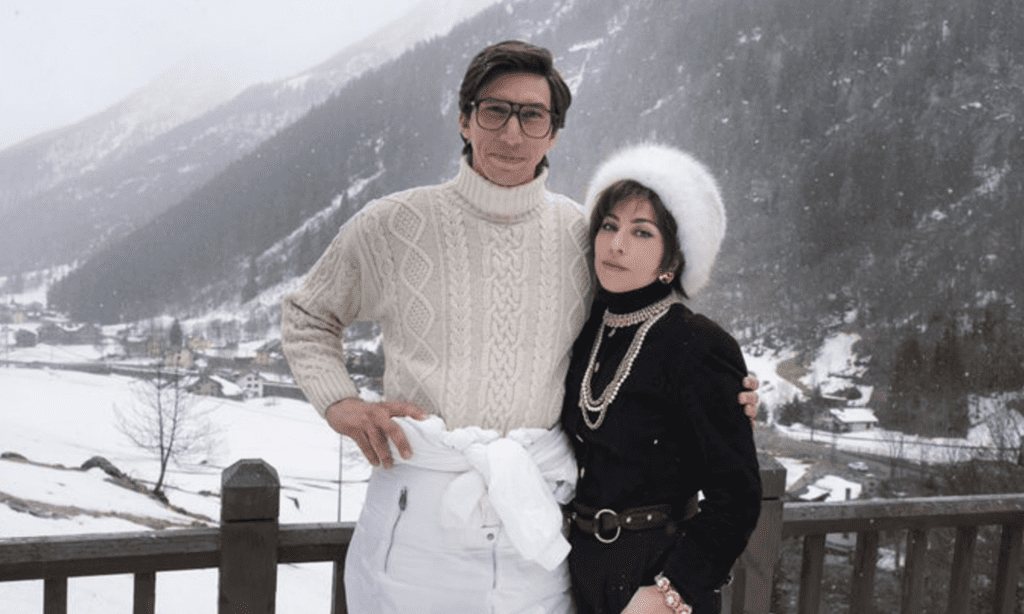
“Lady Gaga was probably the furthest thing from an ego. She was very collaborative. She was wonderful in every fitting, and Christ, we had so many fittings, because she would get into character, and I’d have to be whoever she was interacting with. There would be hundreds of people at her fittings, two managers, hair, makeup, her PA, her voice coach, her acting coach, all in this tiny room, all sitting around on the floor. She’d just be dropping her clothes and putting things on, but we worked out this nice rhythm. We’d probably fit two outfits each fitting, all the brooches, how many bangles she’d wear, we worked it all out so that it was no problem on the day.”
While Lady Gaga generously opened up her private fashion archives for research, Yates quickly discovered that the actual House of Gucci was far less accommodating.
“It so wasn’t a dream,” Yates laughs, reflecting on the experience. “They were so unhelpful. They were really unbelievable. Finally, after something like three months of asking, we got to go to their museum in Florence, and they set up one room where they put one rail of clothes, and that was it. A few handbags, a bit of jewellery, and that was it.”
Undeterred by the fashion house’s icy reception, Yates set out to build the visual aesthetic herself. Yates reunited with Len Logsdail to create sharp, impeccably fitted suits for Adam Driver, whilst sending Jared Leto to an incredibly exclusive, old-world tailor in Naples, who typically exclusively crafts garments for international ambassadors and billionaires.
Despite her glittering career, Janty Yates remains humble about her role in shaping the way in which we understand historical costumes, crediting her collaborators and her long-standing professional partnership with Ridley Scott.
“I just go with the flow, I’m happy to be working. I’m always just happy when we start on a new project, and we’ve got funding, and we can go.”
From sword and sandal epics to silky high-fashion threads, Yates has brought history to life on the big screen, shaping the way we view the past in Ridley Scott’s grand cinematic visions with each needle and thread.