How Kubrick and Trumbo forged Spartacus into a symbol of rebellion during the civil rights era in America, and how Kirk Douglas’ fight against oppression goes beyond the film reel.
The day is October 28th, 1947. American screenwriter Dalton Trumbo stood before the House Un-American Activities Committee and refused to give up the names of other communist writers and creatives working in Hollywood, despite an issued subpoena by the US government. They aimed to prosecute Trumbo for what they believed was planting leftist political propaganda in American films.
A month later, Trumbo was cited for contempt of Congress and given eleven months in federal prison. Among nine of his peers, he was dubbed a member of “The Hollywood Ten”, labelled a criminal, and blacklisted from Hollywood for thirteen years.
Trumbo, like many in the era of political instability, continued his work under pseudonyms and was approached by Hollywood star and self-proclaimed perfectionist Kirk Douglas to write a new script for a film called Spartacus, which centres around a young Thracian slave who led one of history’s most recognised revolts against the impregnable Roman Empire.
The day is now October 6th, 1960, and Spartacus premieres at The DeMille Theatre in New York City. Douglas began publicly crediting Trumbo as the writer, and by doing so, shattered the blacklist and defied the system. To the film industry as it’s known today, this means far more than the four Academy Awards that it would sweep at the thirty-third ceremony in 1961.
Suddenly, Dalton Trumbo’s name appears on the famous Spartacus poster, next to the film’s composer Alex North, and a young and eccentric director called Stanley Kubrick. It was the first time in thirteen years that Trumbo, his wife, and his three children had seen his name on a film poster.
From the revolution that allowed filmmaking to be possible, to the characterisation and the framing of Douglas’ protagonist, Spartacus is the ultimate example of the epic struggle for freedom that’s inspired, and is still inspiring, decades of political activism.
“The Universal human desire for freedom”
Dr Monica Cyrino is a professor of Classics at the University of New Mexico, and focuses on classical reception in popular culture.
“The making of Spartacus was a huge gamble for the studio, in a time where epic films were falling out of favour.” Cyrino said. Kirk Douglas wanted to make a film about the universal desire for freedom.”
Douglas had a wish to star in a leading role in a historical epic that defied Roman oppression; he was offered the role of Messala in William Wyler’s 1959 adaptation of Ben-Hur, turning down the role of the lead antagonist on the omission that he didn’t want to play a “second-rate baddie”. The role of Ben-Hur was instead given to Charlton Heston, but upon hearing about the chance to compete against the film, he accepted the role of Spartacus.
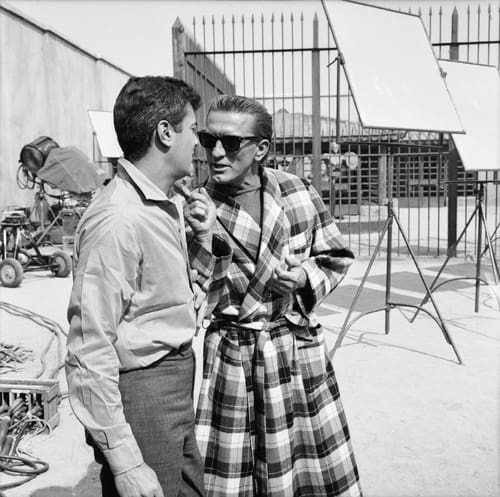
Upon acceptance, he met Anthony Mann, a western and noir style director nominated for his first Academy Award earlier in the decade. Shortly into filming though, he was replaced by word of Douglas, as Cyrino explains.
“He was removed as he couldn’t accurately depict the opening scene, filmed in the North American mines where Spartacus was enslaved.
“He was replaced by Kubrick. None of the big studios would take him, but Douglas did.” It would be through his scenes that we’d see the fight against oppression.
“Kubrick was very concerned that the visual element be highlighted… that the mythic quality be retained.
“There’s no doubt that when you see this film, its influence with that Kubrickian sense of the visuals of Kubrick’s wonderful eye, his way of doing wide-angle shots, his meticulous sense of visual artistry, is there to see.”
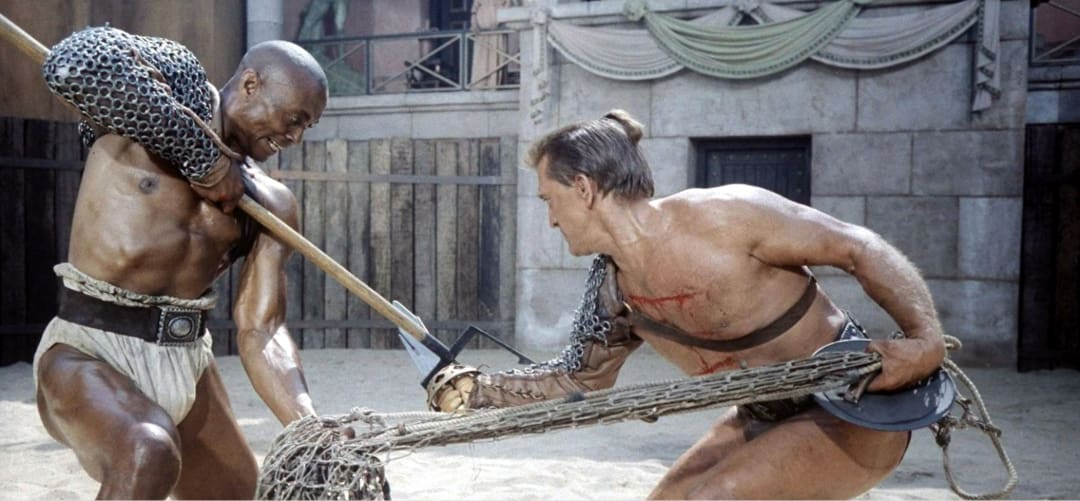
No scene shows Kubrickian’s eye for wide-angle shots and the fight for freedom quite as much as the gladiatorial scene between the two enslaved gladiators chosen to fight to the death, Draba and Spartacus.
Draba was cast as Woody Strode, a hugely influential black actor best known for his prior career in American football. He was a hero of the black pride movement, by helping to break a long-standing ban on black athletes when he signed to the Los Angeles Rams in 1946 with his teammate, Kenny Washington.
By choosing to cast Strode, Dr. Cyrino aligns the film to three key ideas: civil rights, racial equality and civil disobedience. The battle between the two proletariats was a scene that symbolised breaking racial barriers and societal divisions, which became moulded by its time in 1960s America and the civil rights movement.
“The film became a symbol of individual liberty… a person’s right not to be enslaved… a person’s right to have their own personal autonomy.” Cyrino remarked.
Kubrick used strong visual power to demean the gladiators, caging them like animals in a small enclosure until they were chosen by Roman elites to fight to the death for their own classist entertainment.
The subsequent duel happens for about three minutes, and challenges more of a moral battle than a physical one. Draba’s refusal to kill Spartacus and choice to throw his weapon up to the gantry where the Ludus (gladiatorial host) and Roman oppressors are is a parallel to the nonviolent resistance seen during the civil rights movement.
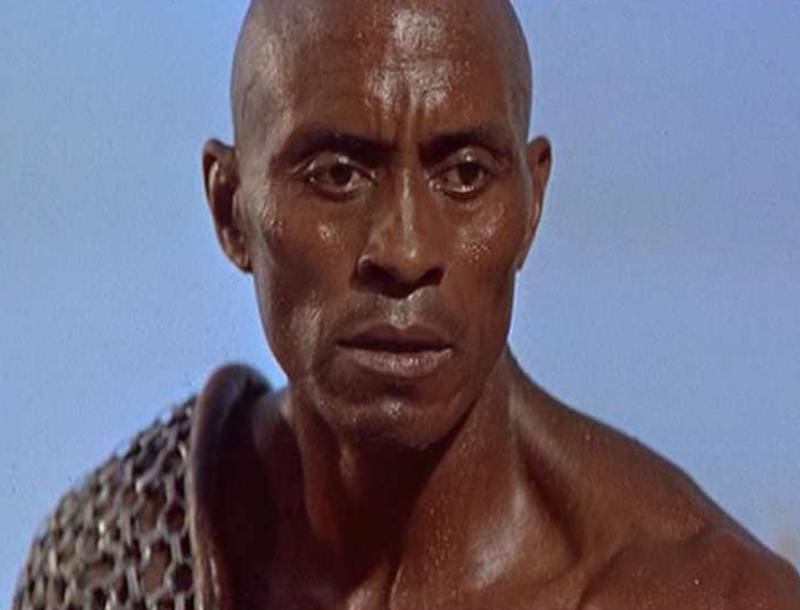
The focus on the action, and lack of dialogue echoes through many different scenes in the film. Kubrick wanted a lot of scenes that didn’t feature a lot of dialogue, as a way of pushing his idea of visual storytelling.
Scenes like these were reflective of wider issues that made Spartacus a figure of resistance across the world. His name became tied with the fight against oppression; The Irish Spartacist group was founded in 1990 amid the troubles in Ireland, as a Trotskyist group focused on revolution.
Historian John Simkin created the Spartacus Educational seven years later, an online archive dedicated to telling the stories of Black Americans during the civil rights movement. Its effect was profound.
Spartacus also became a symbol for workers’ rights, as a “symbol of modern ideology of class struggle”, said Cyrino.
“I AM NOT AN ANIMAL”
“I AM A MAN!”
Both of these short quotes uttered by Spartacus in moments of rebellion and justice have been famously utilised by workers rights groups since the film’s creation. The latter was front and centre as a powerful slogan used by the Memphis Sanitation Group in 1968, to demand equal pay and racial equality for some of the South’s most marginalised urban black workers.
Workers would wear the signs in big, capitalised letters.
It now remains synonymous with equal workers’ rights across the world, a result of a single line that Trumbo wrote into the film’s dialogue.
The voices of resistance
Even if historically inaccurate, the addition of characters that emphasise themes of brotherhood and collective resistance becomes central to the plot and the protagonist.
Antoninus is first introduced as an educated former slave and is seen to be an advisor to Crassus under subjugation. He soon joins Spartacus’ revolt, and becomes “like a son” to him, his final words before Antoninus’ death. Trumbo uses him to push the idea of collective resistance, that the fight for freedom isn’t just individual, but requires more than just one man or woman.
Whilst it’s never been evidenced, there are interesting comparisons to make between Trumbo’s blacklist during the McCarthy era, and the character of Antoninus.
Loyalty seems to be a parallel with both; Trumbo’s refusal in Congress and Antoninus’ refusal to kill Spartacus when forced to duel, so that he wouldn’t be nailed to the cross like other slaves that fought in the revolt.
Martin Winkler is the author of Spartacus: Film and History, and reinforces the idea that political parallels influenced Trumbo’s writing.
“The blacklist and McCarthyism influenced the script by Trumbo and can be seen for example, when Crassus makes his own list of people to be killed off” he said.
When asked about the effect of characters like Antoninus and Varinia, Spartacus’ love interest and eventual wife, he said:
“Both Varinia and Antoninus round off the portrayal of Spartacus: he becomes a quasi-husband and brother in addition to being a father figure to the slaves on their trek.” This then leads to effective climaxes: the duel, the scene at the cross.
“In spite of its complicated production history and numerous distortions of history and inventions, the film remains an attractive and important work, not least in its portrayal of black/white relations in the U.S.”