Bohemian Rhapsody has always been a divisive film; despite its four Oscar wins, it received a mixed bag reception from critics and Queen fans alike for its depiction of the seminal band and their mythic frontman. But why was this? Histoflick asks the author of two Queen biographies, Mark Blake.
Arguably one of the most identifiable musicians of all time, Rami Malek’s depiction of the moustached, white tank-top wearing frontman of Queen in Bohemian Rhapsody earned him the Oscar for Best Actor, but this doesn’t tell the whole story behind the film that helped start the snowball rolling for turning musical biopics into awards buzz.
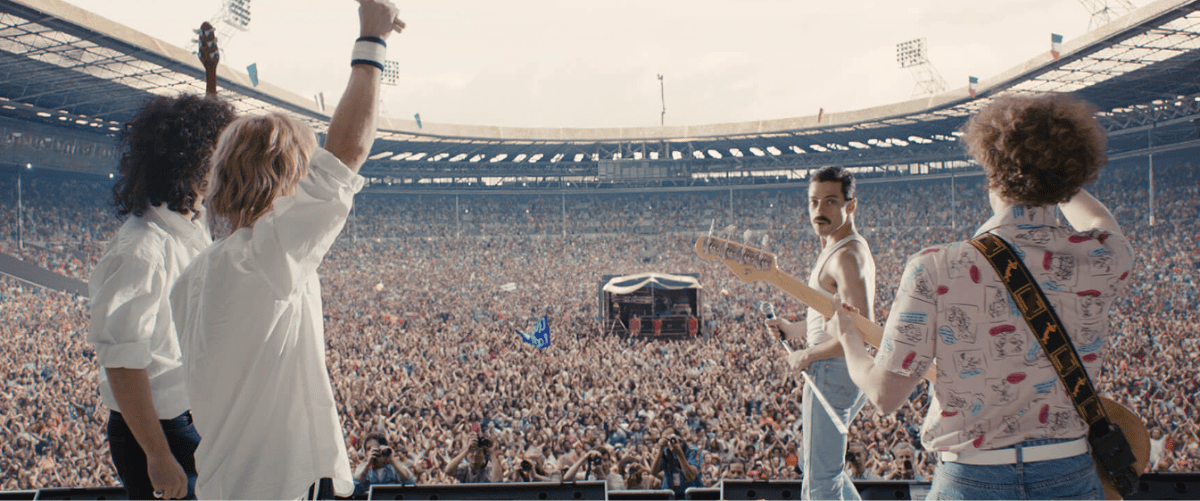
Condensing the life of Freddie Mercury from baggage handler at Heathrow Airport to having 72,000 people at the Live Aid concert at Wembley wrapped around his finger, you expect to see timelines shifted to condense the story into a 2-hour space, that’s par for the course of any biopic.
The issue comes less from the structural telling of the story and more the diluting of the well-documented hedonistic lifestyle of the band, alongside the quieter complexities of Mercury offstage.
Mark Blake, author of Is This The Real Life: The Untold Story Of Queen and Magnifico!: The A to Z of Queen, believes the film sacrifices much of the band’s debauched lifestyle and Mercury’s internal struggle in favour of making a safer, and in particular, a lower age certified film.
“It’s not a film for me, but then I’m not the target audience.
“There are hundreds of inaccuracies, but that’s not the point. The filmmakers wanted to make a family-friendly movie that was a dramatised version of the Queen/Mercury story,” Blake says.
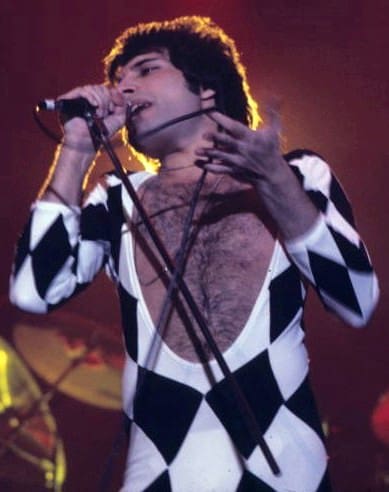
And that they did, Bohemian Rhapsody ended up with a 12A age certificate, with no sign of the drug-fuelled parties with which the band became synonymous, with one particular party at the Fairmont Hotel in New Orleans in 1978 reportedly costing their label £200,000.
“When Queen sold the rights to that story, they gave up any creative control they had over it. The main inaccuracy is Mercury revealing that he is sick before Live Aid,” he says.
In Bohemian Rhapsody, Mercury reveals his AIDS diagnosis to the rest of the band during a rehearsal for the Live Aid concert, which takes place in 1985, in truth, he wasn’t diagnosed until 1987.
“If he was HIV Positive then, he never told anyone and only revealed he had AIDS to the band several years later,” Blake adds.
You can see why the filmmakers decided to close the curtain on Queen’s iconic Live Aid concert, it perfectly sums up the well-trodden journey from obscurity to superstardom in which many music biopics seem to follow, but by throwing in Mercury’s diagnosis at this point in the film, it feels like it’s ticking off an aspect of his story without giving it due focus.
Throughout, Bohemian Rhapsody seems to oversimplify the more difficult to nail down aspects of Mercury’s life, particularly his sexuality, which isn’t as black and white as it’s made out to be.
Take the scene where Mercury comes out to then fiancée Mary Austin as bisexual, played by Lucy Boynton, who responds to this revelation with “Freddie, you’re gay”. From this point on, it heavily focuses on him being a strictly gay character, irrespective of the fact that his relationships were far more complicated than depicted in the film.
Mercury would later go on to call Austin the love of his life, leaving the majority of his estate to her after his death.
The frontman made a point of not wanting to be pigeonholed and one way or another, the film avoids bringing the more complex nature of his sexuality across, as well as his excessive drug use, Blake believes this is down to those behind the film wanting it to be as widely watchable as possible.
“Again, it’s a dramatised version of a story and you have to condense a lot into a two-hour movie. I think it’s a very sanitised portrayal of Mercury’s life and sexuality.
“But there’s a reason for this, the filmmakers wanted to make a family-friendly film to help improve its chances at the box office,” he says.
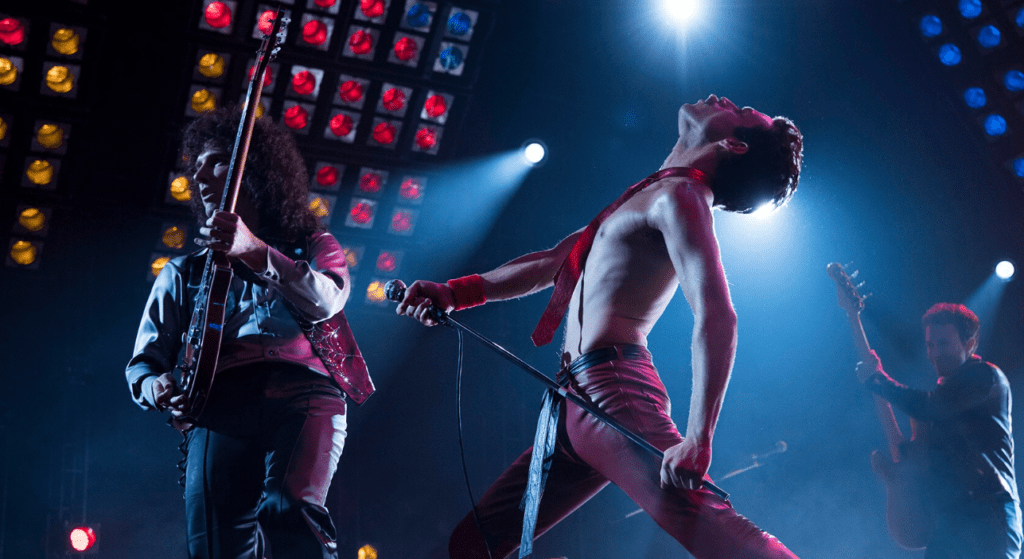
Hollywood has a history of remoulding the stories of the historical figures it focuses on to make them fit into a two hour window with a more film-ready story, take The Imitation Game or The Green Book, among countless others.
One of the relationships it does portray is that of Mercury and Paul Prenter, essentially the antagonist of the film. Prenter worked as his assistant from 1977 to 1986 before being fired, after which point he would go on to sell a series of sensationalised tell-all stories about his former employer’s sex life to The Sun in May 1987.
While Hollywood often covets a villain in its depictions, in the case of Mercury and the members of Queen, Prenter seemed an understandable choice, even though certain aspects of the conflict between the two did receive some backlash for being overly dramatized and the reason given for his sacking in the film was deemed oversimplified.
In the film, the timeline of the betrayal is brought forward, as Prenter, played by Allen Leech, gives an explosive TV interview publicly outing Mercury at some point before the Live Aid concert in July 1985.
Even if some did take issue with Prenter’s on-screen portrayal, Blake alludes to the fact that the remaining members of Queen probably didn’t.
Brian May and Roger Taylor supposedly never got along with the Northern Irish manager, with tensions flaring after the release of the band’s panned 1982 album Hot Space.
The pair reportedly blamed Prenter for his influence over Mercury and consequentially the sound of the album, which ended up being one of the band’s lowest selling, despite the inclusion of the track Under Pressure, the band’s timeless collaboration with David Bowie.
“I do know that for a few years, whenever Brian May spoke about Prenter in interviews, he would never actually name him, just refer to him as “someone who was close to Freddie and was a very divisive character”.
“I am sure there was some over-exaggeration, but he definitely had a bad rep from May and Taylor even before the film came out,” Blake says.
Ultimately, Bohemian Rhapsody depicts what can only be described as a watered down version of the Queen story, taking certain aspects and converting them into a more easily digestible version of the band, it plays it safe.
By omitting the more hedonistic aspects of the band, but more crucially condensing what is such a complicated figure in Mercury into a more binary one, it misses the mark that many may have been expecting from a Queen biopic, instead favouring Hollywood tropes by sprinkling in fabricated conflicts.
The most obvious being the band’s fictional break up, hiatus and reunion for Live Aid as a result of Mercury signing a solo contract. The band never split, in fact, they had just come off the back of a world tour before performing in front of an estimated 1.9 billion global audience.
“It’s not a documentary, it’s a biopic.
“I think they did what they had to do to make a film everyone could potentially go and see. The true story of Queen would have required an 18 certificate. I suspect those fictional conflicts and characters were necessary for dramatic effect,” Blake says.