Blue Moon follows one evening in the tragic life of Lorenz Hart, half of the songwriting duo Rodgers and Hart whose fame in the 1930s screenwriter Robert Kaplow likens to Lennon-McCartney, but what was it about the lyricist and this evening in particular that inspired him to write the film?
Lorenz Hart made up half of the Rodgers and Hart duo, in their time two of the most renowned names within theatre, the pair worked alongside each other for nearly a quarter of a century. Hart wrote the words, Richard Rodgers the music.
Their partnership culminated in the songs Blue Moon, My Funny Valentine, and Bewitched, Bothered and Bewildered, among several hundred others.
Last year, the film Blue Moon was released, focusing on Hart and the unravelling of his life condensed into the space of one evening.
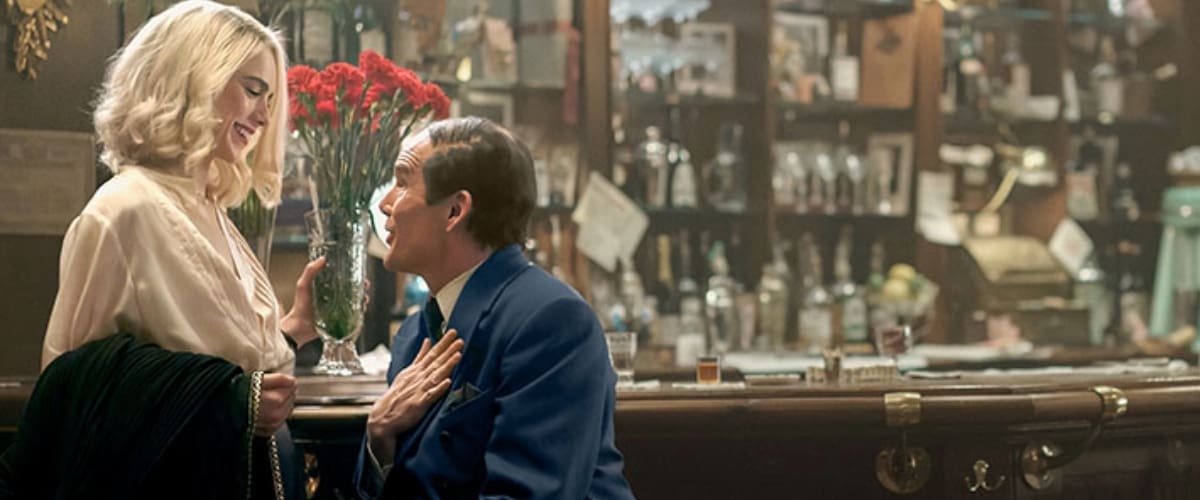
Shot in real time in a set outside Dublin made to resemble Manhattan’s iconic Theatre District restaurant Sardi’s, we follow Lorenz Hart as he attends the opening night of the play Oklahoma!, Richard Rodgers’ first show with another collaborator.
Written by Robert Kaplow, Blue Moon stars Ethan Hawke who transforms into the diminutive, balding, but brilliant Lorenz Hart, both received Oscar nominations for Best Original Screenplay and Best Actor respectively.
But Robert Kaplow’s interest in Lorenz Hart began not with the man himself, but his longtime collaborator who would go on to eclipse him with his later works, Richard Rodgers.
“In my twenties I was very interested in songwriting and I thought I might want to be a songwriter, so I knew who Richard Rodgers was and I had admired him, then I discovered the Rodgers & Hart songbook. These songs were astonishing in their complexity, their humour, their melodic inventiveness,” Kaplow says.
But it was hearing Rodgers discussing his creative separation from Hart that left a lasting impression on the screenwriter.
“I listened to this long audio interview with Richard Rodgers and I found it very interesting, and a little disturbing when he started talking about leaving Lorenz Hart. There was something in the way he presented it that was chillingly business-like.
“That stayed with me. That moment, thinking that he was sort of armouring his heart against feeling guilty about what he did by saying, ‘well, it was a business decision’, it was a very utilitarian decision and I think I knew even at that moment I was going to write about it,” he says.
When asked what it was in particular about Rodgers’ words that struck him, Kaplow says: “I mean they worked together for 25 years, which is half of Lorenz Hart’s life, he only lives to be 48. Half his life is this partnership. They were hugely successful in their time, they were like Lennon-McCartney, particularly in the 1930s.
“I guess I felt Rodgers owed more to that partnership than he was allowing himself to feel, at least publicly.”
“I think these two guys in many ways love each other and admire each other, but at the same time are exasperated by each other,” Kaplow adds.
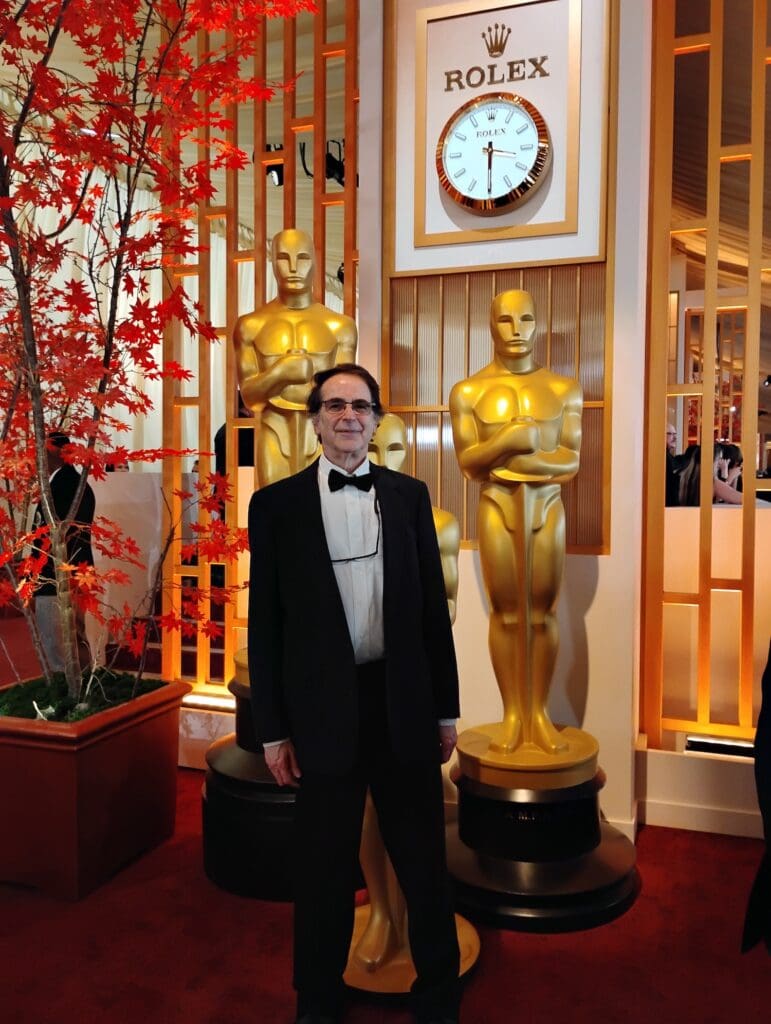
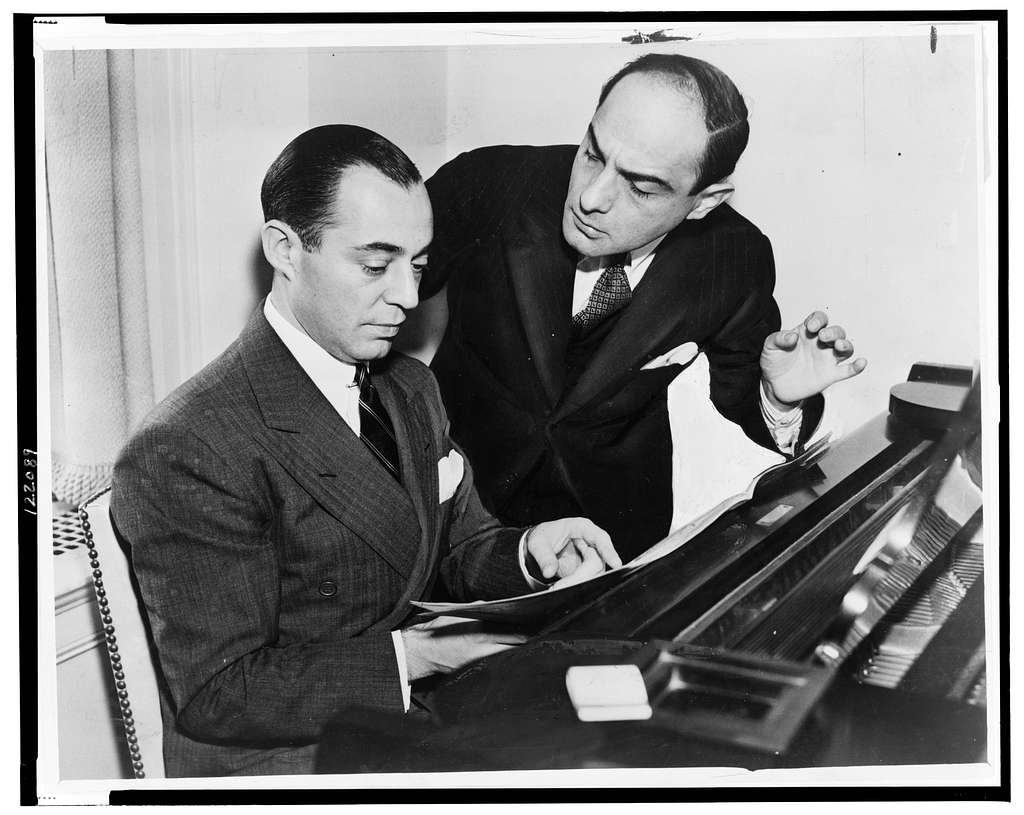
It was Rodgers’ exasperation, the source of which stemmed predominantly from Hart’s alcoholism that would result in him going missing for days at a time, that led to him to leave Hart to write Oklahoma! with Oscar Hammerstein II.
The new pair would go on to work together for 18 years until Hammerstein II’s death, creating musicals like The Sound of Music, which would go on to be adapted into the 1965 classic of the same name starring Julie Andrews and Christopher Plummer.
“Rodgers was very organised, business-like, and went to his piano at nine o’clock in the morning to do his day’s work. Hart was a much more mercurial, devil-may-care character who never showed up on time.
“The way he worked was, Rodgers had to write the melodies first and then say to Hart, I have this melody, you have to come here and write the lyrics,” he explains.
“Hammerstein was very business-like like Rodgers, Hammerstein used to write his lyrics first then mail them in to Rodgers and Rodgers would put them on his piano and set them to music almost in the time it took to read them.
“When Rodgers saw that he could work that way with Hammerstein, it was like, ‘this is the way I want to work. I’m not chasing this little guy all over New York’. And Rodgers did work that way until Hammerstein died from cancer in the 1960s,” Kaplow adds.
The breakup of two of Broadway’s biggest celebrity names, and the fact that Hart actually attended Rodgers and Hammerstein’s opening night of Oklahoma!, gave Kaplow the creative license to imagine how such a pivotal night in the life of the remaining half of Rodgers and Hart would’ve unfolded.
But with so little to go on about Hart in his own words, it was a chance encounter with a book dealer that gave him the insight he needed to portray his story on screen.
“I came upon, through a used book dealer, these letters that a young woman had written to him in 1942 to 1943, it suggested an interesting and complicated relationship between the two.
“So I thought, okay, not only could the story be the end of Hart’s professional life, but also the unraveling of his personal life too,” he says.
The letters, sent from Elizabeth Weiland, played in the film by Maragret Qualley, gave Kaplow a “springboard” into the type of conversations the two might have had.
The numerous letters detail Weiland’s “disastrous” twentieth birthday night and the fact that the two went away together to a lakehouse, both of these particular letters inspire scenes between Hawke’s Lorenz Hart and Qualley’s Weiland in Blue Moon.
Ultimately the relationship between the two portrayed in Blue Moon, which remains ambiguous until its conclusion, is one of unrequited love.
While the nature of their relationship in real life was unclear, this was something that was very much familiar to Lorenz Hart, and is reflective of a man whose sexuality was often questioned at a time when being openly gay wasn’t an option for someone in the public eye.
Kaplow describes the importance behind the uninterrupted 14-minute long scene between the two in the cloakroom for mirroring the real Lorenz Hart’s tragic love life.
“I thought it would be that much more poignant if she’s telling a story to Lorenz Hart about a boy she’s in love with, who doesn’t feel anything back. Because without saying it, that’s what Hart’s feeling about her,” Kaplow says.
“He had proposed to Vivian Segal, at least twice, and to another actress Nanette Guilford. And they all said no. They probably sensed he was sexually confused,” he adds.
“I think Hart very much wanted to be like Rogers, married, mainstream, but he wasn’t. He was much more conflicted. The suggestion is that he is a gay man, this is 1943, he’s not going to be an icon of gay pride, it’s not the world in 1943. He would very much be wrestling with that,” Kaplow adds.
The somber reality of Hart’s life that seeps throughout the film isn’t exclusive to his romantic struggles though, even if Kaplow likens Rodgers’ moving onto a new collaborator as being a similar experience, he uses the example of the stairway scene where Hart discusses this ‘breakup’ with Richard Rodgers, played by Andrew Scott.
“It’s kind of a confrontational scene. I thought as an audience member, this is a 25-year love affair that’s breaking up, a breakup movie,” he quips.
“You see it there where, Rodgers says to him, ‘You’re brilliant. You were brilliant from the day I met you, but that’s not the issue here’, Hart is still clinging to, ‘we’re going to work together, our best work is ahead of us’, as an audience we know none of that is going to happen,” Kaplow adds.
Oklahoma!, as shown in Blue Moon, opened to critical acclaim, and went on to run for what was at the time an unprecedented 2,212 performances, it’s hard to believe Hart’s reaction would have been far from Ethan Hawke’s sullen portrayal.
“He works with this guy 25 years, the first show he works with someone else is going to be the biggest hit that Rodgers is probably ever going to have, how could you not feel like someone just stuck a harpoon in your heart?” Kaplow says.
“I’m sure you secretly want him to fail with another partner, to say that ‘I’m irreplaceable’, but suddenly and conspicuously and publicly, you are replaceable,” he adds.
“Rodgers offers him to write some songs for a revival of their show, A Connecticut Yankee, which is accurate, he did, and Hart did write four or five new songs, but I think that’s Rodgers offering him a constellation prize, it is pity,” Kaplow says.
Kaplow cites a number of accounts of those that attended the opening night as a way to visualise what the atmosphere would’ve been like for Hart.
“The woman who ran the Theatre Guild, Theresa Helburn, she writes in her autobiography, very explicitly, “I think the opening night of Oklahoma! was the end of Larry Hart, that he never recovered from that night”, and she was there.
“That’s March of 1943, Hart is dead by the following November. He doesn’t live much longer than that. And I think he just dissolves into pity, into alcoholism, into nothing to work on,” Kaplow says.
In Blue Moon, the audience is made aware of this from the outset, as a drunken Hart stumbles down a side alley and keels over with a radio announcement pronouncing the lyricist’s passing, which happens to be Kaplow’s own voice.
“We have that little 30 second obituary because I think we felt a lot of the audience wouldn’t know who he was.
“So we had to in 30 seconds tell them how famous he was, these are 10 of his big songs. So when we meet him again, we know he’s a figure to pay some attention to, to contend with. He was a celebrity in his own time, though not now,” Kaplow says.
“I think we thought he was largely a forgotten figure. I mean people know those songs, My Funny Valentine, people know Rodgers and Hammerstein, but I think few people would know he [Rodgers] worked 25 years with another guy before that,” he adds.
The fear of fading into obscurity and the idea that his best work is already behind him is a reality we see Hart struggle to come to terms with throughout the film. And today, the fact is that while some may know his songs, by and large the same can’t be said about one of the names behind them.
This is what particularly surprised Kaplow, when friend and previous collaborator Richard Linklater, who turned Kaplow’s novel Me and Orson Welles into a film of the same name in 2008, expressed an interest in the script he was writing about Hart.
“We were talking on the phone one day and he said “what are you working on, Robert?” I said I’m trying to write this thing about the last days of Lorenz Hart, and he said, “you know I’m really interested in Lorenz Hart, could I read that?” I can’t think of another director in the world who would’ve said I’m interested in Lorenz Hart,” he says.
“I remember we were in Ireland and the cab was driving us back to the respective places we were staying. And I said to Linklater, “you know, there’s not another director in the world who would have made this movie”. And he kind of probably agreed with me,” Kaplow adds.
10 years before the film was made, Linklater showed the script to Ethan Hawke, who shared the director’s enthusiasm.
“Every year, Richard, Ethan and I would meet usually at Ethan’s apartment or his townhouse in New York, and we’d sit and read the whole script, just the three of us,” Kaplow says.
“I thought what Hawke was able to do was to lose the whole actor’s toolbox he had been using for 40 years. His charm, his masculinity, his flirtatiousness, he had to lose all that stuff right. This was a guy [Hart] that didn’t have that self-confidence and that charisma, I think it was a real actor’s tour de force,” he adds.
Hawke’s physical transformation into Hart in Blue Moon, most noticeably making the 5ft 10 actor appear to be 5ft, was achieved through a series of practical theatrical tricks.
Linklater’s choice not to use any digital effects meant a “moveable trench” had to be installed on the set, making Hawke appear a foot shorter than any of his on-screen counterparts.
“Hart’s a guy who’s very physically short. I mean he’s barely five feet, he’s not really a good looking man. The only way he can get people to see him is by being the most brilliant guy in the room
“That’s the way he gets people to see him by being the funniest and the cleverest and the sharpest wit and intelligence in the room. Otherwise he’s an irritating drunk at the bar,” Kaplow says.
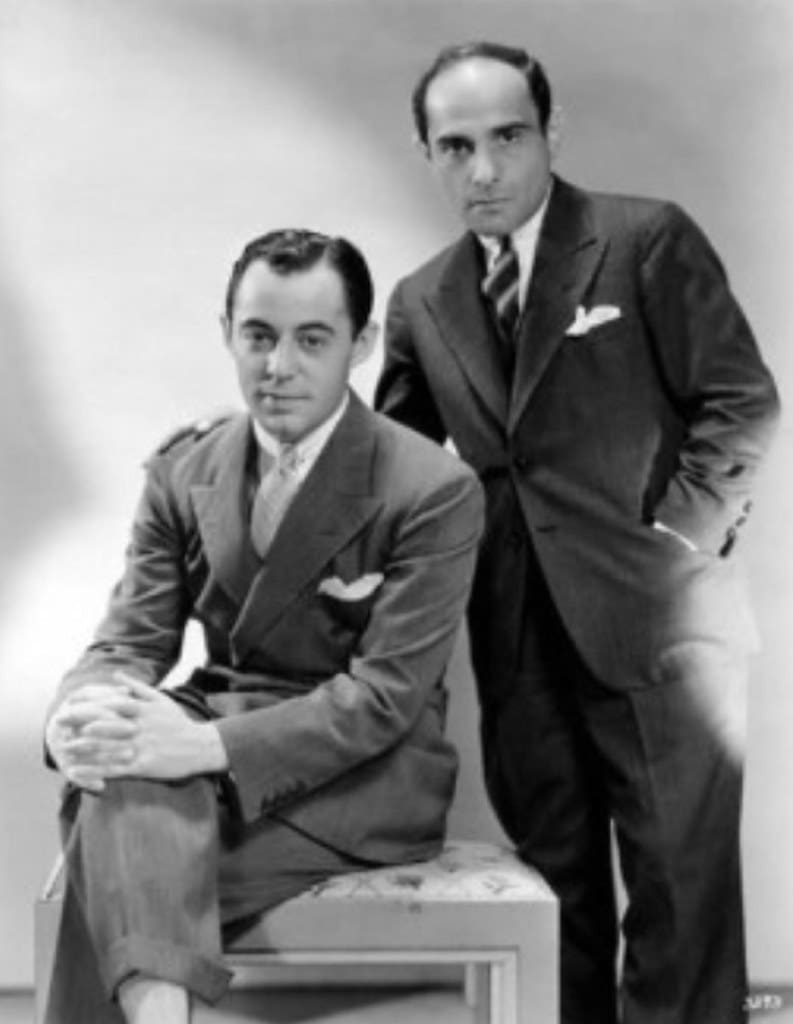
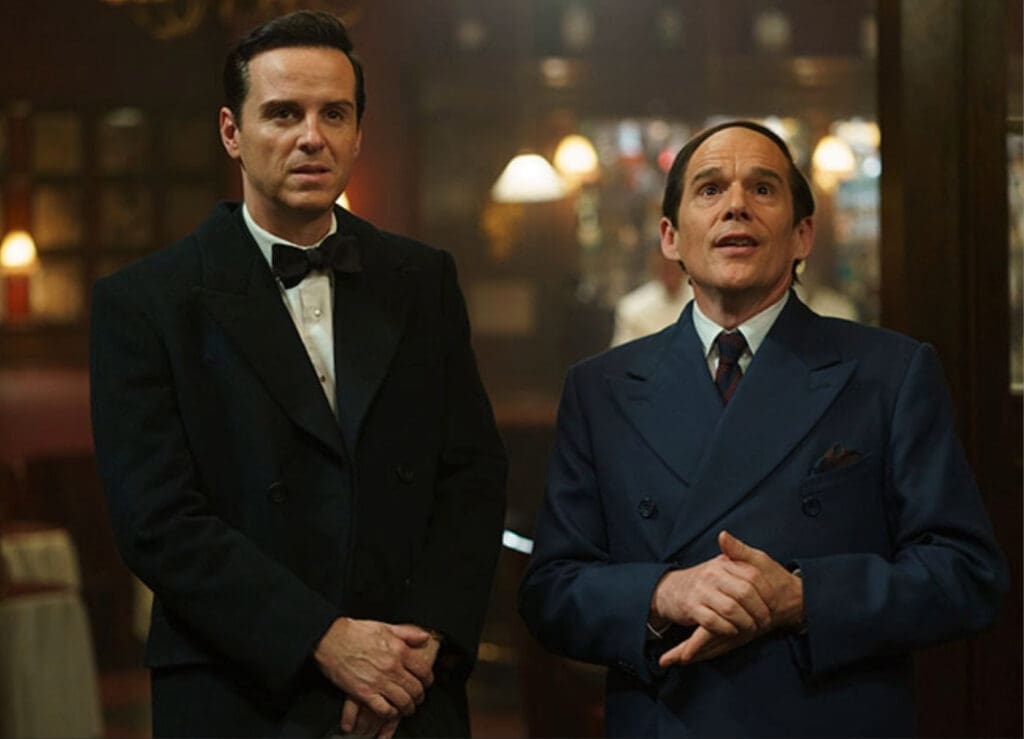
When asked if he views Blue Moon and the lyricist marred by loneliness it focuses on, as an ultimately tragic tale, Kaplow says: “It is a tragedy, and yet he’s far from blameless in the tragedy.
“He’s a very self-destructive character, and I think was for most of his life. I think he’s someone who probably, on some level, didn’t really like himself, and needed the company of other people to assuage that depression.”
Kaplow recalls the words of Alan Jay Lerner, who was Hart’s protege towards the end of his life and would go on to write the lyrics for My Fair Lady and Camelot.
“Lerner says that Hart said to him, “I could have been a genius, if only I cared”, it’s Hart saying I had the talent to have been really remarkable, but it didn’t matter to me that much.
“It’s a sad line to say at the end of your life. And my hope about the film is that it’s this sort of valentine to this sad, brilliant, largely forgotten man,” Kaplow says.