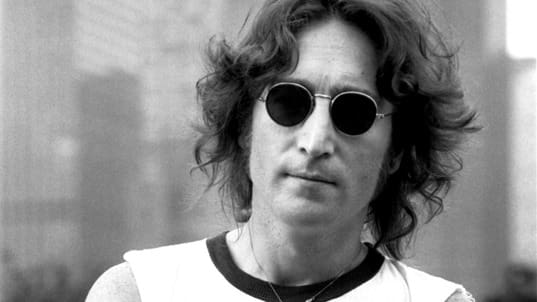
The 2009 feature ‘Nowhere Boy’ helped launch the careers of Sam and Aaron Taylor-Johnson, bringing John Lennon’s pre-fame years to the big screen. Covering life at Mendips and the conflict between his mother Julia and Aunt Mimi, the film promised to uncloak a story never properly told before. Yet for those who actually lived that history, a haunting question lingers: what happens when your family’s sensitive stories are rewritten from a filmmaker’s imagination?
No one is better placed to challenge that dismissal than Julia Baird. As Lennon’s younger half-sister and author of ‘Imagine This: Growing Up with My Brother John Lennon’, Baird didn’t research this history, she lived it. Although ‘Nowhere Boy’ claimed to be based on her memoir, the final product left her entirely estranged from the project. “I disassociated myself from it as soon as I saw the rushes,” she says, calling it “a travesty of fabrication.” For Baird, a guardian of her family legacy, the “only a film” defence minimises the real-world impact of altering the public’s perception of people no longer here to defend themselves.
Historian Colin Hall provides equally powerful grounding. After taking early retirement from teaching to accept the role, he served as the National Trust custodian of Mendips from 2004 to 2024. For the first decade, he relocated his family from Derbyshire to live inside the property, sleeping in the small back bedroom historically allocated to student lodgers.
Hall quickly learned that the full-time position required far more than just showing visitors around four times a day; it demanded intensive maintenance to keep the public spaces in immaculate show condition. Through a constant routine of dusting, cleaning, and gardening, he left everything exactly as it would have been when John occupied it. This immersive custodianship drove him to conduct deep research to ensure his presentation was accurate

The film depicts Mendips as a place of emotional sterility. Hall’s research tells a different story. He tracked down and interviewed the post-war university students whom Mimi had taken in as lodgers to make extra money during Liverpool’s severe post-war housing shortage, uncovering a household far warmer than the one portrayed on screen. One student recalled a visit where Julia grabbed John’s guitar and launched into Maggie May, a notoriously ribald Liverpool sea shanty. Rather than disapproving, Aunt Mimi joined right in because she knew every single word, leaving both John and the lodging student not knowing where to put themselves. “To me,” says Hall, “that’s a woman with a sense of humour,” one the film never thought to show. Hall emphasizes that Mimi was simply trying to do the best for John, just as Julia was.
That picture was reinforced when Pete Shotton, a founding Quarryman and John’s longest-standing school friend, turned up unannounced at Mendips while Hall was gardening. He spent hours wandering the property, and his portrait of Mimi cut against decades of stereotype. “She doted on John,” Hall recalls Shotton telling him. “She was strict because she could see he could be wayward.” Julia, too, is rescued from caricature. Hall believes she “did the best she could in the circumstances she was gifted,” and that the bond she shared with John in his teenage years was deepened through their shared love of music as much as by blood.
Hall was born in Woolton in 1957, the same neighbourhood and the same year as the church fête where the Quarrymen played and John first met Paul. He attended that fête but admits he cannot remember the band, as he was completely distracted by police dogs jumping through flaming hoops of fire.
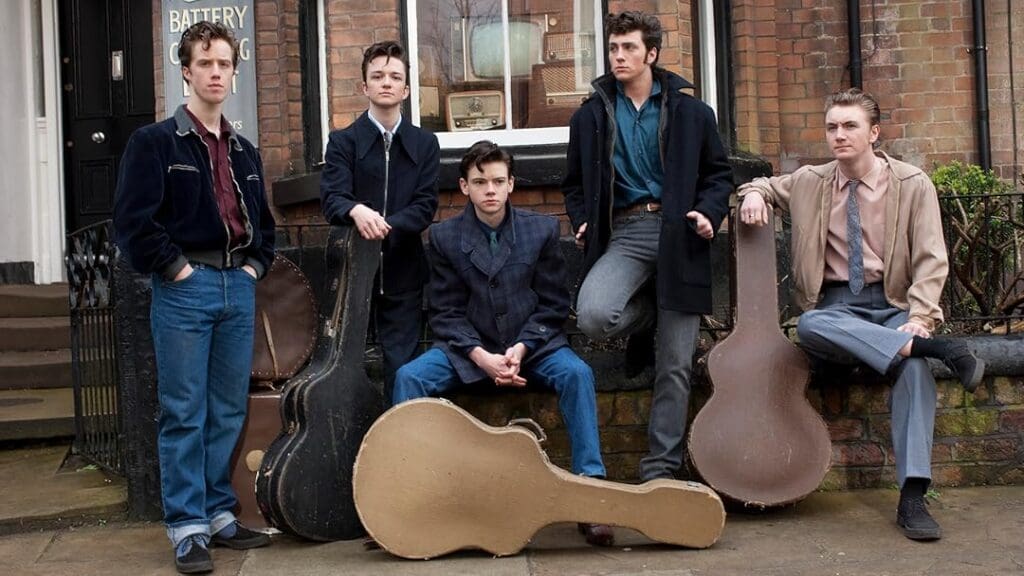
Nonetheless, he later befriended Colin Hanton, the Quarrymen’s original drummer, who was present for every formative milestone: the first Cavern performance, the first recording session, and the arrivals of both George and Paul. Hanton wanted to accurately write down his story for his granddaughter so she wouldn’t receive a second-hand Hollywood script. Their collaboration produced the book ‘PreFab!’, a title referencing Liverpool’s post-war musical boom and the band which predated The Fab Four.
Hall also corrects the mythology surrounding John and Paul’s first encounter. In ‘Nowhere Boy’ it is treated as a moment of sudden cinematic fate, but in reality it was a deliberate act of neighborly introduction. Ivan Vaughan, who lived directly behind John’s house, was close friends with both boys despite them attending different secondary schools. Knowing that John had a band, Vaughan had the “bright idea” to “introduce my music playing friend Paul McCartney to my music playing friend John Lennon”. He brought Paul to the fête specifically to effect that meeting, meaning there was nothing accidental about it.
This drive to preserve historical truths over fictionalised Hollywood scripts is precisely what continues to motivate Hall. To expand on the memories captured in his book, he is currently involved in a new documentary project. By sharing a trailer for the upcoming film, Hall aims to provide an exclusive, first-hand look at the reality of the era, offering audiences a direct alternative to the dramatized narratives popularised by mainstream cinema.
As Liverpool grows into a globally recognised centre of musical tourism, Hall believes the responsibility to get this history right has never been greater. Having watched the city transition from an era where it kept the Beatles’ legacy “at arm’s length” to fully embracing it around 2004, he deeply values the city’s musical identity. “Everybody should sing from the same song sheet,” he argues, adding that “everybody should have the same facts and they should be accurate facts”. To combat the spread of falsified legends, Hall even advocates for a formal qualification or a “little badge” recognised by the local council or University to ensure that every local guide has “reached a certain standard”.
When filmmakers retreat behind the defence of it being “only a film,” they underestimate cinema’s power to overwrite reality in the public consciousness. Aunt Mimi was not a cold antagonist and Julia was not an irresponsible mother. They were two sisters navigating an extraordinary and often painful family dynamic, bound by their shared love for a boy who would go on to reshape modern culture. The true story of John Lennon’s youth needs no Hollywood embellishment. The reality, found in the hallways of Mendips, a sister’s protective memoir, and the memory of two women singing together in a front room in Liverpool, is far more human and infinitely more valuable than anything a screenwriter could fabricate.