From a mother’s touch to the blood, sweat and tears that dye the clothes from the inside out with the final group. In the Andes, the first thought is warmth, and the second is how to get it. Costume designer Julio Suárez shows us the thought process and truthful inspiration behind J.A. Bayona’s masterpiece.
To Julio Suárez, these clothes weren’t just costumes; they were the last strands of a civilisation that was being stripped away.
In 1972, Uruguayan Air Force Flight 571 crashed into the freezing Andes, resulting in one of the greatest stories of survival, horror and mortality
A plane carrying 45 people on board, mothers, fathers, friends, the crew and the team of the Old Christians Club rugby team who were travelling from Montevideo in Uruguay to a match in Chile.
33 lives survived the accident, but only 16 men remained when rescued after 72 days stranded in the Andes in Argentina with no food.
They survived on the bodies of the fallen.
This is the third film that has been made of the ‘Miracle in the Andes’, with ‘Survive!’ in 1976, directed by René Cardona Jr., and Alive in 1993, directed by Frank Marshall and starring Ethan Hawke, coming before it.
In 2023, ‘La Sociedad de la Nieve’ [Society of the Snow] was released by Netflix under J.A Bayona’s direction. The film is grittier, realer, and more visceral than previous incarnations.
Suárez was tasked to capture the gritty truth in J. A Bayona’s vision, through the costumes, documents the invisible 72 days in between, requiring him to become part historian, part psychologist, and part forensic weaver.
How did you get involved in this project of this magnitude?
“My participation in the movie came from a call I got from the director [J.A Bayona]. He is a Spanish director, and was looking for a costume designer from this area, from the Rio de la Plata, where the accident happened.
“I suppose he chose me because of my previous works, so that I would be in the movie. But, mainly well, he wanted a costume designer from where the accident happened.
“I am Argentinian. The entire group that had that accident was from Uruguay, a neighbouring country. As you know, we have a lot of connections. It’s like a very sisterly country. A river separates us. It’s good that we go and come together.”
How did you prepare for this role?
“I started to investigate. I remembered this accident. I had information, I had it in my memory. I even had magazines and newspapers from that time. It was an accident that had a big impact here. I lived it in some way, even though I was young, a teenager.
“So, I started to work on the investigation. I studied the families of each character. Although it was a very collective movie, each character had their own particular story to tell to the world that we wanted to tell, and my work turned out to be very valued by the director.
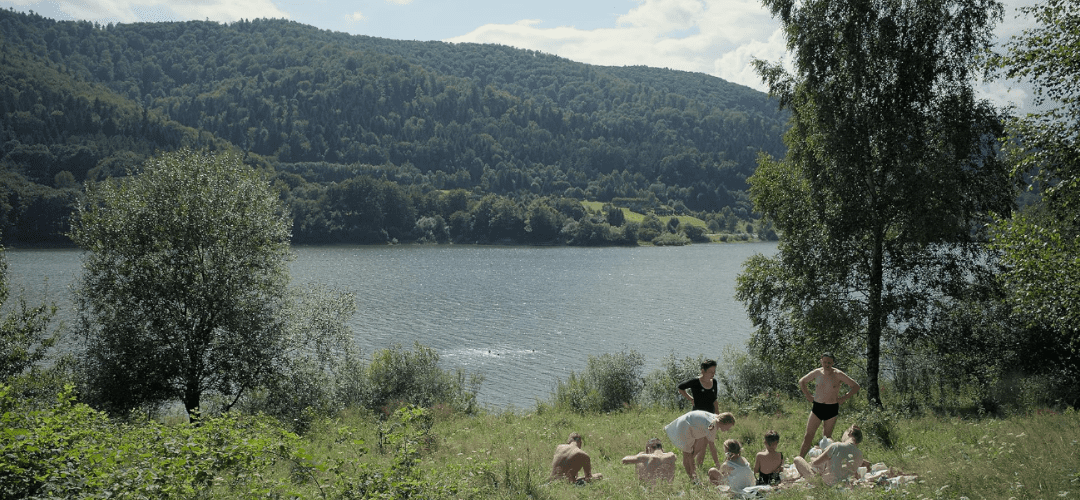
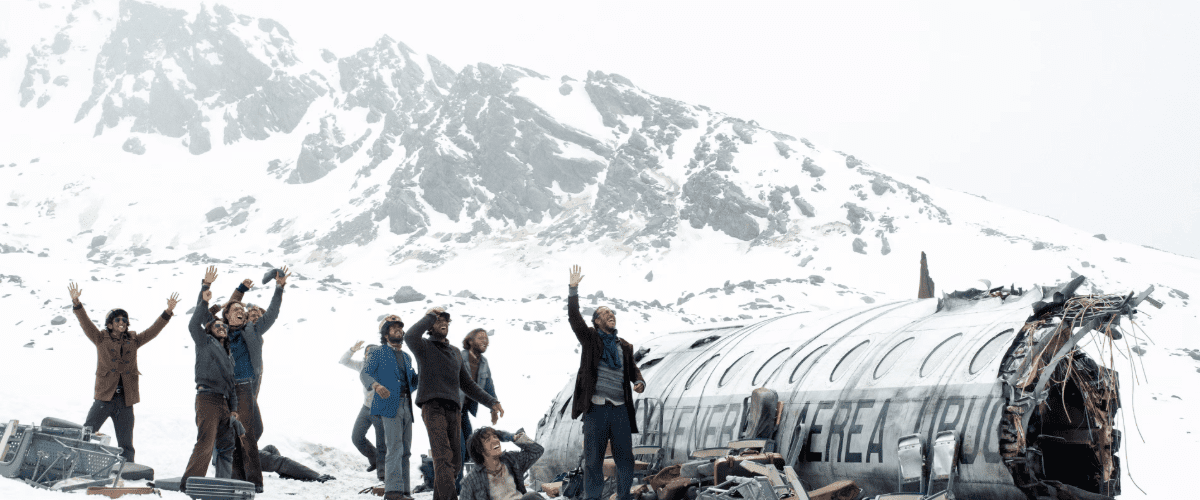
“I was also heavily inspired by the real images. I had the image of the beginning, the photo they took at the airport before leaving, and the image of the rescue. And everything else in between was my imagination and vision.”
How did you put that into each costume?
“I tried to look for each garment with a photographic guide and with an interpretative thought for each of them, and so we planned each of the characters, presented them in the story, and then I worked on the garments.
“I contributed dramatically to what was happening in the scenes, and as I started to work on each garment, I had to replicate it several times, to use it at the right moment and to give the garment the drama of what the body had suffered in this event.”
How did you achieve this?
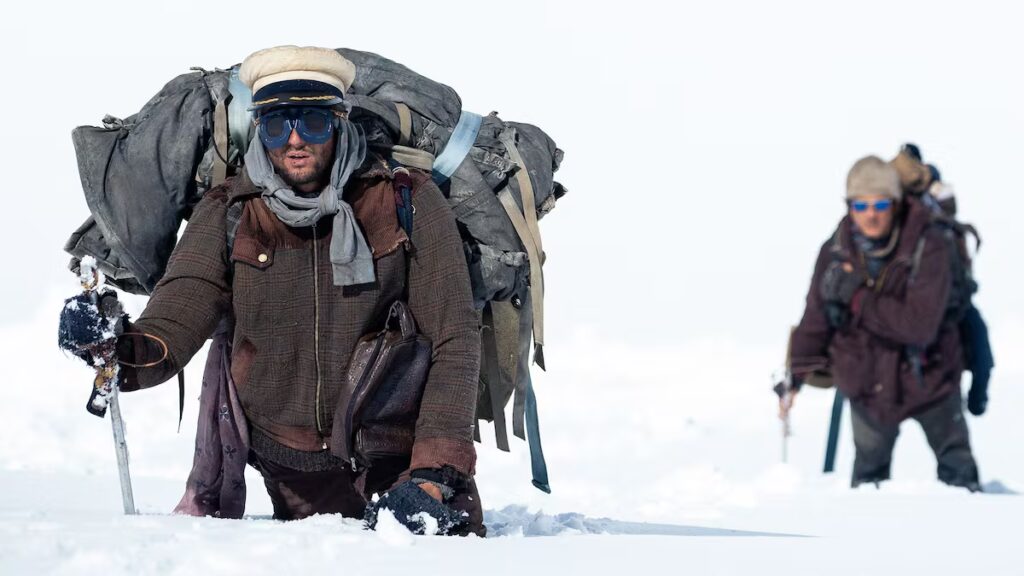
“The precision of the wardrobe, I looked for original fabrics; I didn’t work on noble fabrics like wool, cotton, or cloth. Those fabrics do not show the wear and tear and the industrial aspect.
“I sent a lot to be hand-knit. I had that original vision to give the time period in the 70s. They were almost homemade garments.
“It was a group of young boys from a Catholic school. It was a reference that I wanted to leave in, I wanted to show the uniformity of the school, the hands of the mothers in each body, to show that they hadn’t yet left their homes.
“I wanted to tell garments with stories, garments with touch, warm garments that covered the body, but not in an external way, but as cherished pieces. I even thought about the perfumes of each one, something that would further identify the character.”
How did you show the truth and time of the situation, paired with your creative vision, through the costumes?
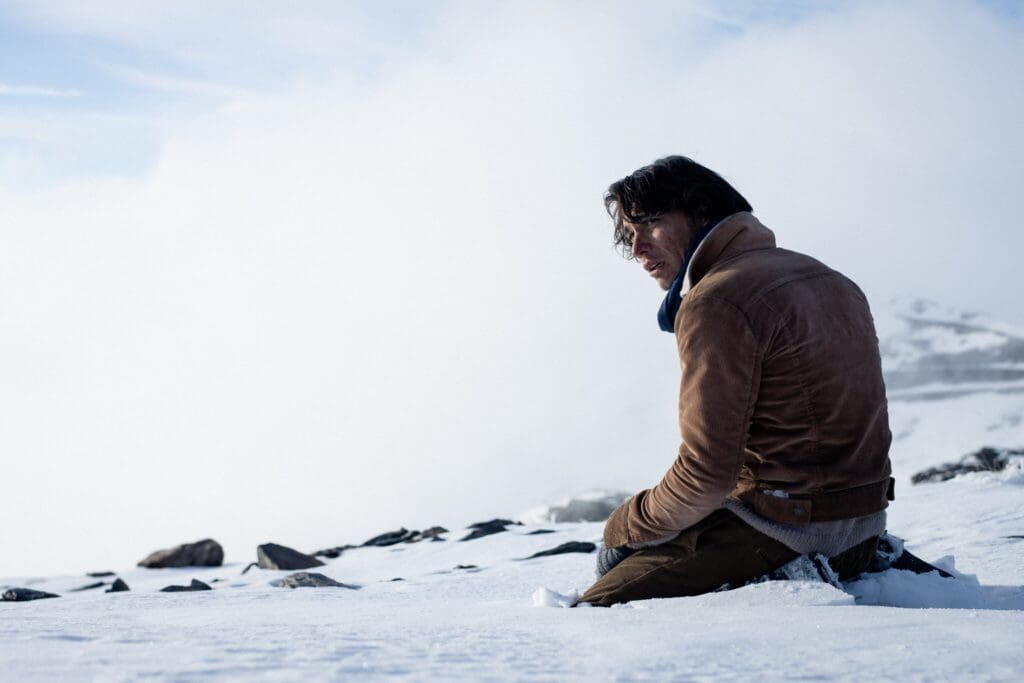
“Look closely at each garment, each actor, each character, with an excessive, very dedicated treatment of wear and dirtiness. I always wondered, ‘How was the garment worn in the mountains, in the snow, that almost inhospitable place?’ and ‘How about wear, when there is no materiality of another colour to dye the garment and show the passage of time?’
“My first intention was to think that the garment got dirty from the inside out, as if each body, in its sweating, in its drama, in the way it was.”
And was it the body?
“I think the body was what began to stain and dye through its sweat, through its cold, its heat, everything it was going through, and I thought of an internal wear outward.
“Then the avalanche, the accident, the blood of the companions, the friction, the tears from certain movements, but I thought of it as something internal, like expressing what was happening inside so that it would pass through the wardrobe and the clothes.”
There have been three films about this tragedy. How did you make this one stand out?
“Regarding the three versions, I didn’t watch any of them again.
“I remembered the first film, and I didn’t experience anything beyond what I had heard as a child about the real event, which was very shocking because the first film didn’t convey the ‘not knowing what was happening’ to me.
“And here I found a director [J.A Bayona] very dedicated to telling every minute of this absence of civilisation, of this solitude, of how to keep living, how to endure.
“So every morning I dressed each character before filming, I invented knots and ties, and contained within the wardrobe, what was happening to each one, constantly working on each body, such as with Agustín [Della Corte], who played ‘Tintín’, when he climbs the mountain, the garments are embedded into his body, with the discolouration pouring through. “
Just like in real life, the cast seemed genuinely close, like the survivors. Was this the case?
“Every day of filming, everyone was involved. Not like other films where suddenly there’s a scene with three actors, then five, then ten, and each one is called depending on what is going to be filmed.”
“In this film, we were all there, all the time. It was an ensemble, and that makes it very conscious, very collective, even if the others weren’t seen.”
Were you this meticulous with the whole cast?
“I thought of each deceased person, each body that ceased to exist; those who remained would take some of their clothing.
So what one person used at first, I later wanted another person to take.
“With those scraps of how they removed each piece of clothing, I tried to make it serve the next person.”
So you limited yourself?
“I limited myself to using what was there and not bringing in new things from elsewhere that hadn’t been seen before filming began.
“I have this wardrobe, I have these clothes, I have these people dressed, I have suitcases on the plane with some clothes they had brought. Well, that’s what I’m going to use.
“With that material, I want to show and limit myself to telling the story. So everything was about how each thing that remained was transformed”