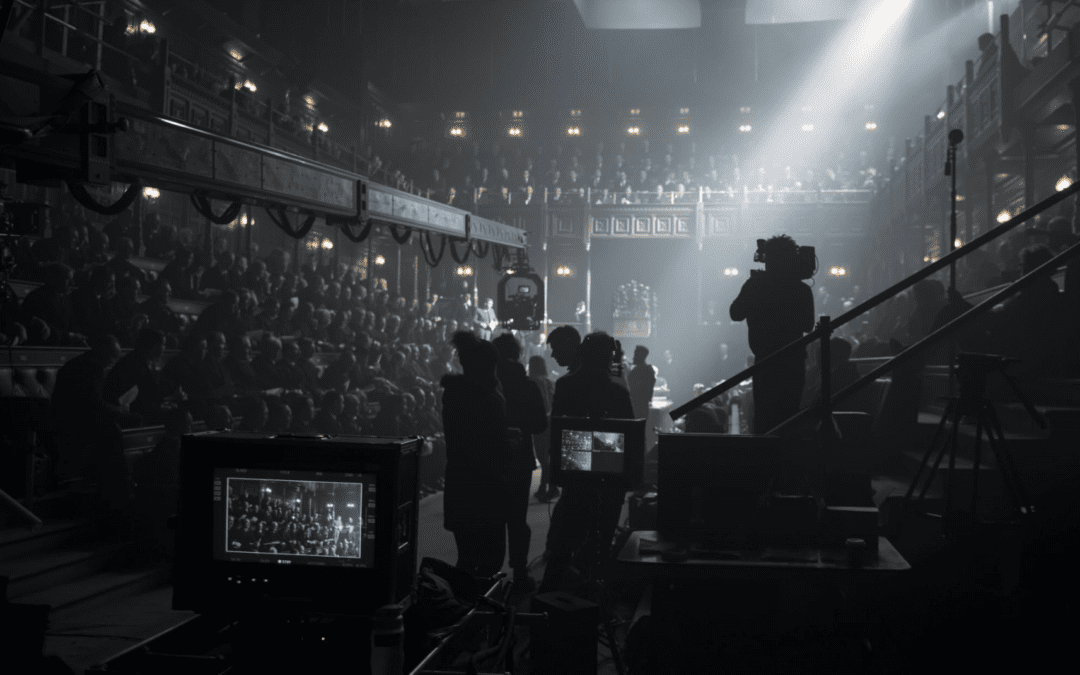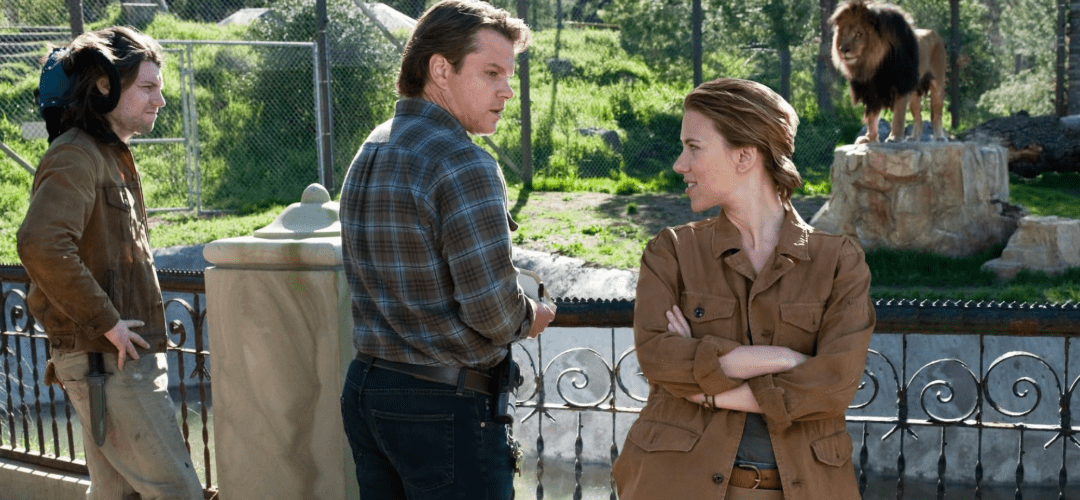
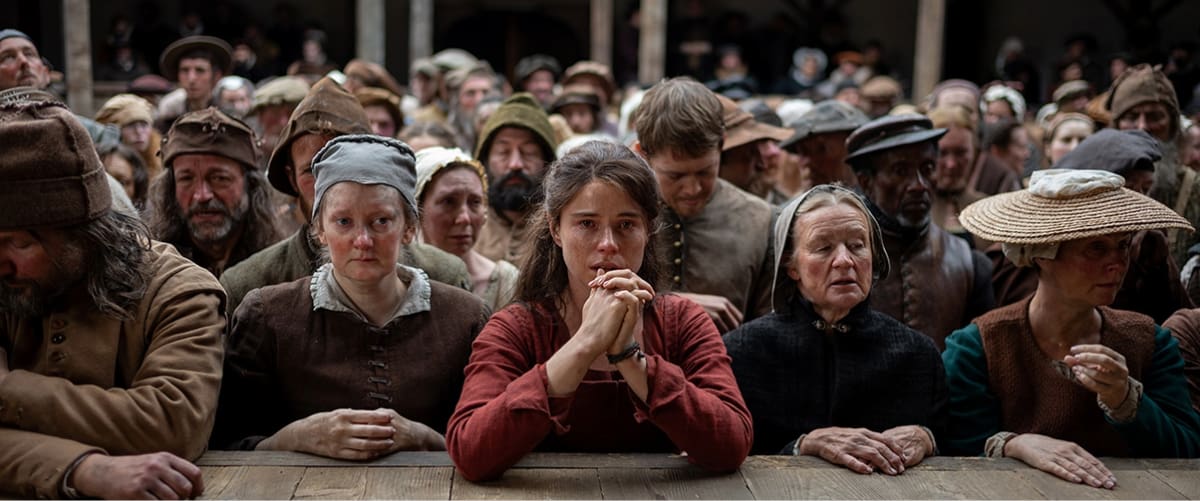
Have you ever watched a historical film and felt something wasn’t quite right? Be it an out of place prop or unconventional costume, all it takes is one little inaccuracy to rip audiences out of their immersion. So, how does a film’s production team navigate historical world-building, whilst preserving the story they want to tell? I spoke to three acclaimed industry professionals about their roles, and the importance of historical authenticity in their projects.
If there’s anything movie-goers like, it’s a good story. Be it the tale of two-lovers whose happily-ever-after is capsized along with the Titanic, or the legend of a gladiator who topples a corrupt emperor in his dying-breath. Audiences want to be immersed in the lives of these characters.
In ‘Titanic,’ the claim by Rose’s mother about the ‘unsinkable’ ship was massively overstated by filmmakers for the sake of prophetic storytelling. Likewise, in ‘Gladiator’ Emperor Commodus’ death wasn’t at the hands of Maximus in a final act of revenge, but rather a professional wrestler named Narcissus whilst he laid in a bath.
Small, negligible misconceptions, right? Wrong. With the growth of the internet, the average audience member is more educated now than ever. Discourse around films grounded in history has transitioned from recounting memorable scenes and character moments to in-depth analysis of their authenticity.
So, how do the people behind the pictures navigate this, how much weight does historical accuracy hold, and can a film rooted in real-world events still offer an avenue for artistic expression and creativity? To explore these considerations, I spoke with Oscar-nominated production designer Fiona Crombie, set decorator Niamh Coulter, and art-director Steven X. Haber about their experiences balancing facts with their own artistic impulse in some of Hollywood’s latest historical blockbusters.
“I think it’s just how my mind works! I seem to have a way of translating words into colours and textures and spaces.”
Fiona Crombie is a master of her craft, and with Oscar-nominations for production design in 2019’s ‘The Favourite’ and 2026’s ‘Hamnet’ she’s no stranger to historical world-building. Here, she illustrates her conceptualisation of film-scenery:
What does your creative process look like?
“When I read a script, I will have instincts about the way the film should look. They are vague and sketchy ideas, but I will always have an immediate sense of colour and texture. I then start gathering images that go some way to illustrating and articulating these ideas. Over time, with lots of thought and conversation we arrive at designs.”
How do you collaborate with directors throughout a project like Hamnet?
“Different directors require different levels of communication and control. Chloe (Zhao) was very open to me interpreting many elements of the film. At the very beginning I provided her with images that I felt illustrated the look of the film – colours, textures, architecture, details. She felt a connection to the images. It was very collaborative. We worked together to refine ideas to their clearest articulation. Chloe is excellent at determining the essential.”
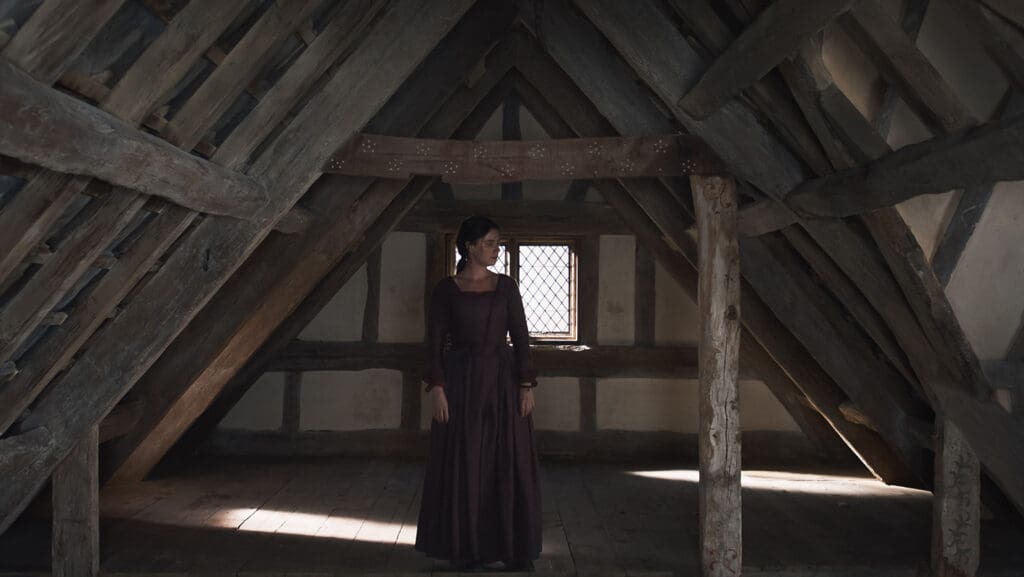
Did you consult any historical sources during the design process?
“We always speak to advisers when we can. For Hamnet we had experts in foraging and medicinal plants, glove making and bee keeping. The book Hamnet is meticulously researched so that was an amazing resource.
“It is very important for us to understand the factual reality of a story or a period so that we can make informed decisions about what to follow and what to leave behind.”
Were you conscious of avoiding any historical misconceptions?
“What we aim for is environments that feel accurate and appropriate so that the audience is never taken out of the story because of the design.
“I really loosened up and realised my priority is to create not to re-create.”
What is more important in filmmaking, historical accuracy or artistic license?
“I consider designing films as the same as creating characters. They are creative interpretations. I’ll always aim for what is right for the film rather than focusing on historical accuracy.”
With over 25 years of experience, Niamh Coulter is one of Hollywood’s premier set decorators. ‘The Northman’, ‘Dorian Gray’ and ‘Diana’ are but a few examples of her expertise when it comes to recreating history on the silver-screen. She walks us through her role on set:
As a set decorator, how do you prepare for a production?
“Generally, there is a long prep-period ahead of shooting which gives me the ability to hone ideas and then action them, this often involves manufacturing props and furniture.
“It begins with the script and an overall look for the film that will have been pitched and approved by the production designer/director and producers.”
How much do films like ‘The Northman’ draw on historical facts versus mythology?
“Robert Eggers is very bedded in total historic accuracy, so anything we designed or suggested to use for The Northman had to have a proven historical provenance.
“A project that is more loose, or has fantastic elements, allows you the freedom to cherry-pick from periods, this is a lot of fun to do and lets your imagination run wild.”
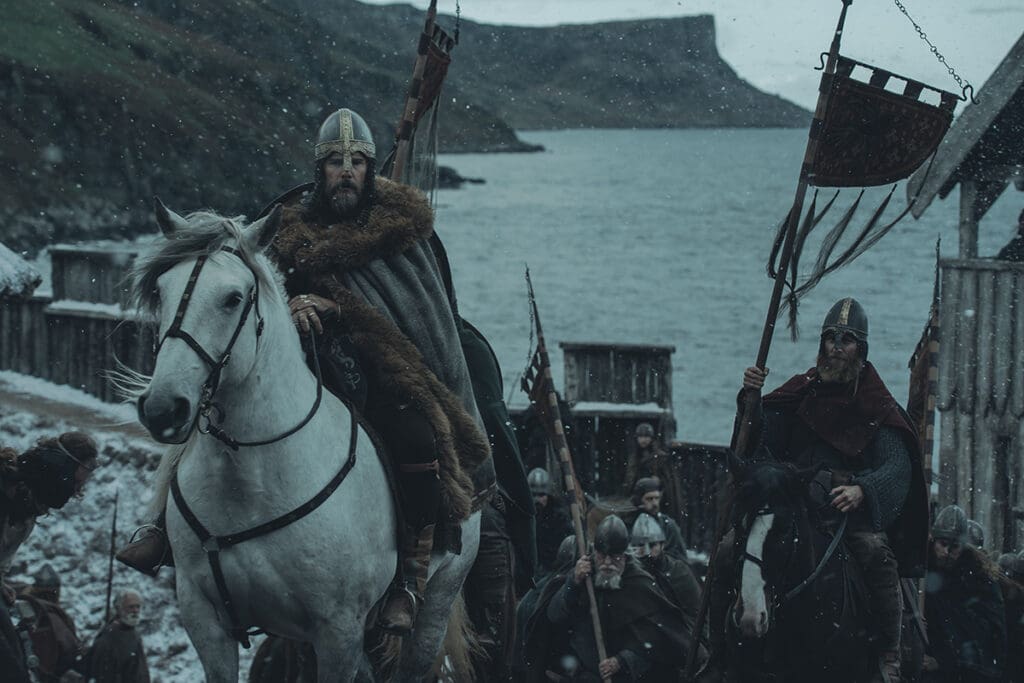
Ethan Hawke stars as King Aurvandil in director Robert Eggers’ Viking epic THE NORTHMAN, a Focus Features release.
Credit: Aiden Monaghan / © 2021 Focus Features, LLC
How do you address concerns about historical inaccuracies during a film’s production?
“I would worry about that and have often pointed out and addressed issues along those lines in scripts, so we don’t resort to tropes or clichés in our world building.
“Sometimes decisions are made that go against the historical grain for narrative reasons and those are very hard to argue with.”
Have you ever opposed a creative decision in favour of something more historically accurate?
“I’ve done period films in the past where, for example, the lighting of the set can become quite contentious as I prefer this to be historically accurate (gas, candle, oil lamps etc). With so much practical lighting being used, to light the set and the actors, this can lead to some issues with the lighting department. Generally, a little negotiation goes a long way and compromises can be reached.”
When do you feel it is appropriate to bend historical elements in films?
“Unless it’s a narrative or character choice there really shouldn’t need to be a need!”
Steven X. Haber is a man of many talents. Foremostly, an art director, with credits for ‘Gladiator II’ and ‘Napoleon,’ Haber has a keen eye for historical detail and marries this with his background in architectural design. He reveals his contributions to a film’s aesthetic:
What is your role as an art director during production and how do you realise a director’s creative vision?
“My role is primarily to interpret and execute the production designer’s vision, working hand-in-hand with them to ensure the art direction fulfils the brief of the set. While designs are always malleable and evolve through discussion, every visual decision ultimately prioritises the director’s narrative needs while working with every department.”
What kind of historical resources do you draw from when developing your designs?
“We are often fortunate to have dedicated researchers who supply the art department with hard-to-find, historically accurate references; they are a godsend for our workflow efficiency. While the production designer may consult specific experts for broader context, our team usually relies on these researchers to provide the visual evidence we build upon. We also conduct research by sourcing original architectural plans, visiting museums, and photographing real-world spaces to ensure every detail is absorbed in reality.”
Does your approach to historical fiction, such as ‘Gladiator II,’ differ from more biographical films?
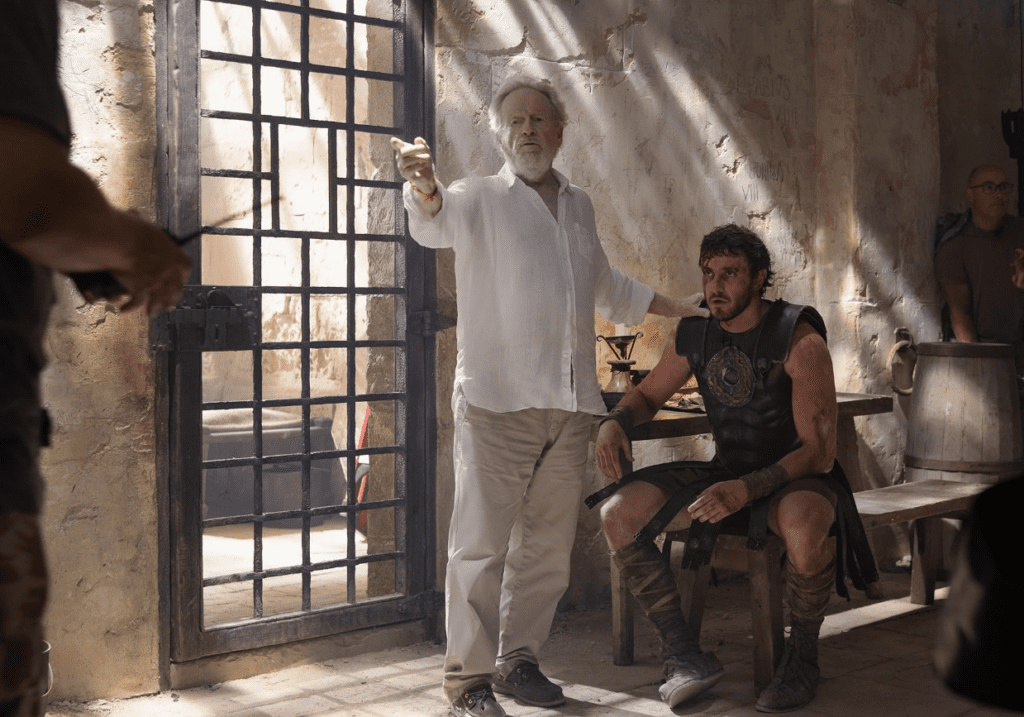
“There is actually less pressure in historical fiction because we are sometimes catering to a modern perception of the era, such as the ancient feel of weathered stone, rather than the shiny, colourful reality of Rome at the time. The goal is to create a cohesive universe that feels authentic to the film’s feeling.
“Cinema creates its own visual culture where audiences expect certain aesthetics, and we sometimes have to lean into those expectations rather than fight them. We rely on the designer’s instincts to navigate this, ensuring the visuals feel emotionally right even if they aren’t always factually perfect.”
To what extent is historical accuracy a guiding factor in the projects you work on?
“Being historically informed is the baseline, but the ultimate question is always: Does this serve the story? History in itself is full of anachronisms and borrowed styles, so why not film too. Capturing the spirit of the time often outweighs the need to be accurate to every square-inch. Poor Things (designed by Shona Heath and James Price) comes to mind, which is meant to be based on an alternate Victorian era, which Frankensteins architectural styles to suit the themes of the story.
“A designer can never be too cautious, but an obsessiveness to absolute accuracy could be a hindrance too and stunt the creative process.”
There you have it, testimonies from crew members who have worked on Hollywood’s most recent historical hits. Whilst it’s no doubt true that historical accuracy is of great importance to everything movie makers do, with dedicated history experts on set to consult over the minutest details, this is simply a foundation. Visual storytelling is everything, and what internet critics call ‘style over substance’ couldn’t be further from the truth. At the heart of these big-budget productions are passionate, innovative creators finding new methods of translating history in a way that is dynamic and engaging to us, the audience. So, the next time you read an article nitpicking the tiny details, consider the film’s ideas, emotions and the big picture.