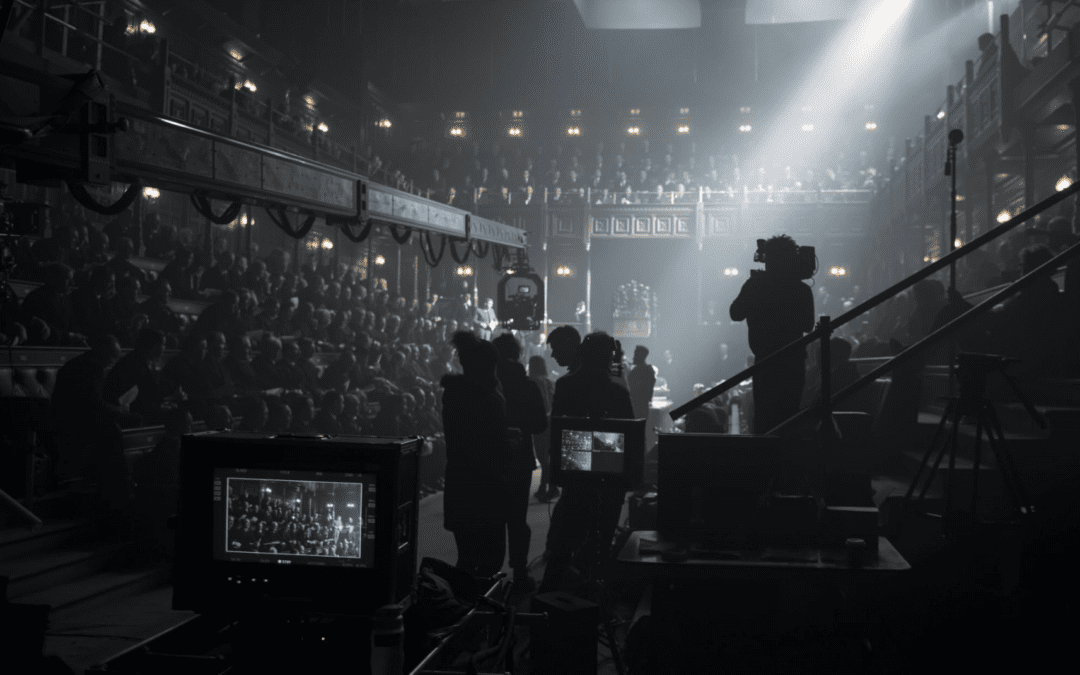
Jack El-Hai published the book The Nazi and the Psychiatrist in 2013; last year, it was adapted into Nuremberg, a film depicting the psychological standoff between Hermann Göring and psychiatrist Douglas Kelley before the Nuremberg trials. But what inspired El-Hai to delve into the psychiatrist’s story in the first place?
While researching another book, Jack El-Hai learnt of a psychiatrist who arrived at a conference, not to deliver a talk or a paper, but to give a magic show.
This, in turn, led to his discovery that this psychiatrist, Douglas Kelley, was responsible for analysing the highest-ranking remaining Nazi officials ahead of the Nuremberg trials.
El-Hai visited Kelley’s son, who presented him with 15 boxes worth of material his father took from Nuremberg, unseen by anyone outside the family for more than 50 years.
“One of the first things I saw was a jewellery case full of little red pills labelled Hermann Göring’s paracodin, that he had been addicted to at the time.
“But one of the strangest was a sealed-up package half the size of a shoebox labelled ‘biscuits Rudolf Hess refused to eat because he thought they were poisoned’, so I didn’t open that up,” he says.
In what would go on to be a ten-year period between El-Hai’s first finding out about Dr Kelley and publishing his book, it was the psychiatrist’s personality that first struck him.
“I was impressed by Dr Kelley’s intelligence and self-confidence. He thought he could do no wrong.
“He was a man of formidable talents, lots of flaws as well, but a lack of self-confidence wasn’t one of them,” he says.
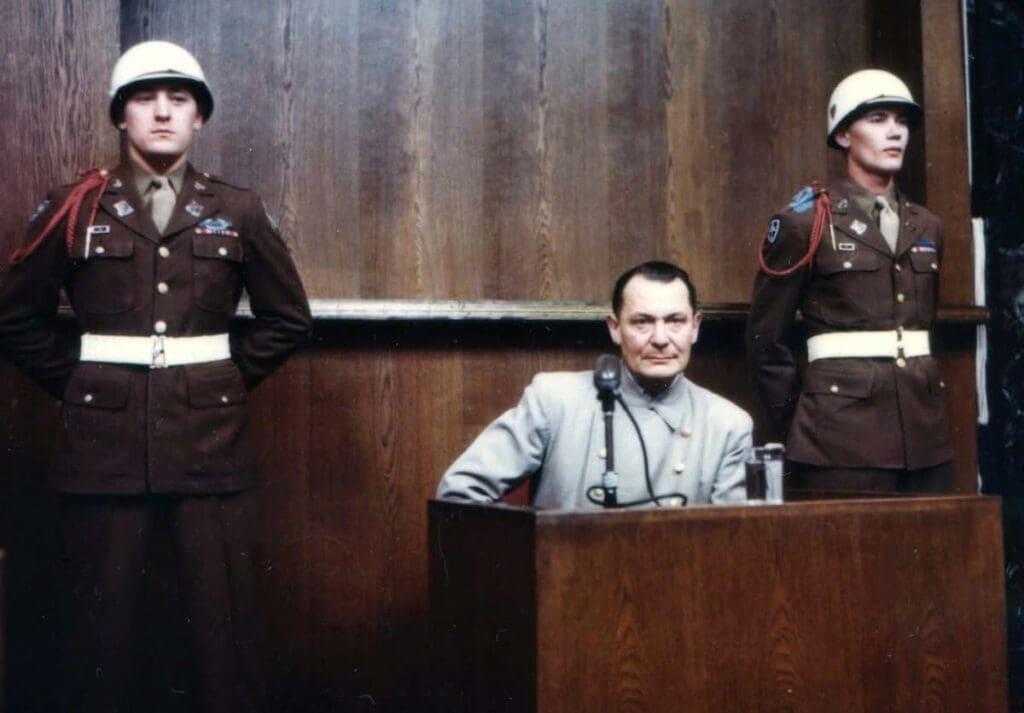
El-Hai says this was why he was the perfect man for analysing Hermann Göring, one of the most powerful figures of the Third Reich.
“Göring’s charm in the prison was legendary. He was everybody’s favourite prisoner, telling jokes about himself and Hitler. Kelley did his magic performances and could be the really appealing raconteur who knew how to work an audience.
“This was what made him a good person to go head-to-head with Göring, because he was so similar,” he says.
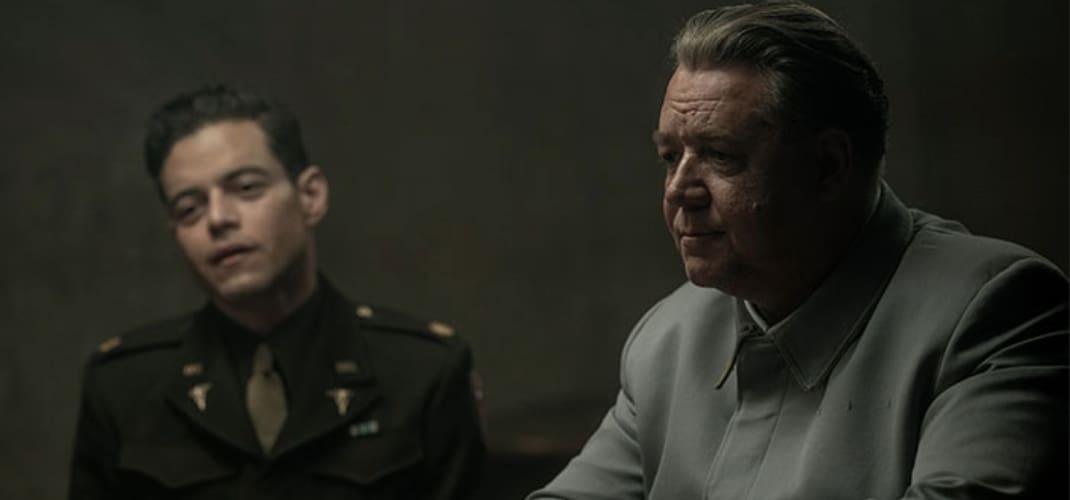
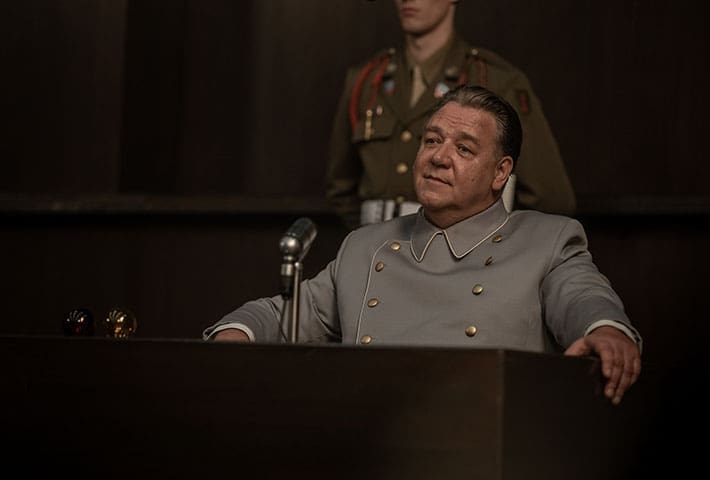
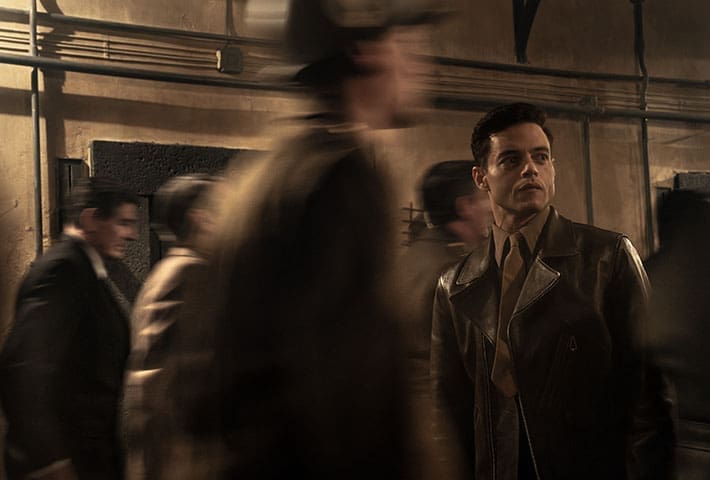
It’s this dynamic that Nuremberg centres on, with Russell Crowe portraying Hermann Göring opposite Rami Malek’s Douglas Kelley.
“They developed a relationship that I would never call a friendship, that was based on a mutual admiration of sorts that kept them talking to each other over the many months before the trial and after the trial began,” El-Hai says.
“It grew into an exercise of mutual manipulation. Kelley wanted access to Göring’s thoughts, beliefs, history and opinions. He undertook on his own initiative a study to determine whether these defendants shared a common psychiatric disorder that accounted for their crimes and heinous behaviour,” El-Hai says.
Kelley’s findings, and a key message behind El-Hai’s book that he ensured was carried across into Nuremberg, is that there was nothing extraordinary about these men’s mental state, instead, Kelley wanted simply to show “they were opportunists,” he says.
“Fascism, Nazism, authoritarianism, these are not German things, or Italian or Japanese things or any particular country’s things. They are distinctive to humanity and Dr Kelley’s message was that this can happen anywhere.
“These men weren’t madmen or monsters, they fell within a normal range of human personality and people like them can and do reappear at any time in any country. They knew the value of a radical extremist ideology but subscribed much more to their own values of acquiring power and taking advantage of whatever they could to get there rather than the ideology itself,” El-Hai says.
“The ideology was rungs on the ladder, but reaching the top of the ladder was desirable to them because of their hunger for power and domination,” he adds.
But Göring had his own reasons for entertaining Kelley, who El-Hai believes was the first military psychiatrist ever to be placed among war criminals.
“Göring wanted more access to his family. He had been separated from his wife and young daughter for a long time. And as time went on, he was trying out different aspects of the defence he would go on to mount in the trial,” he says.
Dr Kelley, as shown in Nuremberg, did deliver letters between Göring and his family without authorization, even though El-Hai believes the warmth with which Kelley is welcomed by them in the film is slightly exaggerated, it’s one of the more extraordinary true interactions between Kelley and Göring regarding his wife and daughter that didn’t make it into the film.
“So it happened, and the movie doesn’t mention this, but Göring asked Kelley to adopt his daughter Edda, if something ever happened to both him and his wife and they could not raise her.
“When Kelley brought this up in a letter to his wife back in the states, she wanted nothing to do with Hermann Göring’s daughter, so he never accepted that offer,” El-Hai says.
Towards the end of the film, we’re shown the pair’s final interaction, where Kelley confronts Göring after seeing the extent of the horrors of the Nazi regime during the trial.
“The films from the concentration camps were a true shock, not just to everybody in the courtroom, but also to some of the defendants. It’s important to remember that in December 1945, news was still trickling out about what had happened there, and evidence was still piling up about the death camps,” El-Hai says.
“When Kelley arrived in Nuremberg in the summer of ‘45, I doubt that he knew much of, if anything at all about the concentration camps, and especially that a Holocaust had occurred within them,” El-Hai adds.
“The movie presents it as a cold, chilly parting. I don’t think it was cold, in the sense that Göring actually shed tears when he found out Kelley was leaving.
“He hungered for intelligent conversation, which Kelley gave to him. Many of them were sad when they learned he was leaving Nuremberg.
“But it was never a friendship. Kelley was much too aware of the dark and dangerous aspects of Göring’s personality to ever consider him a friend,” El-Hai says.
By the pair’s final encounter in Nuremberg, Göring had already been sentenced to death by hanging, a fate he deemed dishonourable for a high ranking soldier. His request to be executed instead by firing squad was flatly refused by the international allied tribunal.
“Göring at the time of his arrest most likely had with him the cyanide capsules, and that was the moment he used to make a statement to the allies. ‘I’m not gonna do it your way, you cannot control me, I’m doing it a different way’. So it was a dramatic, very theatrical statement he was making,” El-Hai says.
The next twelve years of Dr Kelley’s life following the events of Nuremberg are only briefly mentioned in the film’s concluding rolling text.
“His world turned upside down,” El-Hai says.
“He came to believe that if psychiatry couldn’t explain the behaviours of the defendants, what could? Over time, he gravitated towards the discipline of criminology that perhaps he thought could. But no one wanted to hear the message this could happen again,” he adds.
“More personally, he developed a drinking problem, his marriage went sour, and eventually he became very depressed before taking his own life in 1958, using the same method that Hermann Göring had, cyanide poisoning,” he says
The connection between the two men, and in particular their superficially similar deaths, was one of the key aspects that inspired El-Hai’s book.
“Because of the kind of men that Kelley and Göring were, and what they were trying to do by taking their own lives, when Kelley did so 12 years later he made it a spectacle by swallowing the powder in front of his family on the stairway so everyone could see him, it was dramatic too,” he says.
El-Hai explains that Dr Kelley’s unwavering search for answers that could explain the shared psyche of those on trial in Nuremberg stuck with him until his death.
“In terms of Kelley’s life, the most lasting effect was the shaking up of his confidence in psychiatry to answer the question ‘what makes men do evil?’ He found that it couldn’t. It was a big presence in his life, I think he thought about his time in Nuremberg for the rest of his life,” El-Hai says.