Centring on the life of Hugh Glass, a 19th-century fur trapper who survives a near-fatal grizzly bear attack, Tom Preston delves into the historical truth behind The Revenant for HistoFlick to reveal just how far the triple Oscar-winning epic strays from reality.
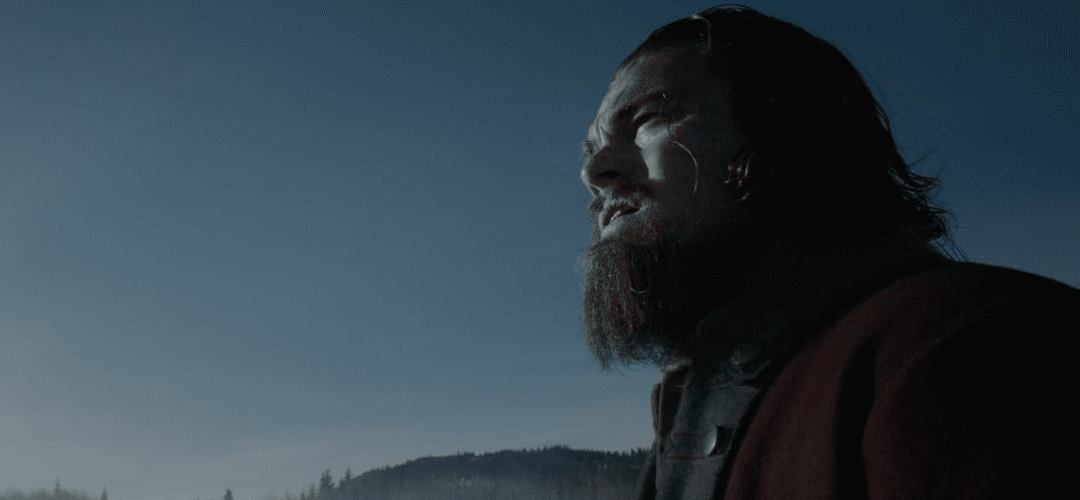
One of the most infamous scenes in The Revenant is the one where Leonardo DiCaprio’s Hugh Glass is mauled nearly to death by a grizzly bear and abandoned by his men.
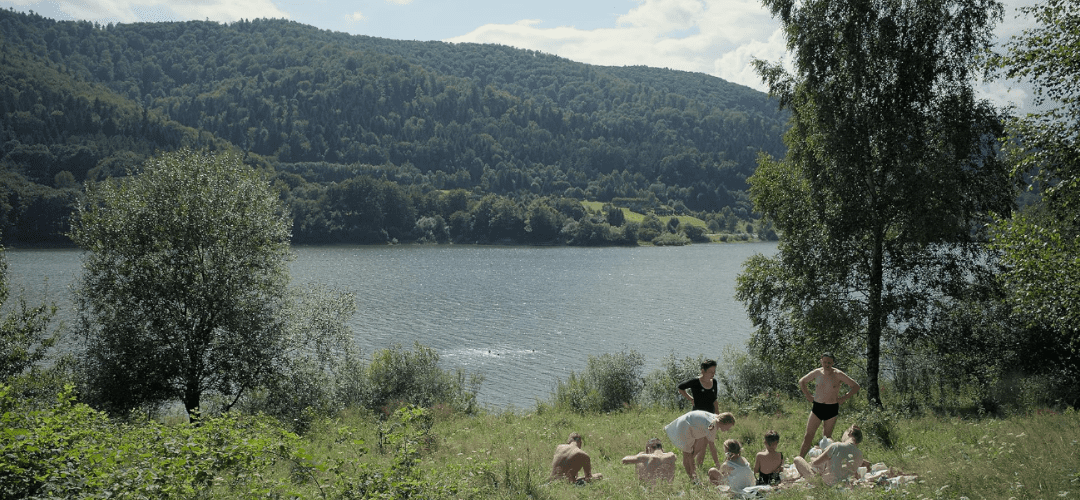
At its core, a tale of vengeance, we follow Glass’s journey after the ordeal with the stunning backdrop of the Canadian mountains masquerading as the American Rockies. It’s not hard to see how one of the film’s three Oscar wins was for cinematography.
The Wilderness Technical Advisor on set of The Revenant, Clay Landry, ran boot camps for the actors, teaching Leonardo DiCaprio and other cast members how to shoot flintlock rifles, skin beavers, and throw tomahawk axes.
Landry’s first query for the films Art Director Jack Fisk?
“In the case of The Revenant, my first question to Jack Fisk was about the bear mauling and Hugh Glass’s 250-mile survival crawl that took place along the Grand River, which flows through Prairie County along the borders of South and North Dakota.
“So I asked him why are we up here in these Canadian mountains filming this story about an American mountain man?” Landry says.
The mountain men, as they were known, were groups of fur trappers like Hugh Glass, who roamed the North American Rocky Mountains hunting beavers for pelts to trade.
“Jack’s answer was that in just about every direction you see snowcapped mountains, wild rivers and native forests. This kind of backdrop and scenery provided by Mother Nature contributes to putting asses in movie theatre seats,” Landry says.
“The actual location of these historical events was replaced to enhance the camera angles and the viewer’s eye appeal,” he adds.
Filmed predominantly in Kananaskis Country – a vast protected area spanning Canada’s Alberta Rockies – the location was chosen for its ability to most accurately emulate the brutal conditions in which Hugh Glass would have operated on in the American frontier of the 1820s, where the Missouri River winds through present-day Dakota, Montana, and Nebraska.
Dr Stephen Tuffnell, The University of Oxford’s Associate Professor of Modern United States History, believes it would have been impossible for filming to take place in the locations where the actual events occurred.
“Given the extent of deforestation that took place in the US over the 19th century, you can really only find an environment similar to that in those parts of Canada. They’ve definitely done their best to capture the sense of the landscapes,” he says.
It was in South Dakota where Hugh Glass encountered the grizzly bear that nearly took his life while part of the Henry Ashley fur trapping company, alongside fellow trappers John Fitzgerald, played by Tom Hardy in The Revenant, and Jim Bridger, played by Will Poulter.
In the film, we’re shown Glass driven by revenge following the mauling when his son is murdered by Hardy’s John Fitzgerald, who then leaves him for dead.
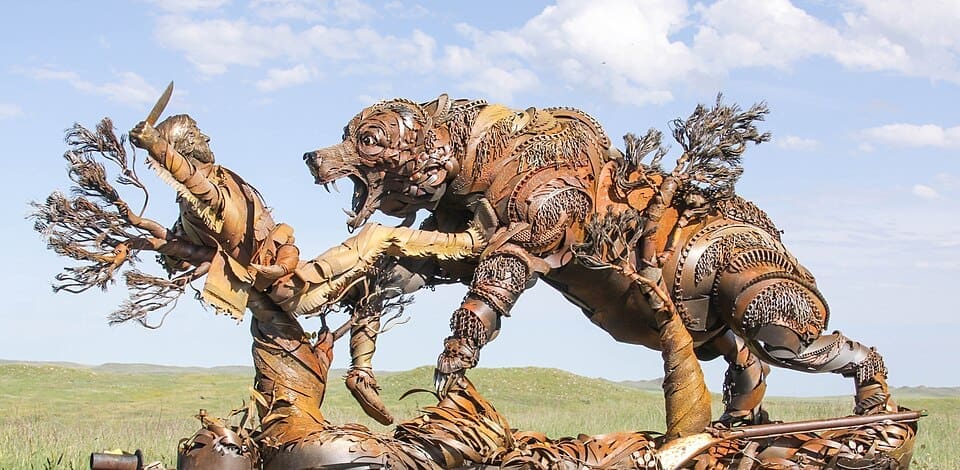
Professor of American History, Susan-Mary Grant, says: “Glass, like so many frontier characters, became a myth that is almost impossible to unpick now, but there’s no actual evidence that he had a son.”
Part of the difficulty in identifying the exact truth behind Hugh Glass’s story is the lack of first-hand accounts.
“Glass was a figure of folklore long before the film, partially because he represented the mountain man ideal; this way of life was dying out by the mid-19th century, but he was seen as an idealised aspect of the American story,” Professor Grant says.
“Everything we know, or assume, about Glass comes from second or third-hand sources, he didn’t really leave us anything to go on,” she says.
And as far as historians can tell, though Glass’s vendetta was against the two men, Fitzgerald and Bridger, it wasn’t for the reasons in the film.
In truth, after the mauling, the two were ordered to remain with Glass until his death, which the party saw as inevitable, and to give him a proper burial afterwards.
The two men abandoned Glass, taking his gun, knife and bag of supplies, leaving him for dead. What follows is where history differs from director Alejandro G. Iñárritu’s series of fictionalised events.
“Hollywood often changes the outcome of the conflict between the hero and the bad guy in frontier stories,” Landry says.
“In Glass’s case, any contemporary who heard his story – of being deserted while still alive from the bear mauling with no weapons, food or water – agreed that he had every right to shoot the two men who deserted him on sight,” Landry says.
“The historical record of Glass’s story reveals that neither culprit was harmed. However, The Revenant concludes with Glass having forgiven the younger man (Jim Bridger) but tracking down and killing John Fitzgerald in a bloody hand-to-hand fight,” he adds.
Following Glass’s 250-mile crawl from the site of the bear attack, surviving off of berries and insects, Glass eventually caught up to the men, where he forgave Jim Bridger, just as depicted in The Revenant.
But it’s the climactic final fight between Glass and Fitzgerald in the film that differs from history.
Accounts show Fitzgerald had by this point left the fur trade and enlisted in the army, meaning Glass was unable to seek revenge, as any act of violence against a US soldier was considered a serious crime.
Historians instead believe there was no physical altercation and that Glass’s belongings were returned, at which point he was paid £300 from the army as a form of compensation.
Dr Tuffnell believes that while Glass’s retribution is a key driving force in the film, the American frontier may not have operated quite as lawlessly as Iñárritu leads us to believe.
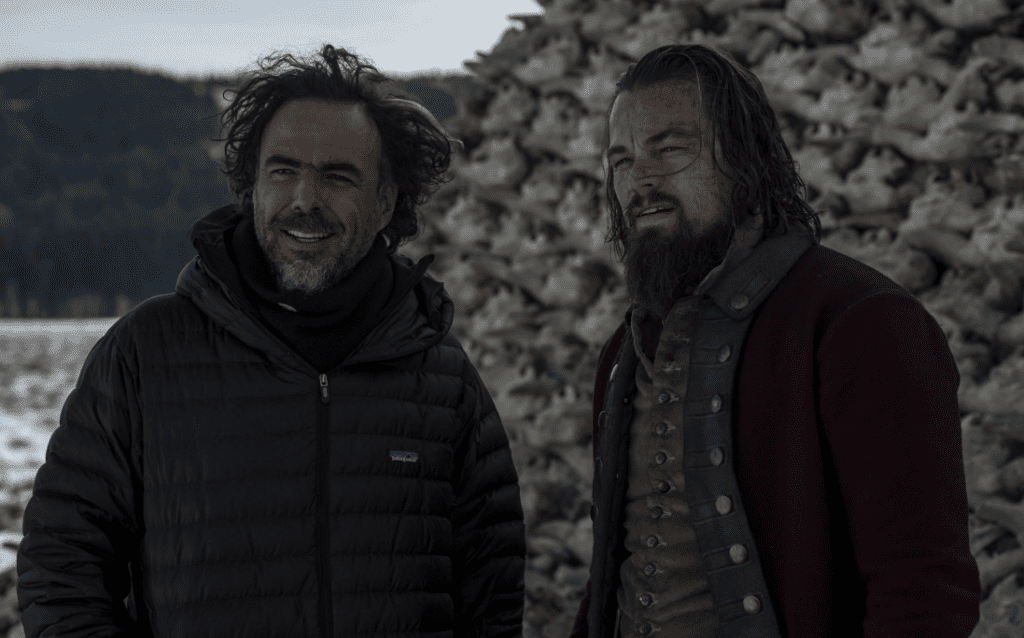
“While the final fight between Tom Hardy’s character (Fitzgerald) and Glass is fictionalised, it provides all the narrative drama of the film,” he says.
“Frontier justice wasn’t necessarily as random as it was depicted in some instances.”
Retribution was carried out by committees mimicking the forms of law you’d get in the Eastern United States as opposed to rough natural justice.
“That’s not to understate just how violent the frontier zone really was,” he says.
Dr Tuffnell admits that due to the nature of fur trappers moving from location to location, there is a chance these groups of men took disputes into their own hands, even if not in Glass’s case.
“His group would’ve been moving from beaver dam to dam once they’d harvested all they needed. With this mobility comes the likelihood of them assembling a kangaroo court (one that ignores any recognised standards of law).
“So there may have been a sense of retributive justice. These are men governed by codes of honour where duelling was an acceptable way to arbitrate disputes,” he says.
Dr Tuffnell uses the example of Domhnall Gleeson’s character, Captain Andrew Henry, the leader of the trapping expedition whose authority is overruled throughout the film.
“What begins as a man of self-restraint who doesn’t resort to violence immediately journeys towards the extreme violence of the frontier.
“It’s like Iñárritu’s saying this is what the frontier does to men, to survive in this kind of environment, that kind of martial masculinity is what’s required.
“But they largely ignore him, which is interesting because those groups are often quite democratic, and the only way to survive in that kind of environment is to have joint and collective decision-making,” he says.
Clashes, however, between American fur trappers and indigenous tribes such as the one present throughout the film, the Arikara, accounted for much of the conflict on the frontier.
Professor Grant says most of the violence between the two is down to the sense of intrusion felt by the native tribes.
“It was a violent world these people inhabited, both in terms of white and indigenous relations and the contested nature of the fur trade itself,” Professor Grant says.
“The frontier was both a meeting point and a clashing of different worlds, identities and ideals, and the film brings this out well.
“While it portrays resilience as the core of Glass’s survival, the hard reality was many white settlers died in the harsh conditions of the frontier, and indigenous people had every reason to oppose this intrusion onto their land,” she adds.
Ultimately, Glass’s death came ten years after the events of the film in an attack by members of the Arikara tribe, somewhere along the Yellowstone River in modern-day North Dakota.
Professor Tuffnell believes that part of The Revenant’s strength is the lack of source material restraining its retelling of a figure of early American folklore.
“The absence of material allows Iñárritu to tell the story within the realms of possibility.
“So, while it’s a historical challenge to write about, the same way it is for a director to reimagine it. They put a lot of effort into how Glass’s story would’ve looked, sounded and how they centred the environment. Which is what makes it so impressive,” he says.