Dr. Iain MacInnes is a renowned Scottish historian with expertise on the Wars of Independence. He unveiled the not-so glamorous reality behind Outlaw King’s Battle of Loudoun Hill.
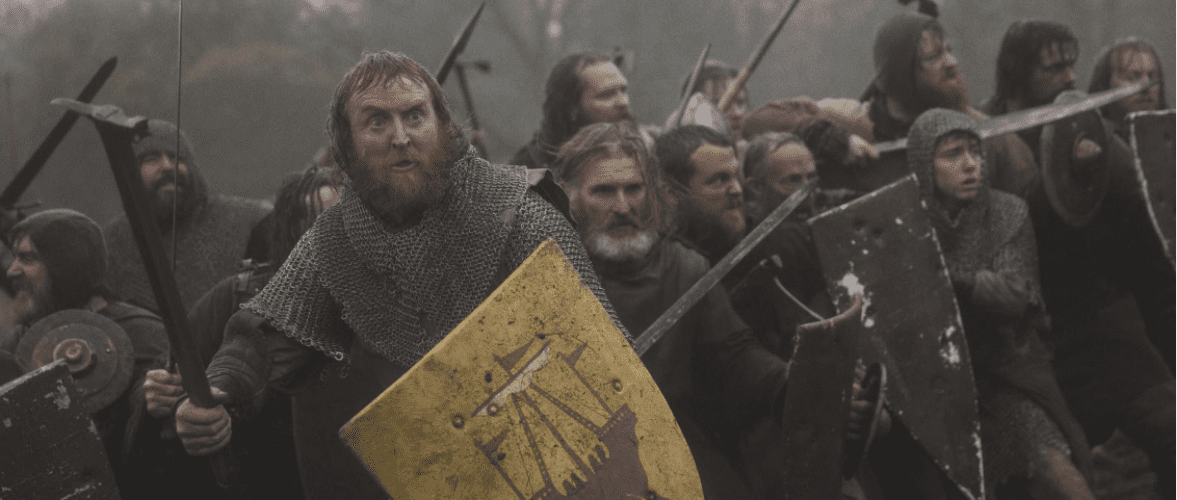
Robert the Bruce rises amongst a sea of strewn corpses. Beneath a thick layer of mud, his eyes are wide, a visage carved of pure adrenaline. At his feet, his adversary, the Prince of Wales, scrambles, sobbing desperately in fear and frustration as the dust settles over Loudoun Hill. Scottish forces stand triumphantly, surely marking a turning point in their rebellion.
Or so Netflix’s historical epic Outlaw King would have you believe. Dr. Iain MacInnes revealed that the Battle of Loudoun Hill was nothing more than a pit stop on the Scottish march to liberation, and that Prince Edward wasn’t even present. So, why did filmmakers opt for a seemingly insignificant skirmish as the climax of their multi-decade spanning retelling of Robert I’s rise to power?
“Loudoun Hill is a brave choice, for all it was, it decided nothing. It’s not the endpoint. Arguably, it’s not even a turning point” MacInnes said.
Beyond being a catalyst for the eventual romantic reunion between Chris Pine’s Robert I and Florence Pugh’s Elizabeth de Burgh in the film’s final scene, it seems the strategic weight of Loudoun Hill was undeniably overplayed for the sake of a fairy-tale ending.
“It’s just too neat in making Loudoun Hill an endpoint, and it’s not. There’s a lot more to come, but obviously, you don’t have narrative room for that.
“For Bruce, Loudoun Hill is a learning point; he must spend the next three years defeating his Scottish enemies, picking them off one by one. And it’s only in the wake of that that he’s able to then start to make his kingship a reality.”
For the battle itself, MacInnes was eager to highlight the accuracy of its retelling. The film captures the Scottish ingenuity and use of guerrilla warfare tactics that handed them victory against the English.
“It’s an almighty scrap for want of a better term.
“It’s only actually through modern medium like this that you might get more of an understanding of what it’s like. I think it is quite a nice depiction of things.”
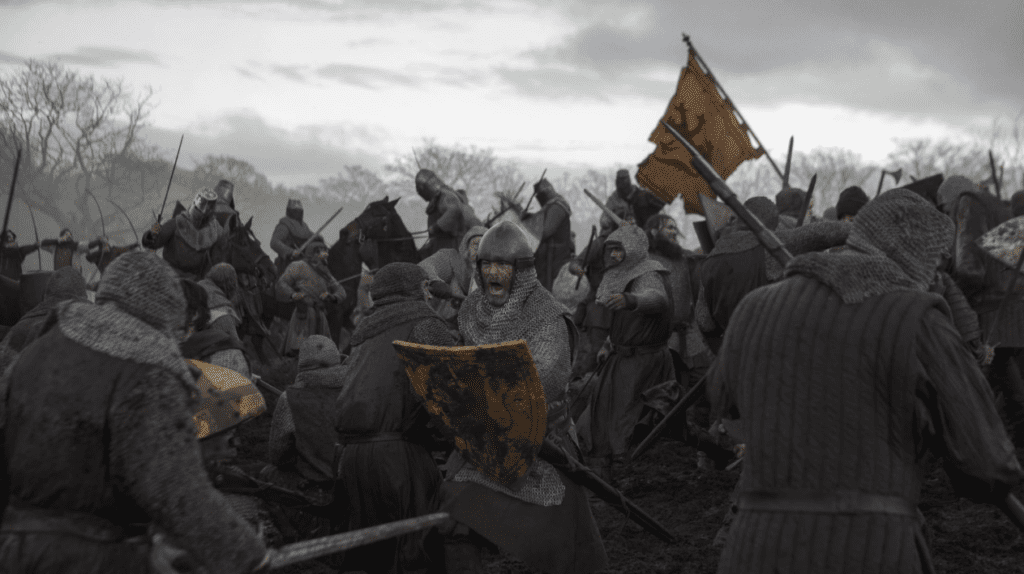
From building a series of trenches to the vast outnumbering of the 500 Scottish troops, the scene would be near-perfect in MacInnes’ opinion, were it not for one glaringly obvious deviation.
“There wasn’t the one-on-one fight, you don’t get that particularly often in the Middle Ages at all. They’ve made it about Bruce and the young Edward, and so they must finish it on that as well. That’s a bit more historically problematic.”
Although the film’s depiction of The Battle of Loudoun Hill wasn’t a one-to-one recreation, MacInnes reiterated that it wasn’t its purpose. Instead, he highlighted the medium as an opportunity for discussion.
“I think it always gives a different basis for discussion. You’re not dependent on the written word or people’s interpretation of that. There are always issues. But then they’re films at the end of the day, they’re not meant to be histories.”