
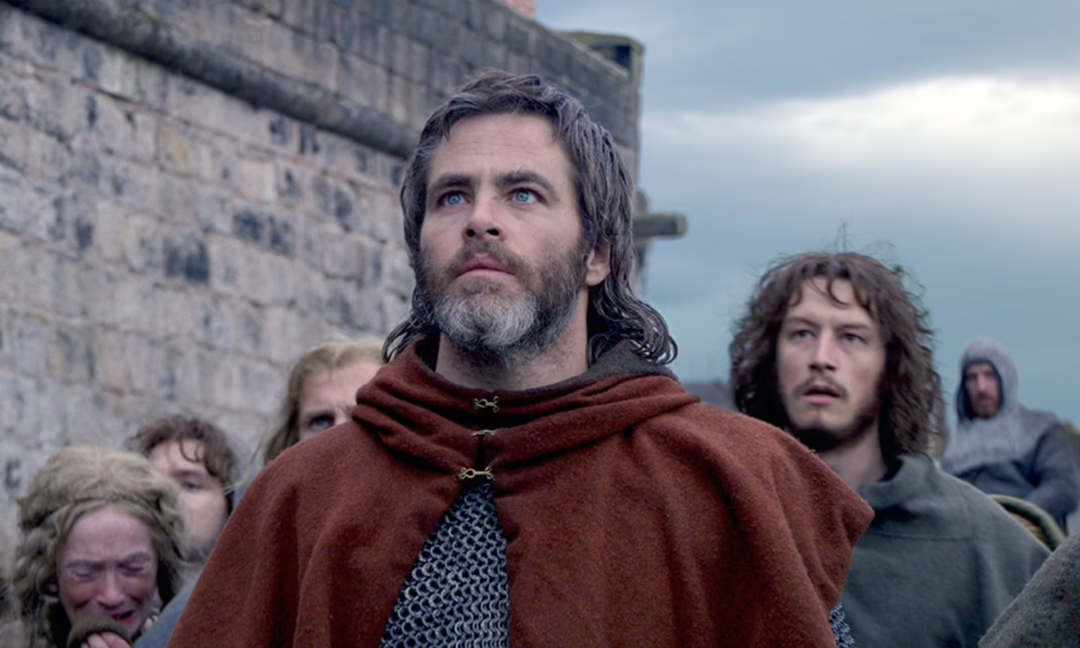
Dr. Iain MacInnes, who specialises in Scotland’s Wars of Independence, discussed how Outlaw King’s portrayal of Robert the Bruce matches the historical record.
The Netflix original stars Chris Pine as Robert the Bruce and follows his rise to power amidst Scotland’s First War of Independence.
Bruce was born in 1274 to Scottish nobility, his fourth great-grandfather, David I, giving him a claim to the throne. The film opens with Edward I conquering Scotland, and Robert becoming King out of necessity to further his guerrilla campaign.
Dr. MacInnes said: “Bruce knows exactly who he is. He knows his family’s history; they were one of the competitors for the throne during the great cause, and he knows where he stands. Ultimately, he does want to make himself king.
Director David Mackenzie portrays Bruce as a servant leader burdened by his responsibility to liberate the Scottish people.
MacInnes said: “You get that depiction of Bruce who’s been thrust into this, but then realises Scotland is being mistreated and it needs a strong figure to lead them to success. Lo and Behold, here comes Bruce, that’s why he becomes King, and that’s why he does all the things he does, it’s for the betterment of Scotland.
“Ultimately, that’s fourteenth-century propaganda. That’s the writings of men who Bruce himself got to write down the history of this period.”
“It’s remarkable to which that message has stuck, and the same can go for his portrayal as a champion of the common folk.”
Before the film’s climax, The Battle of Loudon Hill, Bruce is shown to be a champion of the common folk by getting knee-deep in the trenches and digging alongside his contemporaries.
MacInnes added: “When he’s on the lam, no supporters, and he’s being hunted through the forest with dogs, he stops to help a pregnant washerwoman. There’s also the story when they’re crossing the loch, he’s at the other side telling stories to his troops to keep their spirits up when they’re at their lowest.
“The idea of him as that personable guy with an interest in, not just the nobles, but the common man, that’s reflective of what’s coming out of the fourteenth century as well.”