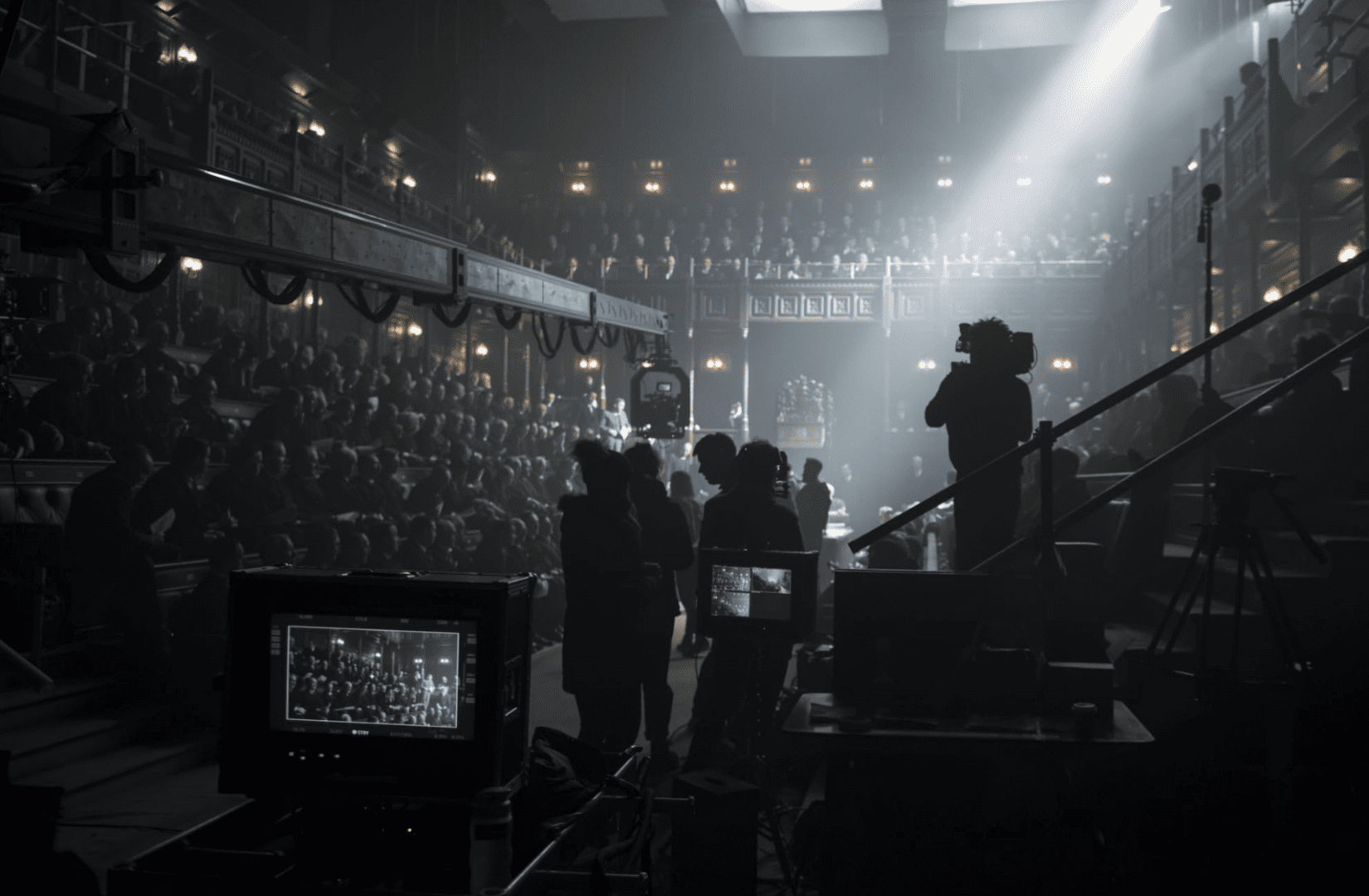
The fog machines were already running by the time Francesca Finch arrived on set. Bicester Airfield had been transformed along one strip into a fragment of 1940s Britain with carriages, horses, trailers dressed as period vehicles, extras wrapped in heavy knitted wool standing in manufactured mist. Francesca was eleven years old and for a few hours on a working airfield in Oxfordshire, she was a French refugee fleeing the fall of Europe.
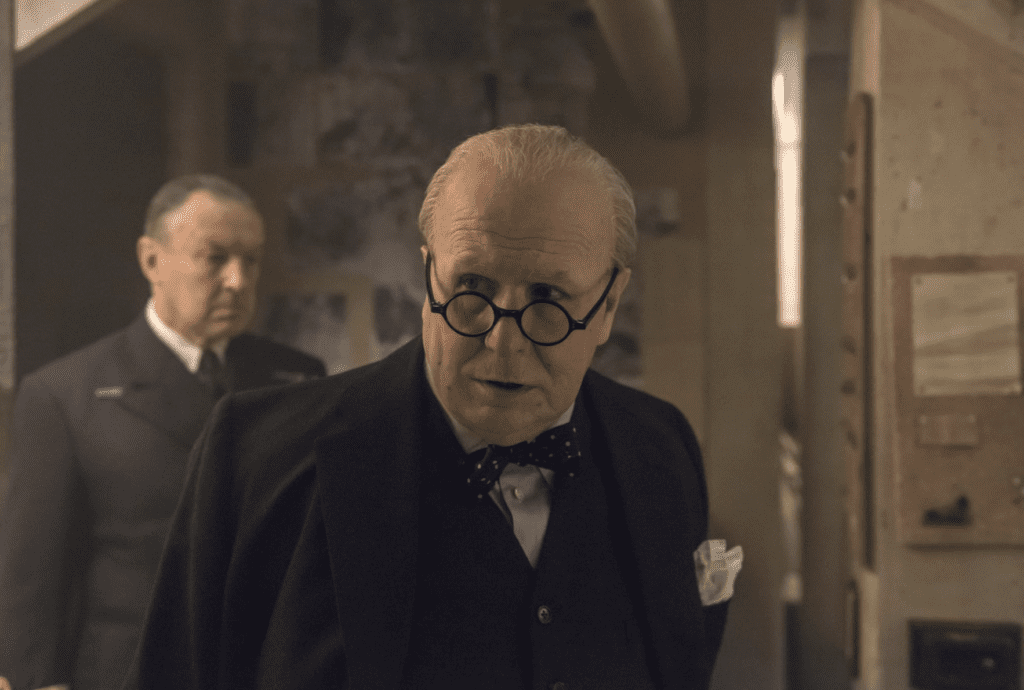
Darkest Hour, Joe Wright’s 2017 film about Churchill’s first weeks as Prime Minister, is best remembered for what Gary Oldman did in the lead role, with the prosthetics, the shuffling gait, the cigars, the Academy Award.
That transformation is the most visible expression of what the production was trying to do. But it ran all the way down. Through the costume department, the hair and makeup team, the set dressers, and out to the edges of the frame where eleven-year-old extras nobody would ever recognise were being treated with the same level of care.
The process started long before Francesca set foot on the airfield. There were costume fittings in London first with measurements taken, then a room full of period clothing on rails where the costume team worked through each extra individually, deciding what they would wear and why.
On the day itself, hair and makeup was done in gazebos on location. The fog machines were operational. The horses were real. Every surface within camera range had been dressed to belong to a different decade.
“The attention to detail was very surprising,” Francesca says, “especially only being about 11 when we did it.”
The detail that surprised her most had nothing to do with her. It was her brother. He was paid extra, on top of his fee as a background artist, to have his hair cut into a 1940s style. A proper period cut, done by the production.
This was all for someone who would appear on screen for approximately five seconds, possibly only as the back of a head in a crowd of refugees.
“It makes sense for the movie with the detail they went into making Gary Oldman look like Churchill,” she says.
A production willing to spend money on the haircuts of people who will barely register on screen is a production that has decided authenticity matters at every level, not just at the top. Every wrong detail is a small crack in the illusion. Whereas every right one is another layer of that makes a period film feel genuinely inhabited rather than dressed up.
On the set itself, that philosophy was everywhere. The smoke machines running to create a persistent, eerie fog. The horses and carriages. The physical texture of the whole environment, built not just to look right on camera but to feel right to the people standing inside it.
“Once we were on set it was quite cool – you did feel a bit like you had gone back in time,” Francesca says. “There were fog machines to make it all eerie and foggy, and carriages and trailers and horses and stuff all around us. I was wearing really heavy knitted clothes so I did feel in character.”
That last part matters. The costume department’s job is not just to satisfy the camera and appease historians. It is to put an actor, or in this case an extra, in a physical state that helps them inhabit the period. Heavy wool in an English field does something to how you carry yourself, how you move, how cold and uncomfortable and burdened you feel. It is a form of direction delivered through clothing.
The most explicit direction came from Joe Wright himself.
Wright, who had previously made Atonement (2007) and Pride & Prejudice (2005), came over to Francesca during filming, handed her a teddy bear, and told her to pretend it was all she had left in the world. Then he told her to cry into it.
“Being given an actual acting direction made it become very real,” she says, “trying to re-enact the feelings of a refugee in that era.”
A director running a major studio production, with one of the world’s most lauded actors at its centre, taking time to give a specific emotional instruction to a background artist who would appear on screen for five seconds. The teddy bear became a piece of psychological direction, a way of anchoring an eleven-year-old to the specific grief of a person displaced by war.
The production wasn’t just building a set that looked like 1940. It was trying to generate performances, even peripheral ones, that felt like 1940.
“Looking back I find that level of direction into such a small scene where you can only see the top of our heads quite something,” Francesca says. “Meeting Joe Wright and him giving me that direction was a really cool thing to experience.”
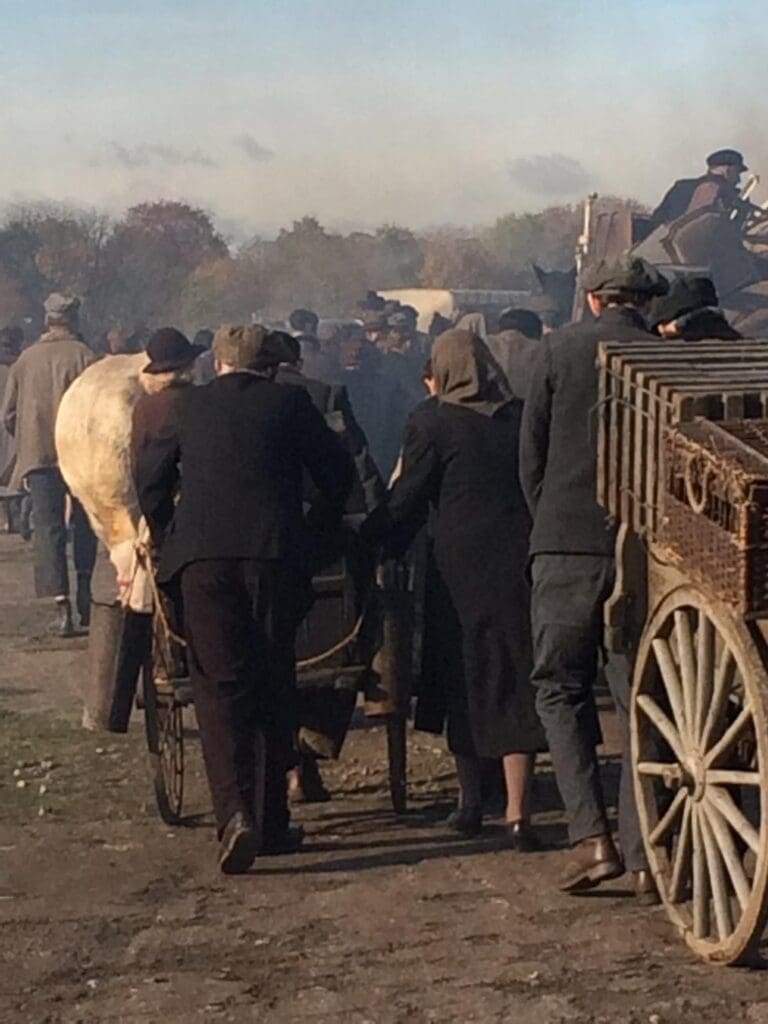
When the film came out and the scene arrived on screen, Francesca says she could still be carried along by it, still feel the pull of the world the production had built. But she was also aware, in a way the audience couldn’t be, of the distance between what was on screen and what it had taken to produce it. The five seconds of fog and wool and refugees that a viewer might absorb without a second thought had required a London fitting room, a period haircut, a working airfield dressed from scratch, and a director crouching down to hand a child a teddy bear and ask her to grieve.
“To see it behind the scenes makes it so crazy how much effort goes into creating something that will make the audience feel like it’s so real,” she says. “Films like that do such a good job of actually collapsing time and so much work goes into making it not seem like just a reconstruction.”
Reconstruction is the thing period cinema is always trying to escape. A reconstruction is something you observe from a distance, aware of its seams. What Darkest Hour was reaching for, in every haircut and fog machine and tearful extra, was something you fall into without noticing. .
All that work, so you forget it was work at all.