When the late Dr Haing S. Ngor had passed, the gold plating of his Oscar for Best Supporting Actor for The Killing Fields had been rubbed off.
He’d been so proud of his achievement that he’d stroked the colour off of it. It was the symbol of an extraordinary man who’d survived the impossible to immortalise his name in historical film history.
Dr Ngor never intended to become an actor; a victim of the brutal Khmer Rouge regime in Cambodia, he fled containment after four years of torture, slavery and starvation. One day, he was a gynecologist in his home city of Phnom Penh, and the next, he was losing his family at the hands of one of history’s most unforgiving dictatorships.
He lost his wife and unborn child.
He became a refugee in Long Beach, where he’d meet director Roland Joffe, who was interviewing Cambodian refugees to play the journalist Dith Pran in The Killing Fields.
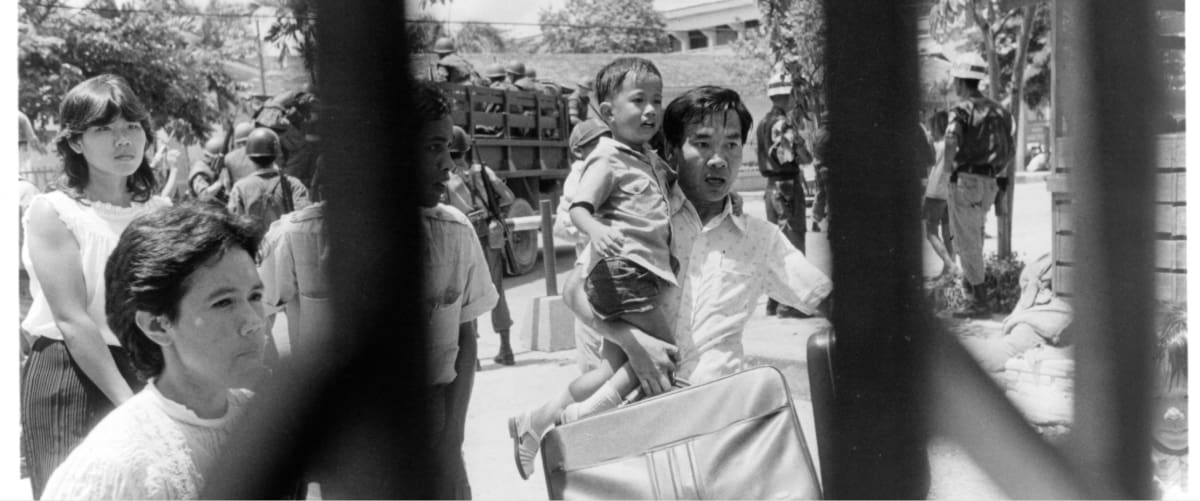
The film follows the real-life story of two journalists, an American and a Cambodian, who are investigating an alleged bombing in Cambodia. Troubles ensue, and native journalist Dith Pran is trapped behind enemy lines and forced into a gruelling labour camp, only to be reunited with his dear friend in the closing moments of the movie.
Histoflick sat down with the film’s director, Roland Joffe, about working with Dr Haing S. Ngor, his unique relationships with co-actors Sam Waterston and John Malkovich, and the exceptional circumstance of his first-ever acting role becoming a reflection of his own harrowing survival.
“Oh, Roland, no, I’m a doctor, not an actor”
Joffe recalls his first time meeting Dr Ngor and the difficulties of not only finding an authentic Cambodian actor, but persuading the man that he had so much belief in to take the role.
“The first time that I met him was part of a long process, because we very much wanted to cast a Cambodian in that role,” noted Joffe.
“That was kind of complicated, because of course, at that time, Cambodia was closed because it was run by the Khmer Rouge, and then after that, it was then run by the Vietnamese, but you still couldn’t get into Cambodia.”
“We began interviewing Cambodian refugees, mainly from Long Beach, and Haing was one of the organisers, so I got to know him as an organiser. He had no interest, he didn’t want to be, wasn’t interested in acting.”
Haing had a unique personality, according to Joffe. He found difficulty casting a Cambodian with the right force of personality. He noticed that Haing was different to the others.
“I realised that there was a problem, because generally Cambodians are extremely polite and gentle in their social interactions and particularly Cambodian refugees, because they were destabilised and uncertain, and I realised that out of the pool available we wouldn’t get someone to play that role with the right force of personality.”
He took Haing to one side and asked him about his interest in playing the role.
”Oh, Roland, no, no, I’m not an actor, I’m a doctor.”
They had a conversation about Haing’s story the very next day, and Joffe had noticed that he was getting more and more involved in it.
”Hang, you are the only Cambodian who can tell this story, you’ve got to understand it. I know it’s not a matter of ego.” Haing asked him if he was a hard-working man, and upon the answer, agreed to take the role. The two would develop an incredibly warm relationship.
It was Haing’s relationship with the others on set that made the acting between the characters so effortless.
Admired by all
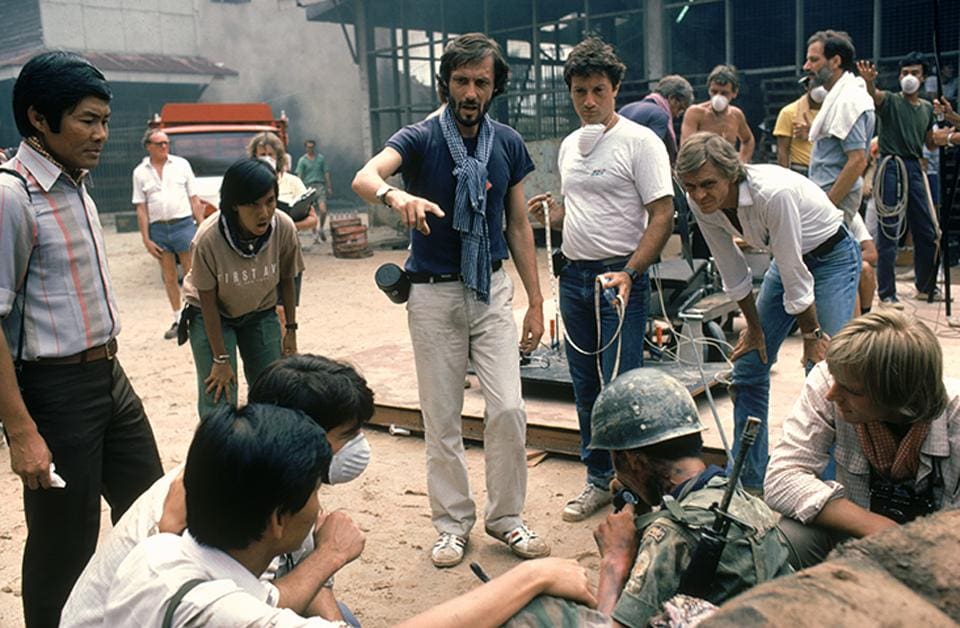
Director Roland Joffe recalls a heartfelt story about the way Haing bonded with his co-actors Sam Masterson, John Malkovich and Julian Sands when he sent the group to Northern Thailand.
“He developed very, very strong relationships with the other actors, for John Malkovich, Julian Sands, and Sam Waterston. In fact, the way that developed was when I got everybody to Thailand, which is where we’re going to shoot the movie.”
“I felt that the most important thing in the movie was the way they bonded, and I decided that the only way to get them to really bond was for me not to be present as a kind of, you know, avuncular, while I was young in those days, but kind of director supervising everything.”
“I sent them all to Chiang Mai, and I gave each of them a slightly different task.”
“To John Malkovich, I said, “You know, you’ve got to really learn photography, because your photographs can be used by the New York Times. Oh, and by the way, keep an eye on Haing, because he’ll need your help. And Sam Waterston, I said, The New York Times has agreed that they will print some articles if you write any articles about your experiences up there, and look after Haing, and be very careful, because I don’t want John leading him astray.”
“And then I said to Julian Sands, maybe The Times of London would print the articles, and I said, just keep an eye on everything, and keep an eye on Haing and John Malkovich, and see that there’s not much friction between Sam Waterston and John Malkovich, and Julian said, “Yeah, okay, I get it, get it.”
“But to Haing, I said, “Haing, you’re in charge, any problems these people have, because Haing could speak Thai.”
“So they went off for, I think, a week, maybe a little longer. When they came back, John (Malkovich) said, “Yeah, had a great time. That Haing is a fantastic figure, and by this time they were beginning to get into character, and then he said, “But I’m sorry, he said, “But I mean, what’s the poker stuck up Sam Waterston’s ass? He kept interfering between me and Haing, which was a lovely character point.”
“Sam (Masterson) came in for his thing, and he said, “Oh, Haing, he’s really special, really looked after us. We’ve been lost without him.”
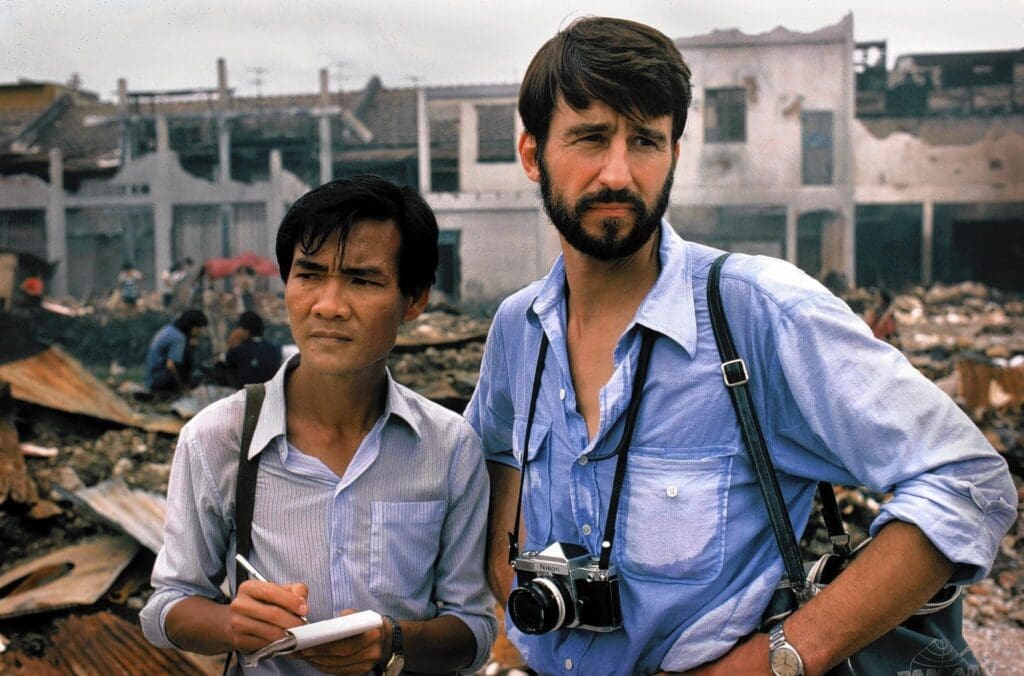
“Julian (Sands) came in and said: “Haing, if I could marry him, I would!”
It was evident that he was admired by everyone on the set, especially by the three who were closest to him. The humble man that he was, he thought that he was so difficult with them.
“I’m looking after John, I’m looking after Sam, and they all cross with each other. It’s very difficult.” Haing said. Welcome to being Dith Pran.
“And the relationships were all born at that moment,” remarked Joffe. Haing absolutely felt real affection for each of those characters, as well as the actors.”
An Oscar like no other
The Killing Fields was a film held to great acclaim, sweeping the 1985 BAFTAs in dominant fashion. Haing would win Best Leading Actor and Most Outstanding Newcomer to Film.
Only two non-professional men have ever won an Oscar for acting. The first was Harold Russell for his role in The Best Years of Our Lives in 1946.
It’s March 25th, 1985, and Linda Hunt is reading out her nominations for Best Supporting Actor. His co-star John Malkovich is nominated for his role in a separate movie, Places in the Heart, as well as the iconic performance of Noriyuki Morita as Mr Miyagi in The Karate Kid.
Haing’s name was called out, and with a wide smile on his face, he walked over to Roland and embraced him. Following a heartfelt speech full of appreciation, he’d lift his Oscar in the air with an even more overwhelming smile than he started with.
For him, this was everything. In his wildest dreams, he’d never envisaged that when he was organising fellow refugees, he’d win something that every actor dreams of, in his first-ever acting role.
When the shoot was done and the sets were wrapped up, Joffe knew he’d created something emotionally powerful. But, like Haing, he was oblivious to its greatness.
“Well, I’m a Brit, so I don’t allow myself those thoughts,” Joffe said.
“I saw it was playing with audiences. I knew the performances were really working, but I had no idea whether it was going to connect or not in the way that it really did connect with people emotionally. But when it did, I wasn’t surprised, and I was delighted for the actors, and of course, for Haing, because as a director, that’s what you want, the directions take the back seat.”
“When you think what that meant for Haing, he was a man who’d lost everything, who told a story about a man who was in many ways, more heroic than he himself was, although Haing was pretty heroic himself, and living in a country that wasn’t his, to suddenly get that validation.”
In the years following the film, Haing would continue acting and would catch up with Joffe, the man who changed his life.
“What was very impressive to me, apart from the fact that he found personal validation in winning the Oscar, was the fact that he felt that he could use that role in Cambodian politics for the good of Cambodia.”
“He didn’t give up his love for his country.”
Haing’s death came in February of 1996, murdered outside of his home in Los Angeles. His legacy lives on through his foundation, The Haing S. Ngor Foundation, which funds aid for Cambodian schools and employment initiatives.
For most people, however, his legacy will forever be immortalised in The Killing Fields. He will forever be remembered.