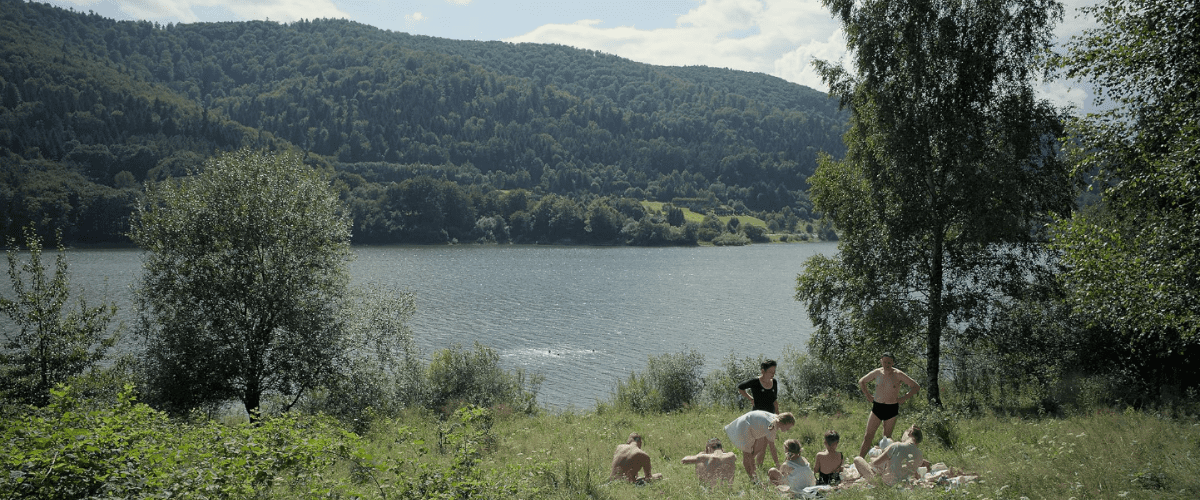
The Zone of Interest depicts the life of Rudolf Höss, the commandant of Auschwitz, who alongside his family tries to create an idyllic setting in their villa meters away from the concentration camp. The Head of the Research Centre at the Auschwitz-Birkenau State Museum, Dr Piotr Setkiewicz discusses how the depiction shed new light on the home lives of those who implemented the Holocaust.
The term ‘zone of interest’ is a translation for the German word Interessengebiet, a phrase used by the Nazi’s to describe the 40-square-kilometre perimeter of the Auschwitz concentration camp, it refers to the restricted area keeping the camp and the atrocities within it hidden from the outside world.
This area is where the entirety of Jonathon Glazer’s 2023 film, The Zone of Interest, takes place. Specifically, within the family home of the commandant of Auschwitz, Rudolf Höss.
We follow the commandant and his wife Hedwig, as they try to build an idyllic family setting in a villa on the doorstep of the death camp that would go on to be responsible for the systematic deaths of an estimated 1 million Jewish people as part of the Nazi regime’s Final Solution.
Through not showing any of the scenes from inside the camp, it’s harrowing depiction comes through carefully placed distant sounds of the horrors seeping into the families home.
Straying from previous on-screen depictions of the Holocaust, the film focuses solely on the apparent normality of the perpetrators and their families living metres away from the mass killings.
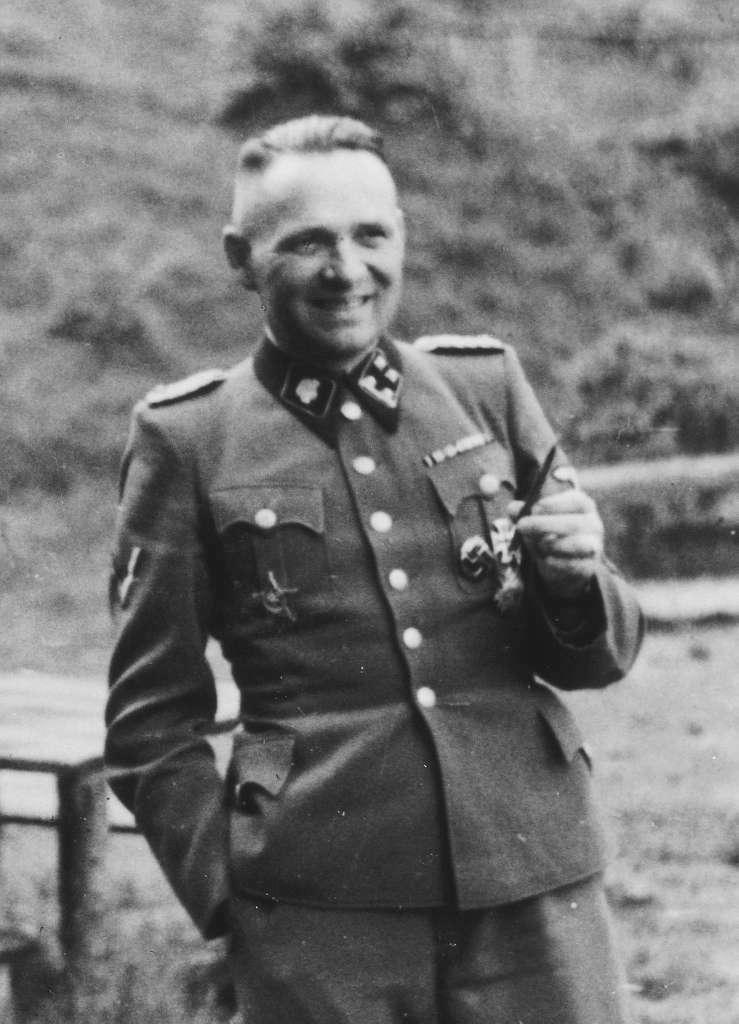
Dr Piotr Setkiewicz, Head of the Research Centre at the Auschwitz-Birkenau State Museum wrote a book on the private lives of SS soldiers at the concentration camp, which director Jonathon Glazer cited as an “essential source” for the film.
He explains how the atmosphere of the household of the commandant and his family was translated into the depiction shown in The Zone of Interest, through first hand accounts of those forced to work in the house.
“We know as much about the Höss family’s life as can be deduced from sources, primarily accounts from prisoners who worked in their home or in the adjacent garden. Höss himself revealed little about it in his post-war testimony, other than that life in Auschwitz resembled an idyll for his wife and children,” Dr Setkiewicz says.
Dr Setkiewicz mentions a Polish seamstress whose accounts of the interior of the Höss household, alongside architectural plans of the villa and family photos paint a picture of the type of lifestyle the family tried to create.
In the film, the family is almost entirely shielded from the camp, with enormous concrete walls surrounding scenes of the family enjoying the swimming pool in the villa garden.
While the Höss family in truth may not have been quite as distanced from the atrocities as Glazer’s depiction makes out, this separation serves as the ultimate desensitization and lack of humanity that defined the members of the SS and many of their families.
“Perhaps Jonathan Glazer’s focus on the strictly domestic life of the Höss family is the reason why there are so few scenes in the film that go beyond the villa, even though his wife and children often went outside and saw crowds of prisoners working in the adjacent area almost every day, and witnessed acts of violence – this is practically absent from the film,” Dr Setkiewicz says.
However, he points out that this depiction is only one family in a far bigger picture of SS soldiers and their families outside Auschwitz.
“This is the perspective of one specific family, which is true for Höss and his wife, but not entirely representative of the entire population of the SS settlement at Auschwitz. While Hedwig Höss was indeed callous and cold towards the prisoners she encountered, lacking seemingly obvious morals in the given situation and preoccupied with building her social standing, several – though not many – wives of SS officers did not necessarily behave in the same way,” he says.
Hedwig Höss, played by Sandra Hüller, at one point dubs herself the “Queen of Auschwitz”, but Dr Setkiewicz gives the rare example of one of the SS officers wives whose actions differ from the mould expected from those so close to the Nazi’s heinous crimes.
“For example, we have the wife of a deputy commandant who, fearing her abusive husband, secretly handed out bowls of soup to prisoners sent to “her” house for some renovation work. We have several examples of other wives who were able to offer a few words of sympathy. Nevertheless, the dominant attitude was either dislike or hostility toward the prisoners, or a focus on their own families and an attempt to live as if the concentration camp did not exist,” he says.
The Zone of Interest was made in close cooperation with the Auschwitz-Birkenau State Museum, with the filmmakers provided with camp documents, survivor accounts and factual consultation.
Dr Setkiewicz, who spoke at length with the filmmakers throughout their production process, explains the importance to remember the family depicted within The Zone of Interest are largely reflective of the average household in Nazi Germany.
“I write about the SS men at Auschwitz as ordinary people caught up in dramatic events, though largely through their own fault. They were fairly typical representatives of German society of the period, as indicated by various sociological measures: age, education, and profession. I try to explain how the Auschwitz camp was organized, so that while most SS men were not forced to commit cruelty or inflict death, the camp ultimately served as an efficient machine for mass killing,” he says.
By giving an insight into the home lives of the SS, Dr Setkiewicz believes the film gives insight into how those carrying out these atrocities were able to separate their crimes from their duty to their family and the wider regime.
“Höss saw himself as fulfilling his duty to the state and the nation, a difficult but necessary one. This doesn’t mean he felt devoid of certain moral values; on the contrary, he tried to be a good husband and a caring father to his family. This served as a kind of alibi for him, suggesting that he was acting appropriately when carrying out orders. The film thus shows how this was possible,” Dr Setkiewicz says.
Dr Setkiewicz explains that while The Zone of Interest‘s particular focus on Höss gives an insight into the family dynamic of one of the Nazi regimes most despicable figures, it doesn’t necessarily tell the whole story of the wider households surrounding the concentration camp.
“It is not a comprehensive portrait of this entire community, although some of the behaviour and reactions to the reality of the camp are quite typical. In this sense, the film portrays the SS men in a different light than most people imagine – criminals who commit their crimes from morning to afternoon, but then return home to their wives and children, where they try to create a semblance of a normal life.
“Höss is similar to them, though also unique: he is the camp commandant, and much depends on his decisions, but he is not required to participate directly in the killing of prisoners. In other words, when he returns home, the servants do not have to wipe the blood off his shoes,” he adds.