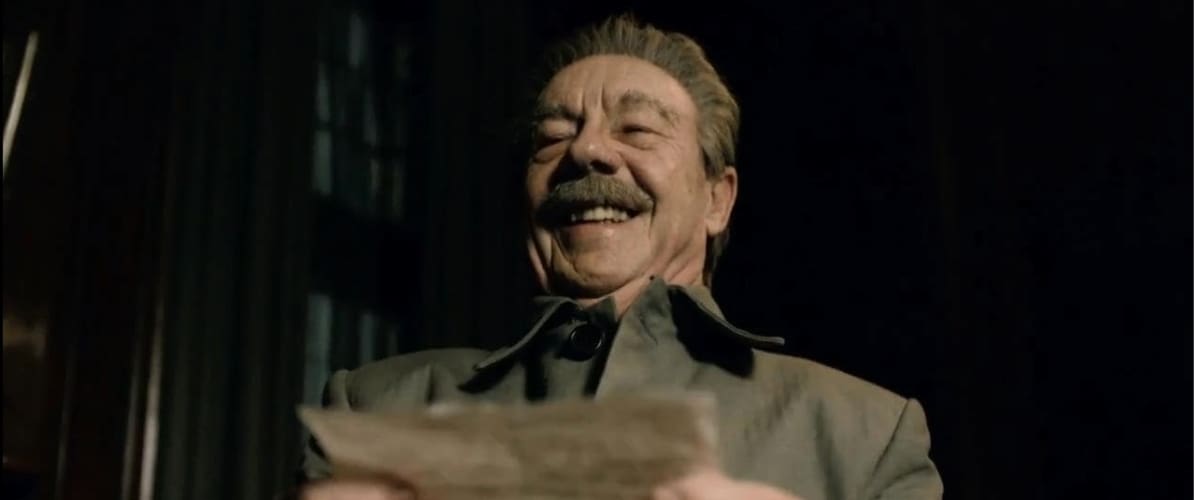
“The Death of Stalin” focuses on the last days of Joseph Stalin and the race to succeed him as the leader of the Soviet Union. The satirical black comedy, released in 2017, was banned in both Russia and Kyrgyzstan as it was seen as Anti-Russian propaganda.
Although the movie covers much of the aftermath of Stalin’s death, it leaves out many of the factors that contributed to his death.
In the wake of the Second World War, Stalin had amassed near-total power over the Soviet Union and Eastern Europe. Although the USSR had suffered heavy losses of over 20 million during WW2, it had control of half of Europe. Moreover, Stalin’s Great Purge of the Communist Party and the Cult of Personality that made him the father figure of the nation further secured his control of the Soviet Union.
Lewis Siegelbaum is a professor of Russian history at Michigan State University and co-author of the award-winning website Seventeen Moments in Soviet History, which describes the extent of Stalin’s power.
“The word that usually is used by historians to describe the extent of Stalin’s power from the early 1930s onward is ‘immense’. Yet, it was not unlimited. It was frustrated by the immensity of distances within the USSR and the unavailability of sophisticated equipment (electronic and otherwise) to keep tabs on what regional and local officials were doing.”
“Stalin’s power did not increase after the Second World War, although the extent of the Soviet state’s power increased to include much of eastern and central Europe.”
Post World War Two, the Georgian dictator’s mental and physical health started to deteriorate. Stalin had a series of strokes in both 1945 and 1949, the second of which caused long-term effects such as partial loss of speech and cognitive problems.
Stalin also became increasingly paranoid, believing that someone would try to poison him. He grew distrustful of his own government officials and doctors and wanted to conduct another purge to further consolidate his power.
The “Doctor’s Plot” was an antisemitic conspiracy that Soviet doctors and medical experts were allegedly poisoning government officials. It aimed to increase public distrust of Jewish citizens in the Soviet Union. In January 1953, nine doctors were publicly arrested and charged with the murders of Andrey A. Zhdanov and Alexander S. Shcherbakov.
The doctors, six of the nine were Jewish, were charged with working for British, American and Israeli intelligence, and were supposed to go on trial later that year. Elsewhere, 37 doctors in Moscow were arrested for conspiracy of murder and tortured to get fake confessions. This left many of the best doctors in Moscow in captivity when Stalin had his fatal stroke in March 1953.
Stalin’s death in real life was similar to how it was portrayed in the movie, with the dictator collapsing in his room after hosting an evening with his inner circle.
Lewis Siegelbaum said that despite Stalin’s ill health, he didn’t appoint an heir.
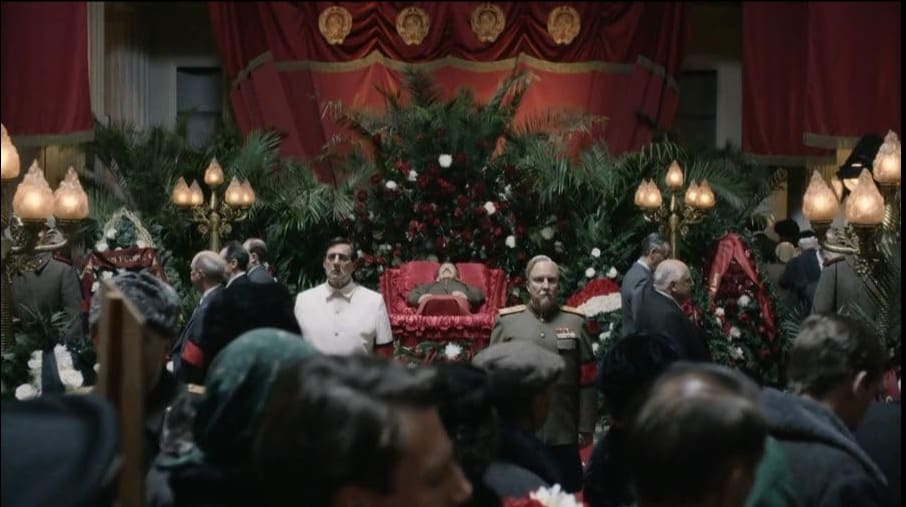
“Like Lenin, Stalin did not anoint a successor; nor did he create a legal mechanism for an orderly transfer of power after his death or incapacitation. On the contrary, to the very end of his life, up to the stroke that killed him, he relentlessly strove to hold onto power.”