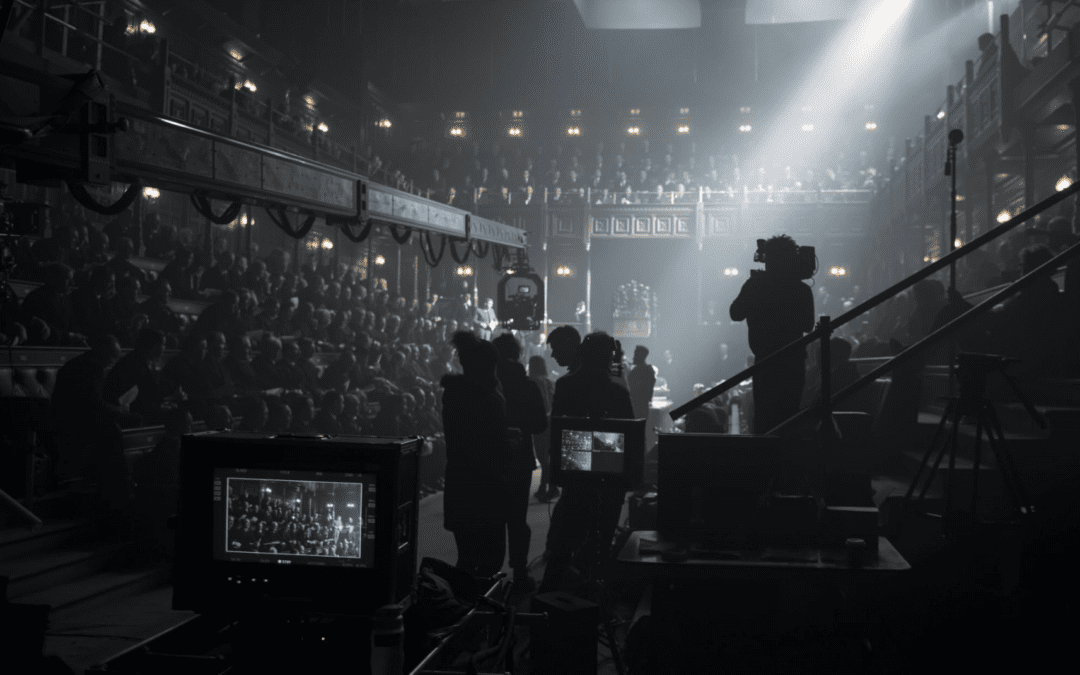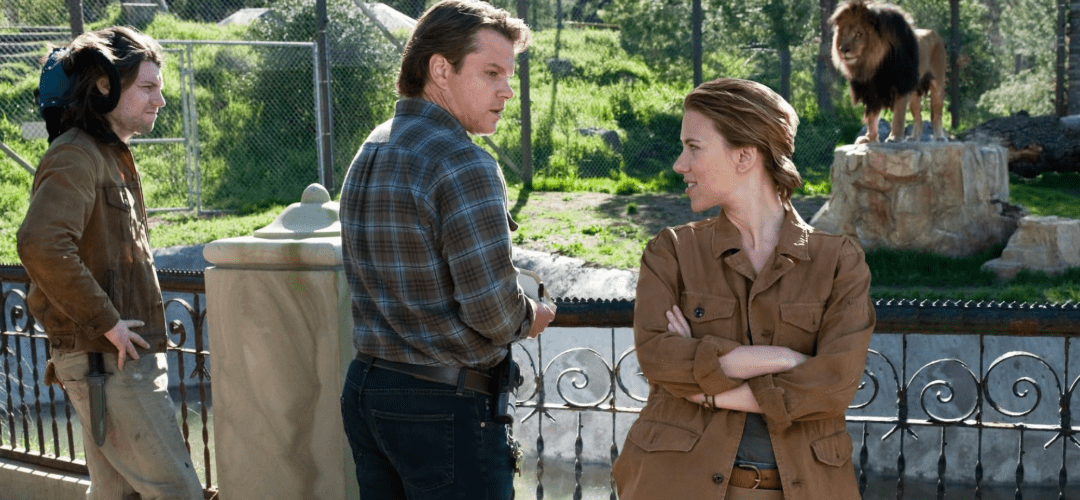
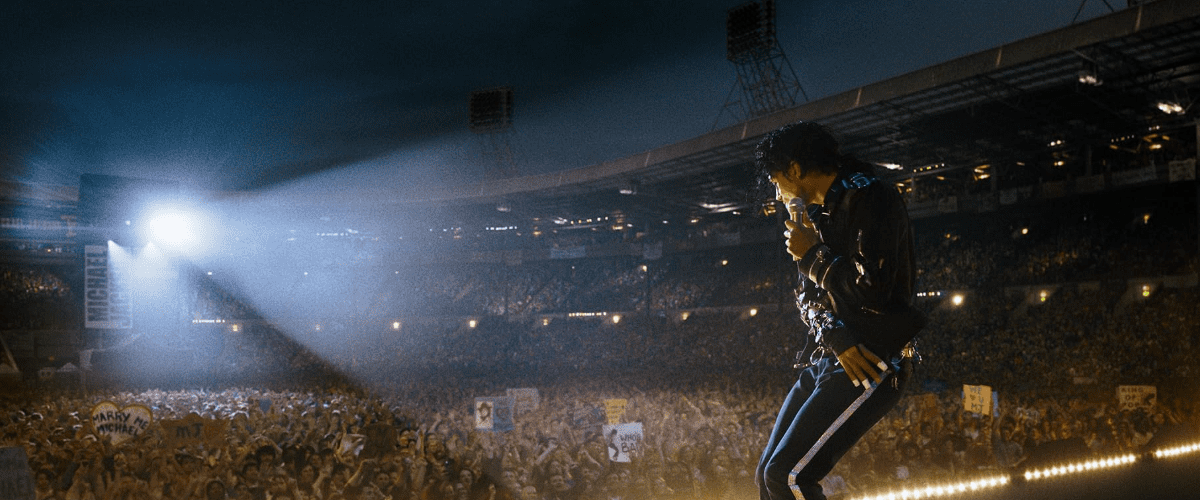
What does Elvis Presley, Amy Winehouse and Weird Al Yankovic have in common? All three are famous musicians, and all have had a biopic made about their lives that have been released in the past decade.
They’re not the only ones. Robbie Williams, Bob Dylan, David Bowie, Bob Marley and Whitney Houston have all had biopics made about them. “Michael” is the second highest grossing movie worldwide this year. And that’s without mentioning the “The Beatles – A Four-Film Cinematic Event”, which has a movie dedicated to each member coming out in 2028.
Music biopics have become a mainstay of modern cinema, with more being put into production every year. But how did this all start? And what makes these movies so irresistible to moviegoers and studio executives alike?
Peter Doggett, a music journalist and author, has written books about musicians such as the Beatles, David Bowie and the Beach Boys. He has also consulted on the Paul McCartney documentary: Man on the Run. Doggett says that the charisma of musicians make them perfect for the biopic treatment.
“Performing musicians (especially in the pop field) depend on magnetic personalities, on and off stage. They are also more prone to excess – sex and drugs and rock’n’roll, anyone? – than the average person on the street. That combination of glamour and danger easily translates into box-office appeal.”
“The lure of charisma carries over from pop into the classical field. Two of the best biopics I’ve ever seen are “Hilary & Jackie” (about the cellist Jacqueline Du Pre) and “Maestro” (Leonard Bernstein). In both cases, their subjects’ creative energy provoked emotional extremes which made for compelling movies.”
Some people credit 2019’s “Bohemian Rhapsody” for starting the more recent increase in music biopics. It was a box office success, grossing $910 million (£686 million) from a $50 million (£42 million) budget, making it the sixth highest grossing movie of the year and the only one in the top 10 not part of a cinematic universe/movie franchise.
Data from the Undertow shows the increase in music biopics released over time, with only two being released in the 1960s, to a peak of 14 in the 2010s. The 2020s are guaranteed to surpass all prior decades, with 10 releases in only 6 years.
Mark Ryan is a box office analyst who specialises in tracking UK financial film data. His website The Undertow shows film data such as weekly box office returns and how many cinema screens are showing a particular film. He says that the reason that studios have greenlit more music biopics is because they’re low-risk / high reward.
“When you track the releases across the decades, the trend line is unmistakable; the appetite has grown, and the industry has simply leaned into it.”
“What’s changed recently is the industry’s recognition that these films occupy a commercially reliable space: mid-budget, emotionally accessible, and powered by nostalgia.”
“They come with built-in audiences, and the marketing is essentially pre-packaged: a trailer with a beloved song does half the work. They also benefit from cross-media synergy; catalogue streams spike, playlists surge, and the artist’s cultural footprint expands.”
The data supports this. Music biopics consistently do well in the box office from more modest budgets, especially in the UK. “Bohemian Rhapsody” made £55 million in the UK box office alone. “Michael” is the highest grossing film in the UK this year, making £44 million. Even the more mid-budget films, such as “Back to Black” and “A Complete Unknown” have made significant returns at the box office.
Ryan claims that audiences respond to them as they feel both familiar and revealing.
“These films function as cultural memory pieces; a way of revisiting artists who shaped particular eras or personal histories. The music creates an immediate emotional connection, and even when the story is difficult, the structure tends to be cathartic or celebratory. That blend of nostalgia, recognition, and emotional payoff is powerful.”
“Even when the films are selective or sanitised, the emotional truth of the music carries them, which is why they continue to draw broad, multi-generational audiences.”
Another factor behind the rise of music biopics is their reputation for being “Oscar Bait”. Jamie Foxx won the Oscar for Best Actor in 2004 for his portrayal of Ray Charles in 2004’s “Ray”. “Bohemian Rhapsody” won 4 Oscars, including Best Actor for Rami Malek as Freddy Mercury. Multiple music biopics have been nominated for Best Picture at the Oscars, most recently “A Complete Unknown”: the Bob Dylan Biopic at the 97th Academy Awards.
Many actors pounce on the chance to star in a music biopic, as they see it as their career-defining role. Austin Butler was nominated for Best Actor in 2023 for his role in “Elvis” and spent a year with a vocal coach to mimic Elvis’ singing and speaking voice for the movie but struggled to get rid of the voice post-production, eventually hiring a vocal coach to unlearn the Elvis accent.
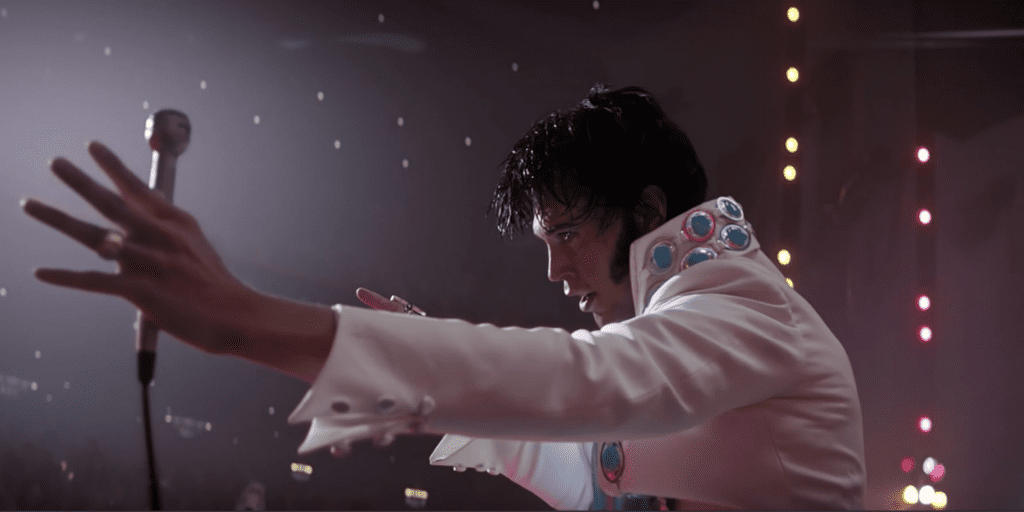
Mark Ryan remarks on how many actors see music biopics as their opportunity for a career-defining role.
“These films are built around the performer; emotionally, physically, and narratively. They allow actors to reshape themselves through voice work, movement, and character study, and the genre has a strong awards track record to prove it.”
“Playing a real person, especially one with a turbulent or iconic life, gives actors the chance to anchor an entire film. It’s one of the few genres where the performer is unquestionably the centre of gravity, and the industry rewards that.”
Despite the critical acclaim that music biopics get, they continue to face criticism, as audiences increasingly experience fatigue similar to the superhero fatigue of the early 2020s. Many music biopics follow a similar structure, with the main character going through a near-identical arc: The artist rises, then suffers a fall from grace, before finding redemption. Such movies as “Jersey Boys”, “Bohemian Rhapsody” and “Ray” all follow this formula and have found critical and commercial success. This has led to claims that the genre is formulaic and repetitive.
Another criticism that music biopics face is that they play it safe and that they gloss over many of the artist’s controversies. “Michael” came under scrutiny over claims that it heavily sanitized the life of Michael Jackson, with such thing as his sexual abuse allegations being omitted from the movie. Many biopics are made with the permission and the supervision of the artist’s estate, which wouldn’t want them portrayed in a negative light.
Peter Doggett claimed that many biopics would rather put a caricature of an artist instead of a more accurate depiction of the person behind it.
“Several of the most successful biopics of recent times have been centred around performers whose image has been easy to transform into a kind of living cartoon character. I’m thinking particularly of Elvis (in the hands of Baz Luhrmann), Elton John and Freddie Mercury. They’ve put entertainment way ahead of historical accuracy, and the danger is that future generations will remember the movie portrayals rather than the real people”
Doggett fears for the four film Beatles biopics coming out in 2028.
“I fear the worst for those, that they will reinforce the carefully crafted ‘official’ version of the band’s history rather than the more nuanced reality. But maybe Mendes will surprise us, and actually deliver a set of interlocking narratives that attempt to unpick the complexities of the four men’s human relationships.”
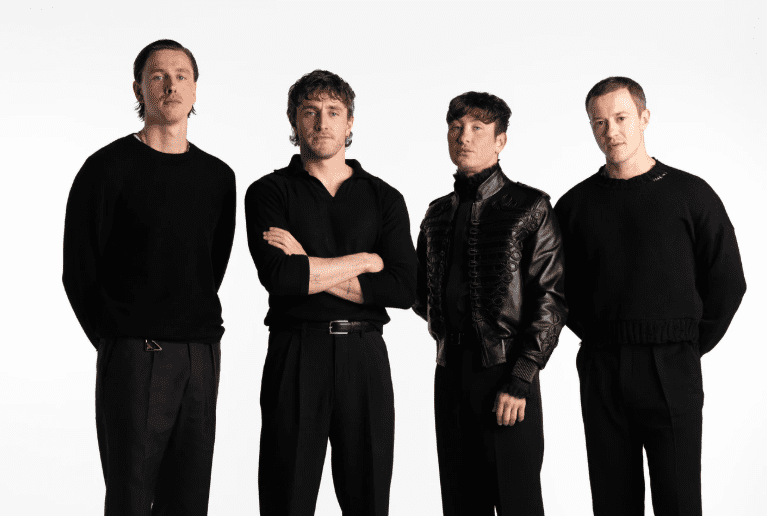
In comparison, Peter Doggett would like to see a different interpretation of the music biopic formula, rather than looking forward to a particular artist getting a movie.
“What would work well on screen is a realistic portrayal of how difficult it is to keep a rock band going under extreme personal and emotional stresses. Bands usually start out idealistic and quickly end up hating each other (and often themselves). The drama then is how do they manage to keep sharing the same stage, while creating music worthy of their name and reputation.”
“I’ve written a few books about the turmoil of rock bands who survived much longer than their personal love for each other. I would be thrilled to see someone make a movie of my 2019 biography of Crosby, Stills, Nash and Young, as it has everything – lots of sex and drugs, vicious in-fighting, passionate musical creativity, and the ongoing dramas and tragedies of the counter-culture between 1968 and 1974.”
One question that remains is when will this trend end? The genre has seen an increase in both volume and popularity over the past couple of decades.
Matt Ryan said that the trend will continue in the foreseeable future, as long as there are still artists to make them on.
“There are still major artists without biopics; David Bowie, Madonna, Prince, George Michael, Kate Bush, Stevie Nicks, Run-D.M.C., Black Sabbath, Karen Carpenter, Keith Moon, and several high-profile projects are already in development, including Bruce Springsteen, Snoop Dogg, Linda Ronstadt, Billy Joel, Frank Sinatra, and four separate Beatles films. The pipeline is far from empty, and the commercial performance of recent titles suggests the appetite is still strong.”