Forced onto the throne after his brother’s abdication, The King’s Speech follows the true story of King George VI and his fight to overcome a stammer with the help of speech therapist Lionel Logue. Hugo Vickers, the film’s historical advisor, discusses his time on set and how he helped shape the intricacies of the acclaimed film.
The King’s Speech, released in 2010, depicts King George VI battling to overcome his stammer after being thrust onto the throne following his brother the Duke of Windsor’s scandalous abdication.
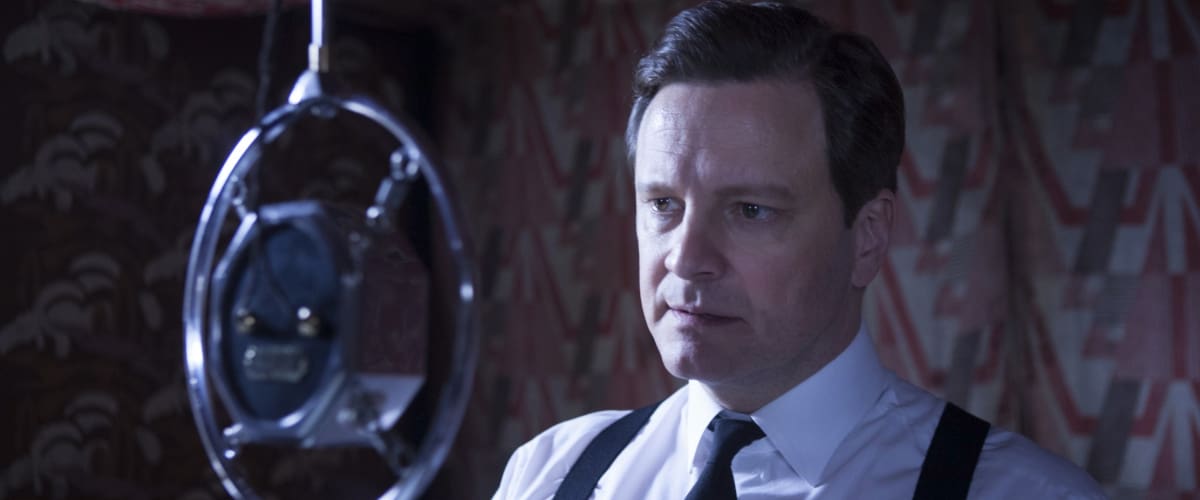
Played by Colin Firth, the King enlists the help of the unconventional Australian speech therapist Lionel Logue, portrayed in the film by Geoffrey Rush.
The historical advisor for the film was Hugo Vickers, a biographer, historian and expert on the Royal Family, who had previously advised on the 2017 film Victoria & Abdul, depicting Queen Victoria’s unconventional relationship with a prison clerk.
He explains his role on set of The King’s Speech and how it evolved as time went on.
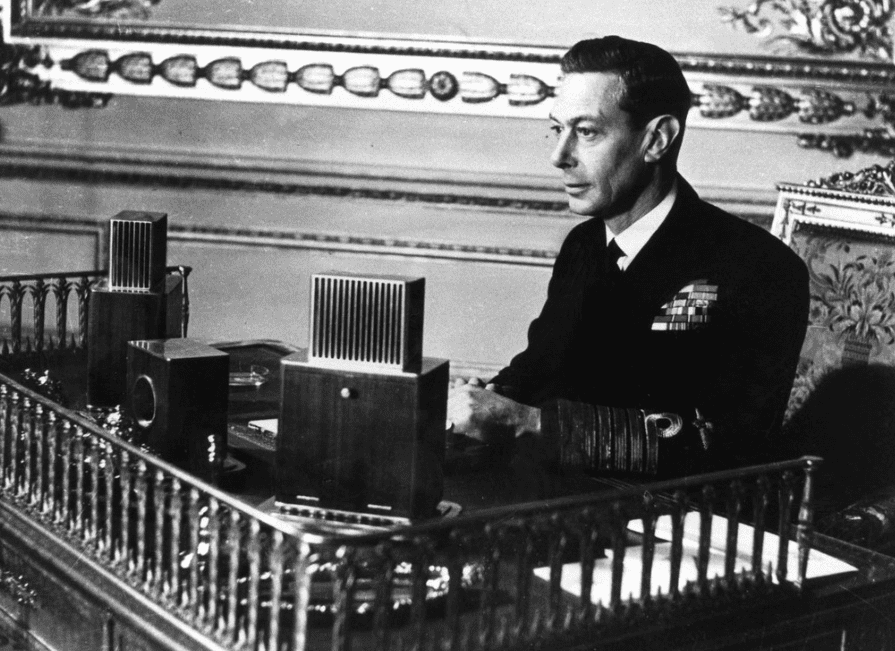
“One of the things that happens when you’re asked to be a historical consultant, they ask you to come in to teach them how to bow and to some extent how to wear their white ties and things like this.
“Gradually I infiltrate the system and I start picking them up on mistakes and get my hands on the script and all sorts of other things. That’s what they want at the beginning, a sort of etiquette expert, which is important, but tedious,” Vickers says.
Vickers’ time on set of The Kings Speech, which did involve one exchange with Geoffrey Rush about the tricky nature of the white tie dress code, is another example of his “infiltration” into ensuring a film about the Royal Family is as accurate as possible.
“Every single production has people wearing the white tie under the wing of the winged collar, in Downton Abbey they do that, and I said to Geoffrey Rush, ‘are you doing it like that to show you’re an Australian gentleman and you don’t know how to wear it? He said no, I don’t know how to do it at all.’”
Once the confusion around the formal dress was ironed out, Vickers’ turned his sights to the bow, a staple of royal etiquette which by this point had become second nature to the film’s historical advisor.
“They will always bow from the waist, endlessly going down, the point about a bow is that you recognise the presence of the King and give him a quick Coburg bow like that.”
Vickers demonstrates by lowering his head down and quickly bringing it back up to eye level.
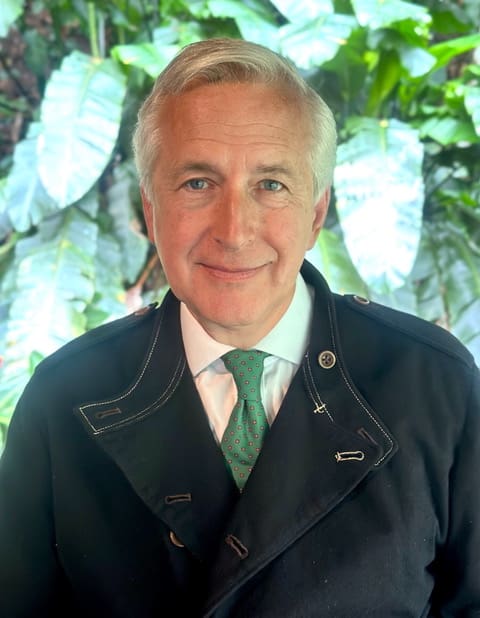
“You have to have your head up again if he wants to speak to you. Otherwise if your head is down between your knees that’s not going to happen,” he says.
“The Archbishop of Canterbury, Derek Jacobi, and other people all had to be taught how to bow. Actually if you look at the footmen as Colin Firth walks to the microphone, you’ll see them all doing the little quick bows.
“I suppose what I was trying to do was to get things like that which didn’t jar. You’re just smoothing the path,” Vickers adds.
With the white ties sat in the correct position and the actors bowing deemed satisfactory, Vickers would go on to help shape a particular scene through sharing an anecdote with Helena Bonham Carter endeavouring to embody the Queen Mother (Queen Consort at the time the film is set).
“I told her that I’d once seen the Queen Mother at St James’s palace at a charity thing I was involved with and one of the women that was being presented said, ‘ma’am, would you lunch with us again in the summer?’ and the Queen Mother’s forefinger went up and she said ‘always such a treat’, and I thought that’s a no.
“So I told Helena this and she slipped it into the scene where Mrs Logue invites her to stay for tea and she says ‘oh, what a treat but alas, a prior engagement,’” he says.
“She almost became my PR officer, she was very generous in saying how much I’d helped her with that,” he adds.
This isn’t the only moment in The King’s Speech which benefits from Vickers’ direct imprint though, he points to the scene just before the death of King George V as the family is sitting at the dinner table awaiting the inevitable news.
“At one point there was a scene where Claire Bloom, as Queen Mary, is sitting at the end of the table and the King is about to die, Lord Wigram comes in and whispers something in her ear.
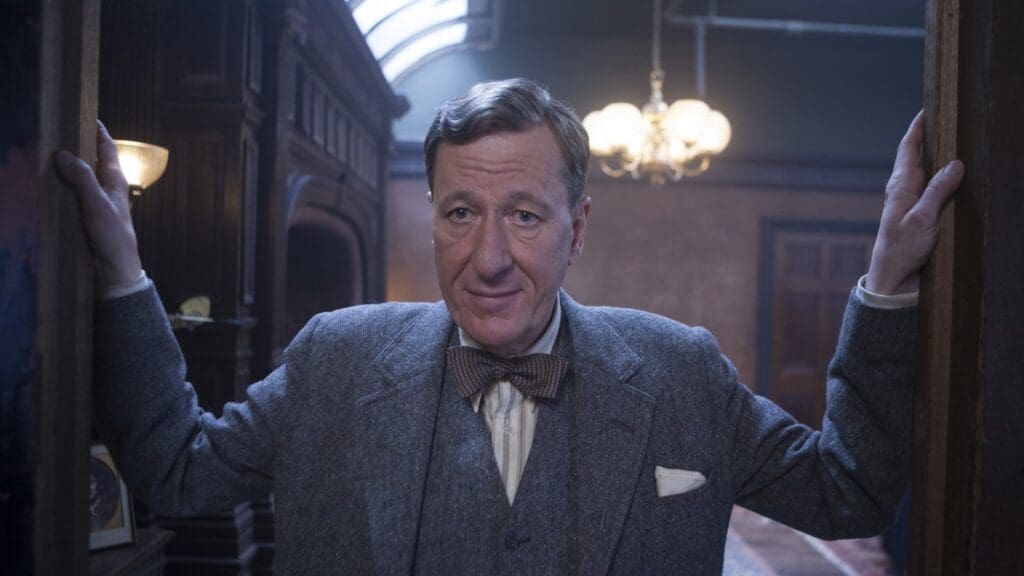
“She had been given the line ‘permission has been given for the coffin to be ordered’, which she didn’t like very much, so Tom Hooper [the director] said can you do anything about that? So on the back of an envelope, I wrote, ‘it seems our vigil will not be of long duration’, which is what she said in the film,” Vickers says.
This scene presents a shift in the film, the passing of the baton to what would be the ultimately short-lived reign of Edward VIII, played by Guy Pearce, who abdicated in order to be able to marry the twice divorced American socialite Wallis Simpson.
“When George V dies, Claire Bloom wanted to curtsy to the new king and kiss his hand, that’s a very good way of showing suddenly he’s the new king, and he looks astonished and horrified.
“I had the unique experience of myself curtsying to Claire Bloom and kissing her hand to show her how to do it,” he says.
Vickers recalls the somewhat intimidating nature of having some of the country’s biggest acting names flock to him for insight into their depictions, wary of not wanting to overstep his role of historical advisor.
“Colin Firth, I mean he listened to the speeches, which you know he got right. He’s a much more glamorous figure than the King, I mean Mr Darcy and all that,” he mentions in reference to Firth’s infamous 1995 turn in the BBC’s Pride and Prejudice series.
“I had to be quite careful, I was there for them to consult. One or two times it was quite funny when they were all listening, you think ‘oh my god I’ve got all these stars asking my advice you know, why me?’ It was funny,” Vickers adds.
One of the most widely-discussed scenes in The King’s Speech is when the King is encouraged to swear by Logue who clocks he doesn’t stammer whilst doing so, something assumably unnatural for a senior royal whose life has been governed by strict formalities from the day he was born.
Though the inner workings of the pair’s meetings remained mostly secret, Vickers is doubtful that the shouting matches depicted would’ve occurred.
“I mean, of course, it’s a film so it’s dramatized and therefore all that stuff about Colin Firth swearing to Lionel Logue, whether that happened I don’t know, but people love that,” he says.
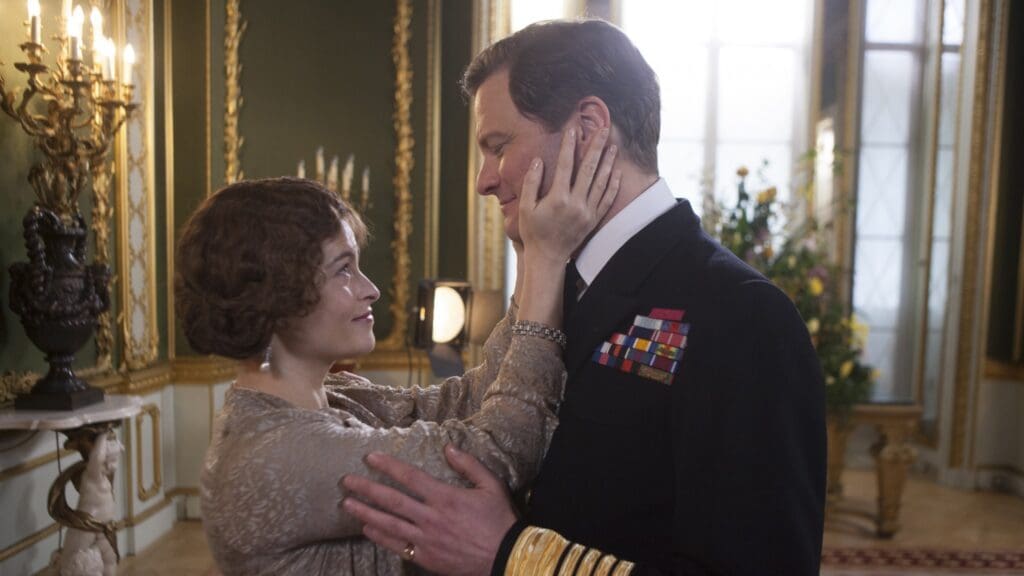
“They like to put in these touches because people find that more approachable. I’m sure he [Logue] didn’t call him ‘Bertie’,” Vickers adds.
He explains the significance at the time of the prospect of having a monarch facing such difficulty to address his people publicly.
“Sir Edward Ford who worked for him [the King], said ‘every time he gave a speech we were all in agony, longing for it to go well for him’, which it by and large did.
“But at the beginning it was terribly difficult for him, he came to the throne with no experience at all, he never expected to have to do that and then to take it over. It was a big concern and went on being a big concern right up until the end,” he says.
Logue continued to support King George VI for the rest of his life, remaining alongside him for many of his major speeches, including those throughout the Second World War and until his death in 1952.
“When the King was ill, he pre-recorded his Christmas Day message in the last year of his life, but before that he had to deliver it live. I think it ruined his Christmas lunch, and everyone else’s too,” Vickers jokes.