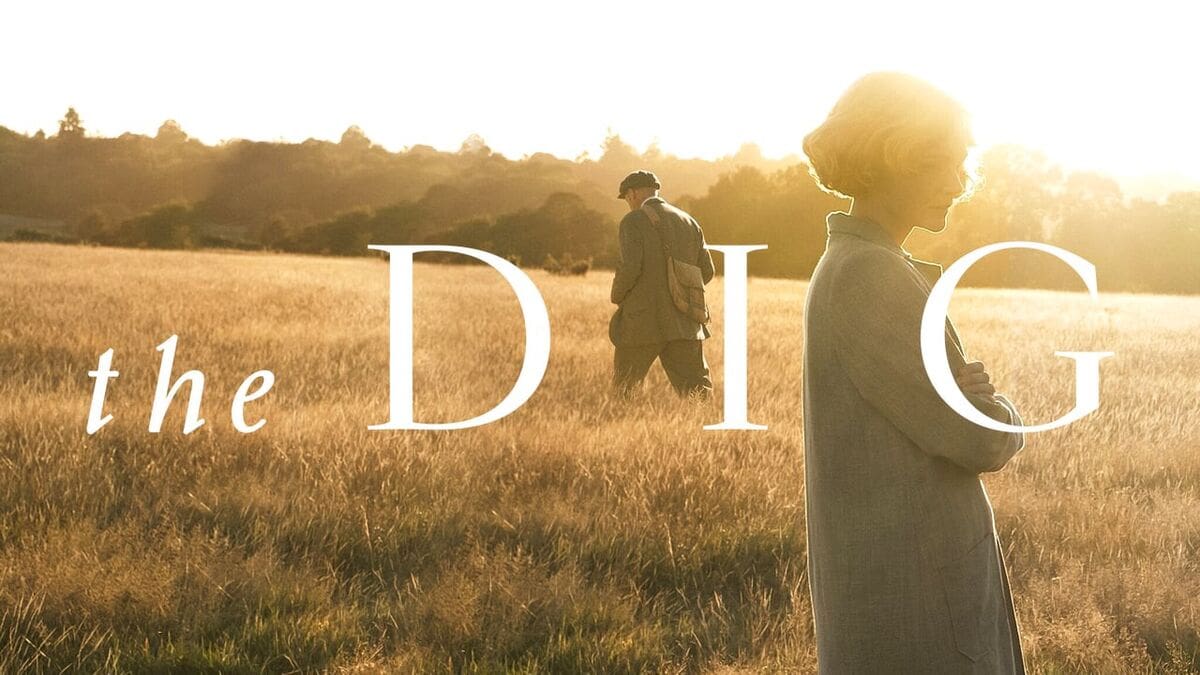
With every historical film, creative license is a given. But why do we always resort to romance – and how is this changing the way audiences interpret characters? Tyra Martin spoke to screenwriter Moira Buffini about relationships in “The Dig”.
Framed by the soft glow of the evening light, her hands reach out to cup his jaw as they lean in closer to each other, noses touching. The kiss is slow and hesitant at first, but the tension is broken by the obvious longing between them, the world around them fading away.
But in reality, this never happened.
These characters, Peggy Piggott and Rory Lomax, from the 2021 film “The Dig” never met, and Lomax himself is a completely fictional character.
Moira Buffini, the film’s screenwriter said:“It’s always challenging bringing real people to life. The novel was extremely helpful because much of it is interior monologue and it gave me a sense of the characters’ emotional lives.
“Lots of characters are speculative too. You find a poetic truth.”
The film was adapted from the novel, written in 2007 by John Preston, the nephew of Margaret Guido, or Peggy Piggott as she is known in the film.
Unlike the girlish amateur she was shown to be on screen, Margaret Guido was one of many experienced archaeologists that joined the excavation. She studied at the University of Cambridge and earned her diploma in 1932, and led her first ever excavation in 1937.
As shown in the film, she was also the first archaeologist on the team to discover gold at the site, demonstrating her expertise in the field, which the adaptation framed as a lucky find.
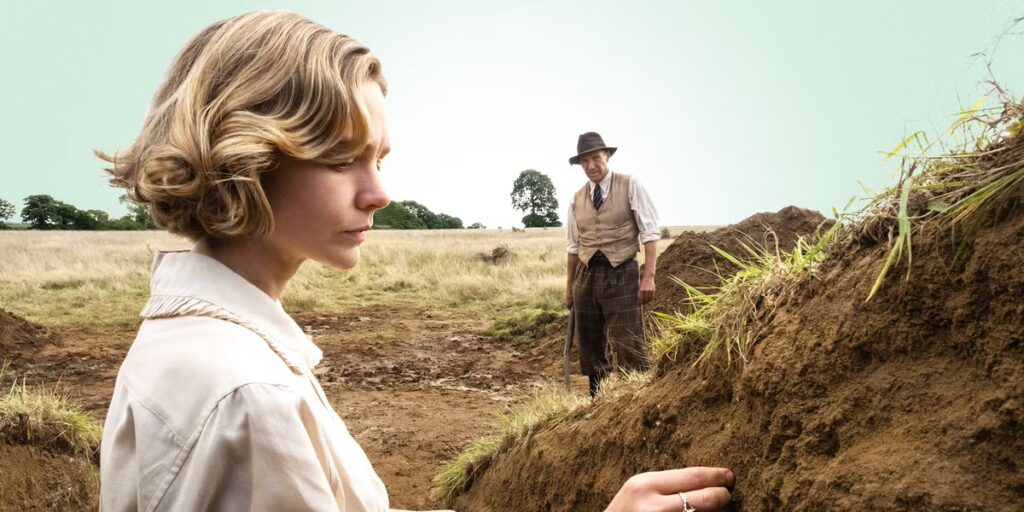
“John Preston wanted to give his aunt a love affair.” Said Mrs Buffini: “In real life, she was unhappy and her marriage was annulled. So that’s why Rory Lomax is there.”
Guido divorced her husband at the time, Stuart Piggott, in 1956 and married Luigi Guido in 1957. But this new marriage resulted in her becoming her husband’s carer, as two years into the marriage, Luigi Guido had a breakdown.
After this period, he left her and she never heard from him again.
Guido’s nephew’s desire to give his Aunt a happy ending is clear, but the question still remains of why include the romance in the film?
“I think their story is really important. In a film that is essentially about death and mutability, to have love and passion in the mix seemed essential to me. It’s a story set on the brink of a war and we have to feel the fragility of life.” said Mrs Buffini.
“We do that through Edith’s illness, her worries about her son and through the snatched moment of passion between Peggy and Rory. But overshadowing everything is the fear for the future that the characters all feel, even as they delve into the far distant past.”
Set in 1939, the film balances the tension of a country threatened with war, and romantic tensions between characters, used to break up the uneasy atmosphere that envelops the duration.
Speaking on the film making process, Mrs Buffini said: “When starting out it took many years to get the film into production because the story is a tricky ‘sell’. It doesn’t fall easily into any genre and it was hard to convince people of its unique qualities. Several directors came and went, and each time I would write a draft to their taste, which then had to be changed.”
The addition of a romance storyline in this retelling has been used as a form of light relief from the dense historical focus and conflicts between characters, such as Basil Brown and Ipswich Museum. It breaks up moments of concentrated archaeological history with romance, an aspect of human connection that most audiences can grasp.
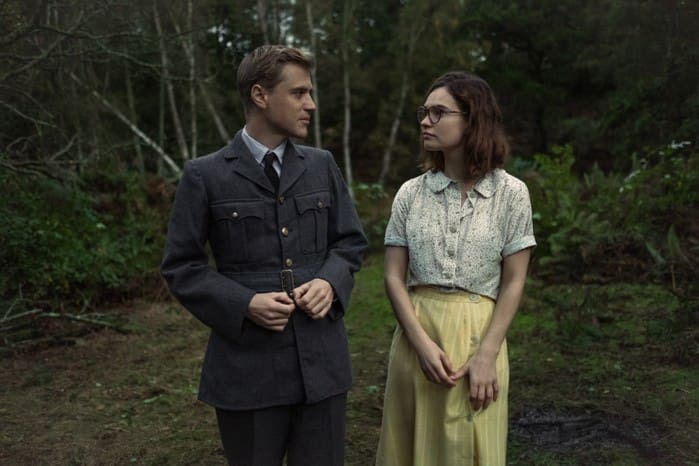
“The Dig” is not the only historical drama to add romance, with notable films such as “Titanic” and “Braveheart” also fabricating relationships, demonstrating a regular theme in historical storytelling, suggesting there is a place in historical films for love stories.
Mia Ford, founder of BadGal film club shared: “Romance is a universal language. When you’re dealing with history, events and dates can feel distant which makes it harder for audiences to relate to. Romance is an easy way of giving audiences something to resonate with. Everybody loves a love story.”
However, inventing a romantic sub-plot poses a risk to erasing the real lived experiences of characters and their contributions to history.
“The pushback tends to be loudest when the people being fictionalised are real, named individuals whose legacies are affected, especially women, whose historical contributions are already so often minimised.” Said Miss Ford.
In this instance, the character of Rory Lomax takes the place of two female photographers, Mercie Lack and Barbara Wagstaff.
Both women contributed significantly to the documentation behind the discovery, as it was one of the first excavations to be captured with colour film. But information such as this is completely overlooked when you replace real people’s work with a love interest.
Miss Ford said: “Adding romance absolutely broadens the audience, but it’s not always a good thing. When a fictional romance sits at the centre of a film based on real events, audiences will often remember the love story more vividly than the history itself.”
The film covers one of the most important archaeological discoveries in British History, of an Anglo-Saxon burial ship, which fundamentally changed the way that the “Dark Ages” were viewed by historians.
The affair in ‘The Dig’ is one of the more talked about elements in the film, and has sparked a huge debate amongst the audience as to whether it overshadows the triumph of the discovery.
Miss Ford said: “It’s increasingly pushed back on, particularly online, where audiences are much more research-literate than they used to be. People will fact-check a film within minutes of watching it.”
Although historical accuracy is important in filmmaking, so is audience engagement. Understandably, elements in historical dramas have to be sensationalised in order for films to gain as much audience traction as possible, so it satisfies a range of tastes.
Talking about the impact on audiences, Mrs Buffini said: “I am the audience. If I’m not moved, nobody will be. If I’m bored, it’s boring. I never separate myself from the audience. It is the worst mistake a writer can make.”
In a quiet, reflective film like ‘The Dig’, it demonstrates the delicacy of human existence, through historical discovery and emotional storytelling through characters, with romance being an instrumental tool in helping pique audience interests.