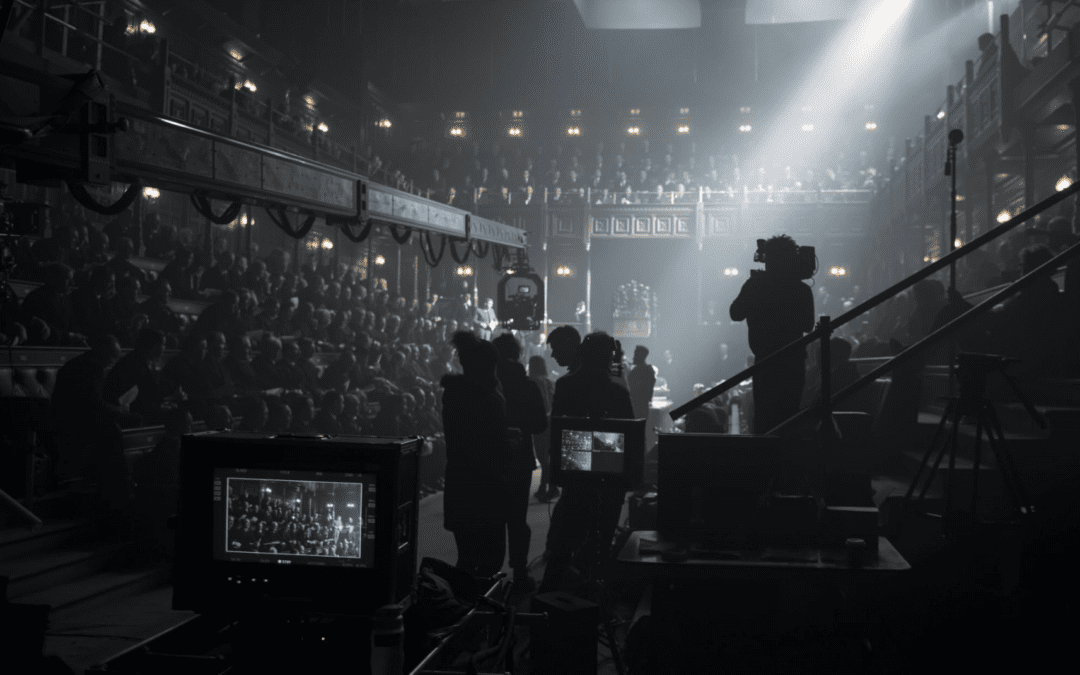

The British independent wrestling scene is a world entirely its own. Built on a rich heritage of hard-nosed, European-style grappling, it is a subculture defined by grit, humor, and a relentless work ethic. Long before the multi-million-dollar glitz of American television, the UK circuit thrived in the shadows—held together by local promotions operating out of drafty town halls, social clubs, and coastal holiday camps. It is a fiercely proud, unglamorous community where wrestlers double as the ring crew and fans are close enough to smell the sweat.
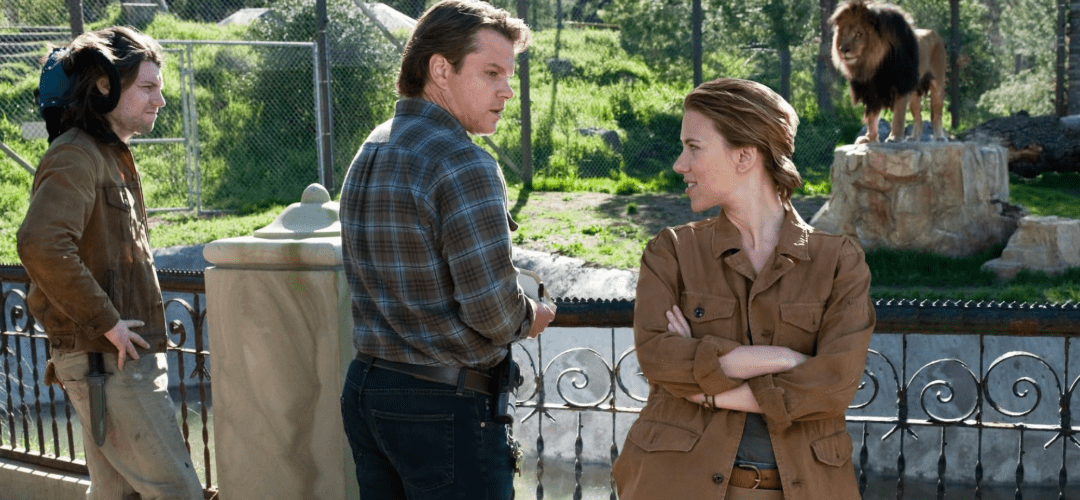
When director Stephen Merchant brought this eccentric world to the big screen with the 2019 biopic Fighting with My Family, he faced an immense challenge. The film tells the remarkable true story of the Knight family from Norwich and their daughter Saraya’s explosive rise to become WWE Superstar “Paige.” But to do the story justice, Merchant couldn’t just capture Hollywood stardom—he had to capture the authentic soul of the British indie grind.
To separate cinematic illusion from canvas-and-gaffer-tape reality, Histoflick sat down with two genuine powerhouses of the UK scene who were physically inside the ring as extras for the movie’s pivotal tryout scenes: heavy-hitting veteran Dave Mastiff and a man who spent 30 years in the ring—witnessing Paige and her brother Zak grow up from toddlerhood—legendary British hand Dale Broughton.
The Grassroots Grind
The film opens by establishing the chaotic, unglamorous hustle of the Knight family’s promotion, WAW. For anyone who has never sat on a creaky plastic chair in a chilly community hall, it looks like Hollywood dramatic exaggeration. According to the men who lived it, Merchant completely nailed it.
“Merchant absolutely nailed the texture of it,” Dave Mastiff tells Histoflick. “The cramped vans, the dodgy makeshift dressing rooms, the smell of a ring that’s been sweated through by six counties’ worth of lads on a week-long camp stint… That’s the world I came up in.”
Mastiff describes a bewildering yet charming existence where you could be wrestling in front of 40 people one minute and 2,000 the next. The film captures the ultimate reality of the UK “graft”—where the wrestlers aren’t just the main event; they are also the ring crew doubling up to load and unload the heavy iron frames into the back of a transit van.
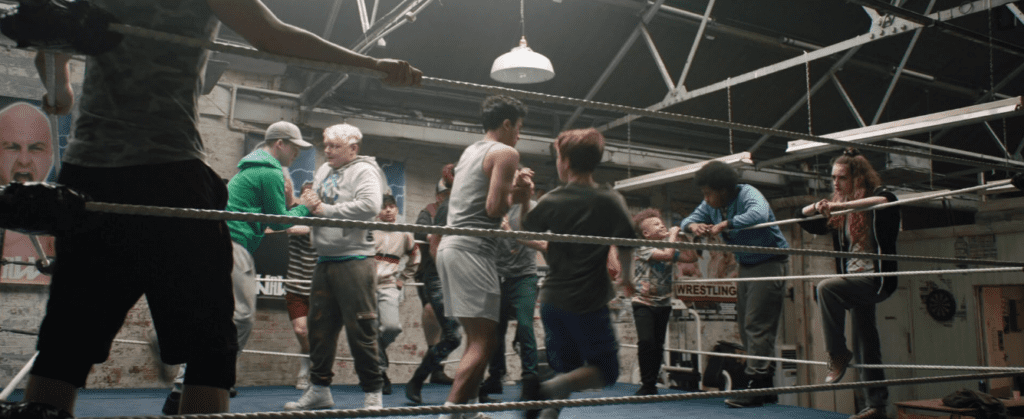
“I’ve wrestled in public libraries, barns with no heating in the middle of winter, sports halls, working men’s clubs, and outdoor carnivals in 35-degree sunshine,” Mastiff recalls.
Dale Broughton agrees that the day-to-day life of a British wrestler was accurately put on screen. “Everyone helped to pack vans, everyone helped flyer the area the shows were on, and yes, at the time, wrestling was in very small venues.”
Crucially, because Stephen Merchant is British, the movie managed to side-step the typical traps of American studio interference. It avoided mocking dialects, it didn’t treat the quirky venues like a joke, and it resisted portraying independent wrestlers as delusional dreamers. Instead, it highlighted the pride, community, and sheer love holding the scene together.
The Great Tryout Illusion
The major turning point of the film happens when Paige and Zak arrive at London’s O2 Arena for a WWE tryout. Here, they encounter “Hutch Morgan”—a bitter, drill-sergeant composite character played by Vince Vaughn, who uses psychological warfare and brutal cardio to break the spirits of the hopefuls.
This, our insiders reveal, is where Hollywood took its biggest creative detour.
“I would say that this is possibly the most inaccurate part of the film,” Mastiff notes, pulling back the curtain on the modern wrestling machine. “The coaches and people involved in the tryout process today are positive and encouraging. It’s ultra-corporate now and has been for a while—it’s more like Disney, Apple, or Google. It’s an NFL Combine-lite.”
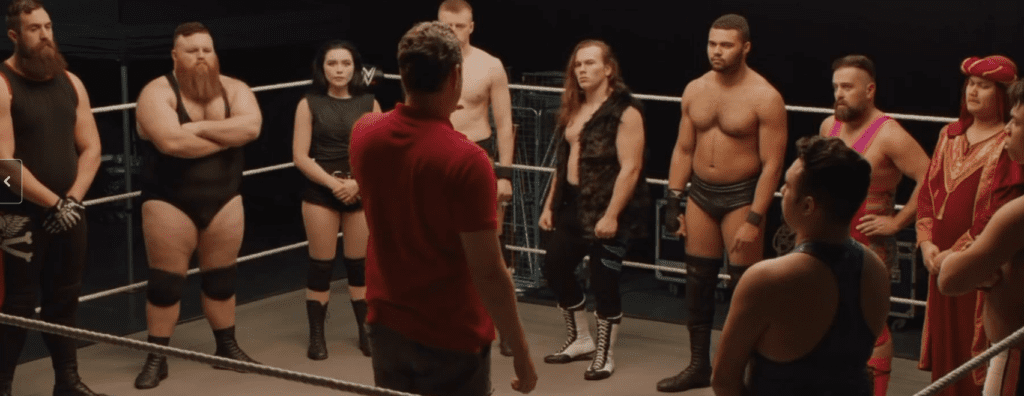
So, where did Vince Vaughn’s ruthless gatekeeper come from? Mastiff explains that Vaughn’s character is a deliberate throwback to an older generation of wrestlers. “I’d even say he’s similar to one of my real-life coaches, Rip Rogers. Their style was to gatekeep the job, find those not suitable for a career as a pro wrestler, and keep the standards high for the industry.”
Broughton, however, notes that while the corporate structure has softened the edges, the underlying pressure remains the same. “It was very hard at any tryout, and you were pushed to your limits. As in any industry, some faces fit and others don’t.”
Guiding Florence Pugh
One of the most fascinating aspects of Fighting with My Family is the physical accuracy of the in-ring action. To achieve this, the Hollywood stunt crew had to step back and let the UK pros lead the way.
Mastiff reveals that while a highly respected stunt director was on set, he willingly stepped aside when it came time to film the tryout montage. “We as wrestlers put together a highlight reel of things for him, and he watched and asked questions in order to understand and help translate it for filming.”

This collaboration led to one of the most authentic, unscripted moments in the movie involving the film’s star, Florence Pugh.
“Florence in particular was excellent and very dedicated,” Mastiff says. “The director wanted her to do some work with me for the tryout scene to really capture the essence of her toughness and ability to mix it with men in the ring. With me being the biggest guy there, Stephen [Merchant] wanted to use that to accentuate those traits.”
The Quiet, Grinding Heartbreak of Being Left Behind
While the movie functions beautifully as a comedy, it pivots into heavy drama when exploring Zak’s rejection by WWE. While his sister ascends to global superstardom, Zak slips into a dark depression back home in Norfolk, feeling defined by his failure.
Both Mastiff and Broughton point to this arc as the most emotionally honest part of the film.
“Every wrestler—every single one—has lived that moment where someone else gets the nod,” Mastiff says quietly. “Sometimes it’s because they’re taller. Sometimes it’s because they’ve got a better look. Sometimes it’s because the company just woke up in a different mood that day.”
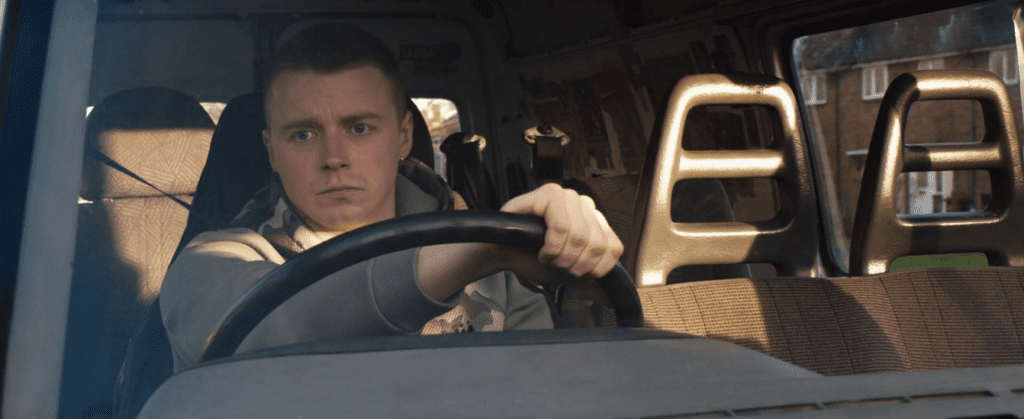
“Zak’s story in the film is painfully real: the feeling of being overlooked. The duality of being happy for friends and colleagues but wanting to crawl up inside yourself also. It showed the quiet, grinding heartbreak—the kind that doesn’t make headlines but breaks people all the same. That’s the part of wrestling fans rarely see,” added Mastiff.
Broughton reflects that given the modern awareness surrounding the industry, the film could have gone even deeper. “With how the world is nowadays, maybe even more could have been made of the mental health concerns, which are so prevalent in society now.”
The British Legacy: “We Do It Right”
Before the movie, mainstream media often treated British wrestling like a dead, nostalgic museum piece—a relic of the 1970s World of Sport era of Big Daddy and Giant Haystacks. Did Fighting with My Family change the narrative?
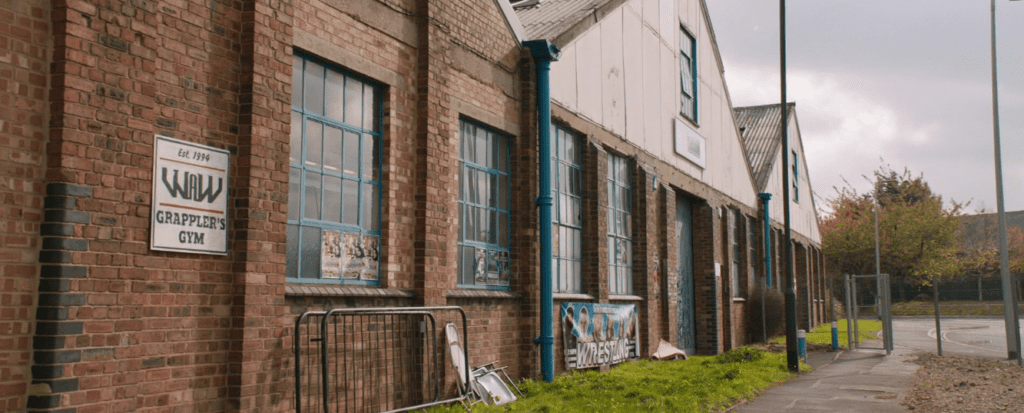
“It certainly put British wrestling back on the map due to its worldwide success,” says Broughton. “It made people believe more stars could come from British wrestling. We do it right. We train in all forms of the art. Many stars are not chosen simply because they look like a film star but on their working ability.”
Mastiff points out that while the UK scene had already set itself alight and pushed toward the mainstream long before Hollywood arrived, the film provided a vital bridge to the public. “I’ve had conversations with a lot of people who aren’t wrestling fans necessarily but have seen the film and found an appreciation for what we do.”
The Verdict
Fighting with My Family may have polished a few corporate edges for the sake of a narrative arc, and it may have transformed modern talent scouts into old-school gatekeepers. But in the areas that truly matter—the smell of the ring, the warmth of the community, and the devastating psychological reality of the “no”—it stands as an incredibly authentic testament to British indie wrestling.
As Dave Mastiff beautifully concludes:
“Wrestling is a strange, beautiful, brutal life. It’s theatre, sport, family, heartbreak, and triumph all rolled into one sweaty, noisy package. Fighting with My Family didn’t get everything perfect—no film could—but it got the heart right. And that’s what matters.”
For Dale Broughton, who watched the real-life kids from Norwich grow into Hollywood history, the sentiment is simple: “Would I change my time in the industry? No way. I’d do it all over again. I loved it.”