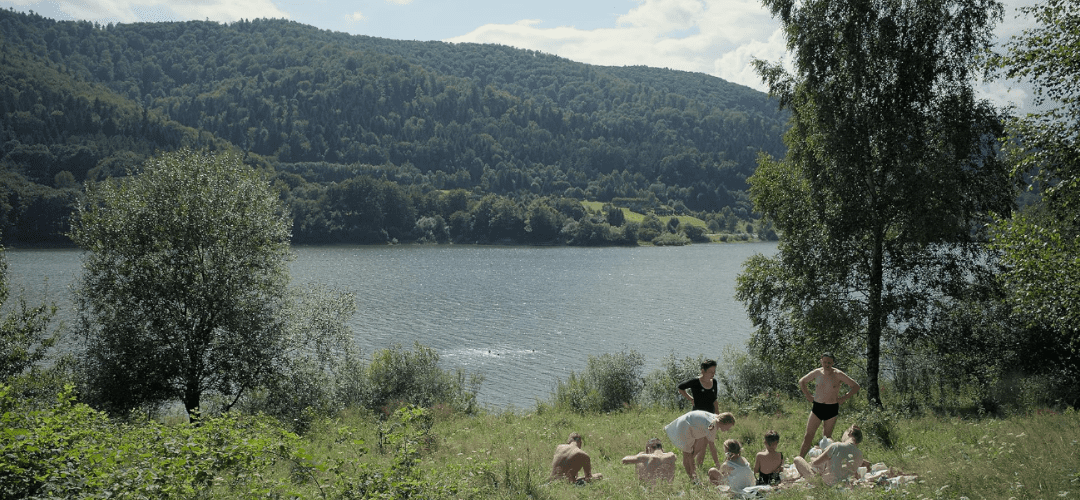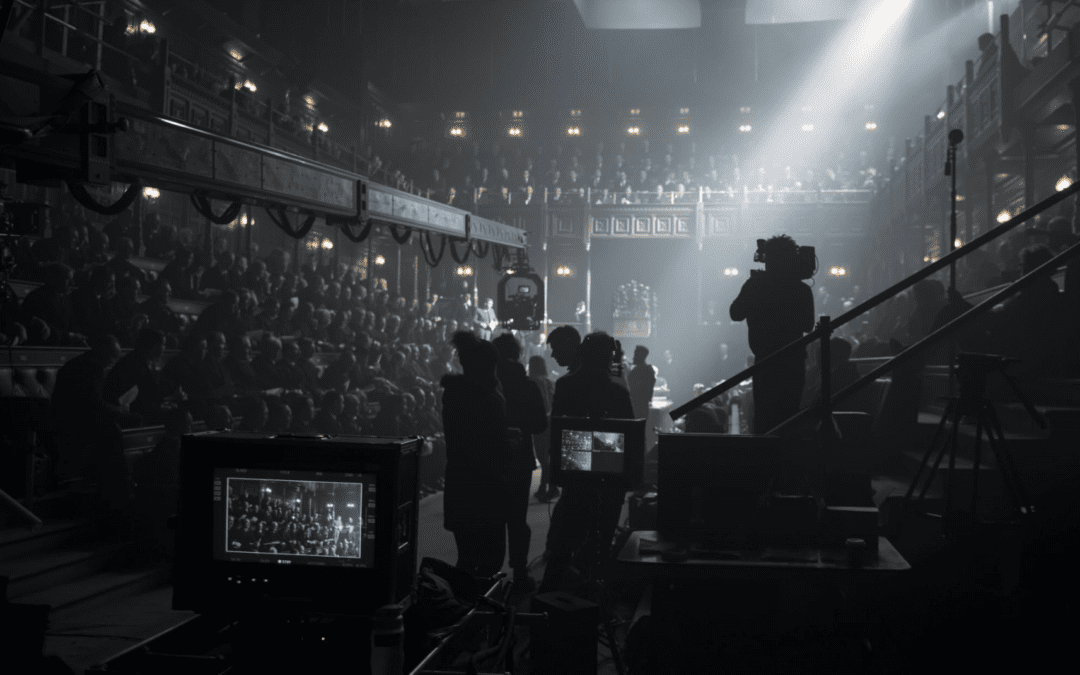
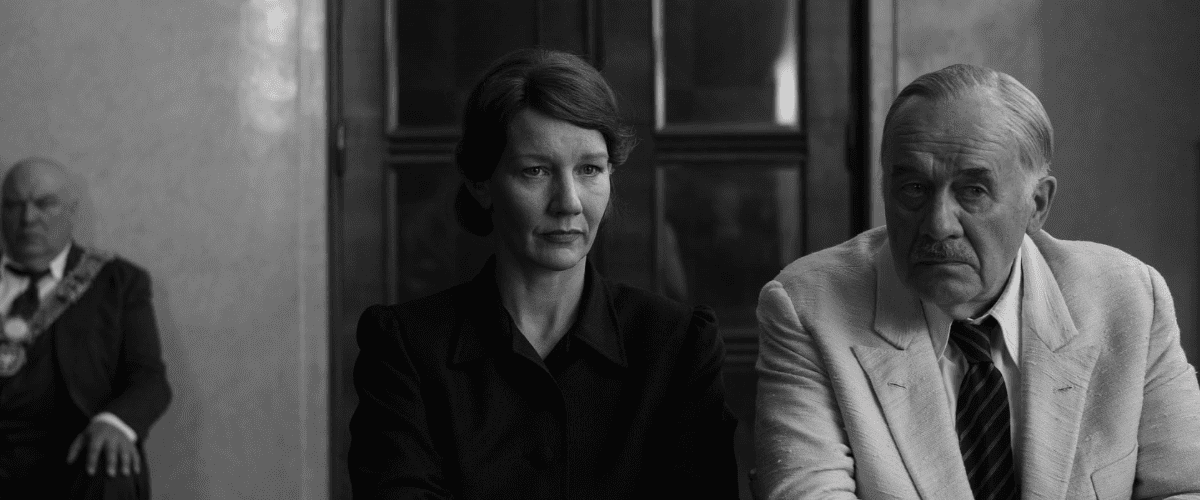
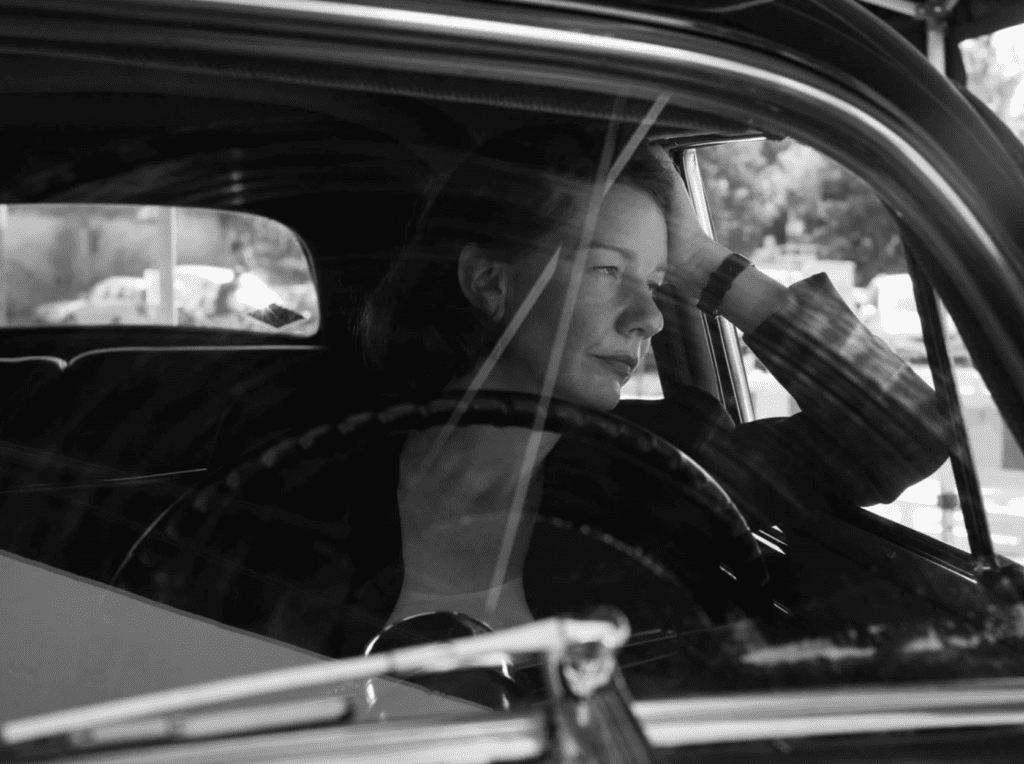
Fresh off director Paweł Pawlikowski’s Best Director win at Cannes earlier this month, the trailer for Fatherland has finally arrived. The striking black-and-white film follows Sandra Hüller, playing the fierce rally-driving actress Erika Mann, and Hanns Zischler as her Nobel Prize-winning father Thomas Mann.
The movie portrays them navigating a sleek black Buick through the single-coloured ruins of 1949 Germany during the Cold War. Their tense road trip takes them from US-dominated Frankfurt to Soviet controlled Weimar, capturing a nation physically and spiritually severed. In one of the trailer’s most haunting moments, a journalist asks Thomas, “Where is home?” The great writer struggles to answer. The film forces us to ask how a nation of normal workers, artists, and thinkers let this happen.
To understand the ruins seen in the trailer, we must ground ourselves in the reality of Weimar Germany. Everyday citizens were not simply brainwashed overnight. They were broken by extreme economic and social circumstances that created a desperate need for stability.
Roger Griffin, a British professor of modern history and political theorist at Oxford Brookes University, explains that this need for order pushed for compliance.
“The German economy from 1918 was a catastrophe,” Griffin says. “You’ve got the hyperinflation, and then you’ve got the 1929 crash. Just the idea that you were going to be in a regime where the trams ran on time and where you had enough food. A lot of people just had this sense of relief.”
He notes that this is called cognitive dissonance, where people find a myth they feel comfortable with to survive.
Moving from economics to psychology, the movie examines the floating voters of the era. A total breakdown in society strips people of their identity, making extreme communal ideologies highly attractive.
The Fatherland trailer shows this emptiness through shots of deserted cafes and the empty smiles of hosts welcoming the Manns at diplomatic ceremonies.
“Most people are blobs in a breakdown of society. They don’t know who the hell they are,” Griffin explains. “And so when you become a Nazi, you get your dustbin armour. In that moment, you are lifted out of your lack of purpose and identity into a communal identity.”
As well as exploring the working class, the movie focuses on the cultural elite who were equally complicit. The new trailer gives a brief glimpse of a party reception featuring the character of Gustaf Gründgens, played by Joachim Meyerhoff.
As Erika Mann’s real-life ex-husband, Gründgens succeeded under the Nazi regime by claiming he was just an actor following his craft. Intellectuals and artists used this exact cultural appropriation to support their survival and success under the regime.
“You’ve got Gründgens, haven’t you? You’ve got the great actor. The Nazis appropriated the idea that there was something Faustian in ordinary Germans, this thrust towards creativity,” Griffin points out. “So you get a lot of very weak, morally spineless, ambiguous people being sucked into the idea that this is a really good thing.”
Ultimately, Fatherland breaks the myth that an entire country was populated by monsters.
“Nazism never had 37 per cent of the population as fanatical Nazis. They were probably, at best, in any population only about 5 per cent who will ever be fanatical. And maybe another 10 per cent will be hangers-on,” Griffin states. “Lots and lots of people who should have known better find themselves working for the regime; they just go along with it.”
When Fatherland arrives in cinemas this autumn, it will be more than just a historical road trip movie. It acts as a cold warning from history, showing how easily normal people can give up their morals just to keep the trams running on time.