John Davidson has spent forty years trying to make the world understand Tourette syndrome. It might finally be working.
When Robert Aramayo accepted the BAFTA for Best Actor in February 2026 for his portrayal of John Davidson, he became one of the most unexpected winners in the award’s recent history – beating the likes of Leonardo Dicaprio and Timothée Chalamet with a performance most of the world had never seen before. That victory alone would’ve been enough of a story, but I Swear was never about the awards. The worldwide recognition of this movie stands for so much more.
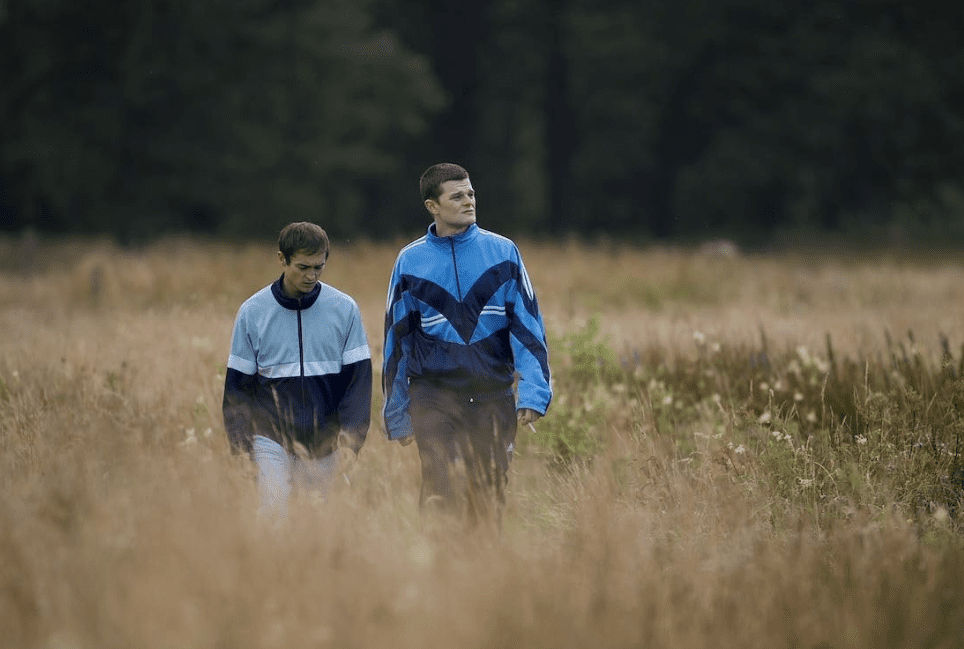
Based on the life of John Davidson, a Scottish man who developed severe Tourette Syndrome at the age of twelve, the film charts his 40-year journey from a promising young goalkeeper in the small town of Galashiels, Scotland, to a globally recognised campaigner, who was awarded an MBE by the late Queen Elizabeth II in 2019.
Despite the success and recognition Davidson eventually received in his life, the path his condition had paved for him was one of trials and tribulations, and often one of pain and isolation. In the years following his diagnosis in 1985, like so many others with Tourette’s, he faced ridicule and violence from almost every aspect of his life.
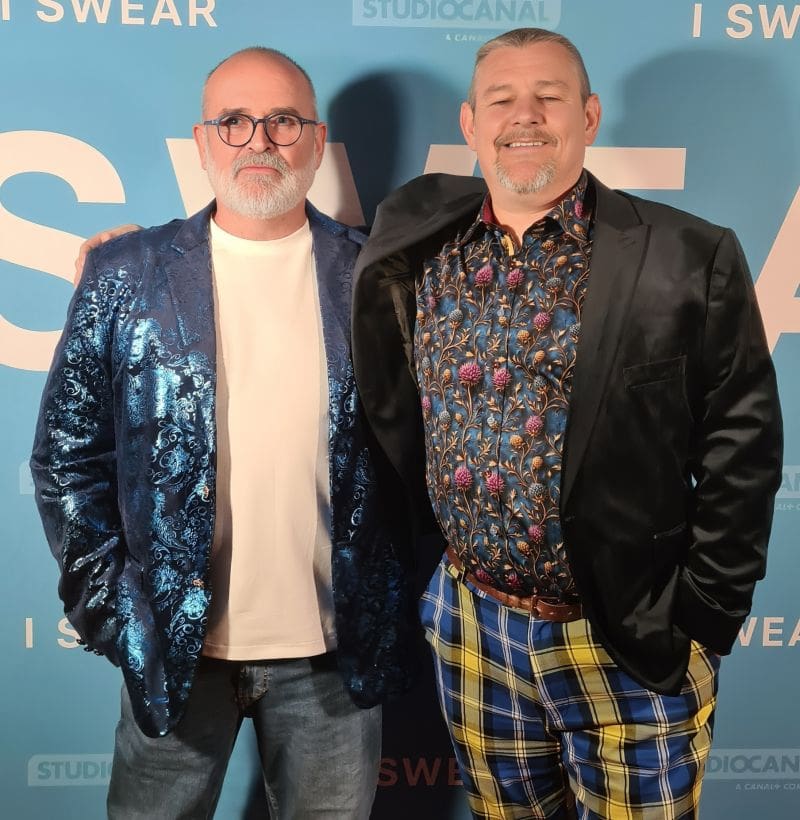
As a global ambassador for Tourette Syndrome awareness, as well as serving in an advisory role on the production and appearing briefly in the film as himself, few people are in a better position to assess I Swear than Paul Stevenson.
After receiving his diagnosis at the age of 46, he sought out advice from Davidson, and the two have been close friends ever since. Despite receiving a later diagnosis than most, Stevenson had been dealing with tics his whole life, and experienced the same horrors we see Davidson go through in his teenage years, especially at school.
He said: “It’s funny because without a diagnosis, it’s like, did I ever suffer or did I struggle? And yet, I did struggle, you know, especially in high school. The movie shows John getting the leather strap and it was a regular occurrence for me to get the strap! We got punished a lot for things we can’t control. My life mirrored John’s in that way, but at the time I didn’t have a name for it.”
He also went on to say: “These tics, they cause you a hell of a lot of trouble. And the movie captured that perfectly. I’ve been attacked a few times myself. You know, people don’t really get the tics. So I would say, you know, it was a great portrayal of what reality living with Tourette syndrome and Coprolalia is like. Yeah. Especially in that period of time.”
The major plot points of the movie ring true. Davidson’s father abandoning the family home, his expulsion from school for outbursts he could not control, his suicide attempt, his gradual transformation from an isolated young man to community leader and inspiration – all documented, all depicted.
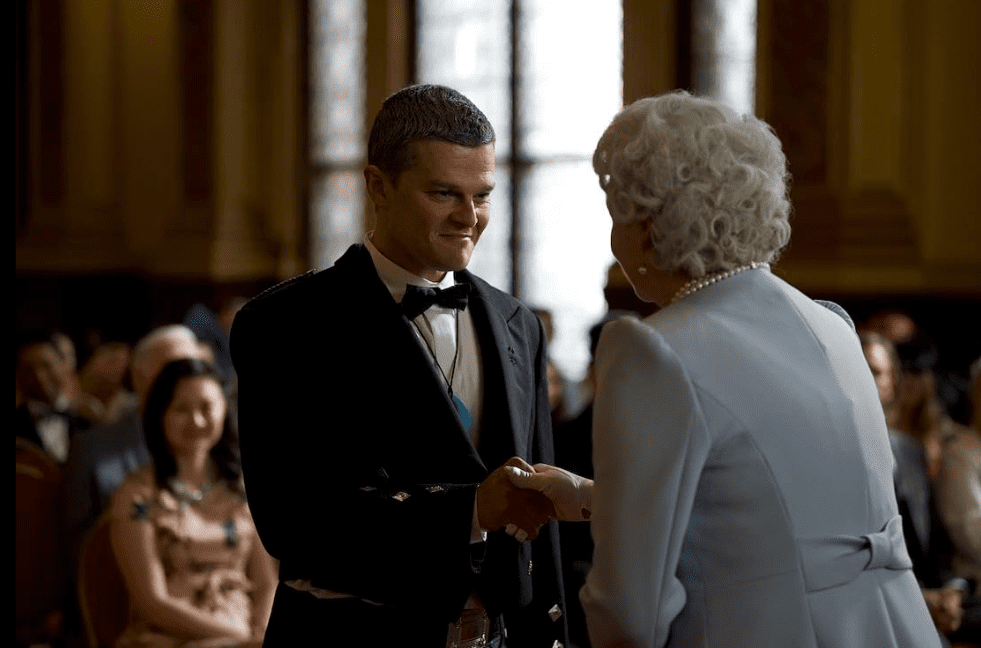
Even the film’s opening and closing scene, in which Davidson involuntarily shouts an expletive at the Queen during his MBE ceremony at Holyrood Palace, is drawn directly from real life.
“The security guy stepped forward, put his hand on John’s shoulder and said, ‘Don’t worry, John, the Queen understands,'” producer and writer Kirk Jones has recounted.
It is a scene that could have easily become trivialised. Instead, it captures something so true to Davidson’s life – the way that the most impressive and dignified moments of his life have always had a second, uninvited voice running alongside.
The sincerity of these moments, though seemingly theatrical, are able to ground themselves in reality, not only because they actually happened, but because of the performances too.
Robert Aramayo threw himself into his work, Stevenson describes him as “very method” as he recounts living with Aramayo and Davidson in Galashiels for three months before filming began.
“I met up with Rob and he said, ‘It’s not so much about the tics, Paul, that I want to know, but it’s the other stuff, you know, the co-occurring conditions, you know, the anxiety, the stress’.”
Aramayo’s portrayal was built from the outside in. Of course with the involuntary jerks, the neck strain, the punching tics that leave marks on walls, but what made it something more was his commitment to understanding the man behind all of that.
The overall conclusion was that Aramayo didn’t play Tourette’s. He played John Davidson. That transformed the performance from what could’ve perhaps been classed as ‘awards-bait’ into something genuinely moving.
Stevenson also spoke highly of the performances of Maxine Peak and Scott Ellis Watson, who played the roles of Aunt Dottie and a young Davidson respectively, with the former “capturing the essence of who and what Aunt Dottie was to us perfectly”.

Copyright: © One Story High/ Tempo Productions, I Swear
Of course, when you assess the accuracy of a movie like this, there are inevitable questions about whether a neurotypical actor could authentically portray a condition as physically specific as Davidson’s severe Tourette’s, but Aramayo answers them resoundingly.
Stevenson reveals they had tried initially to use a neurotypical actor.
“There’s people with Tourette’s who are brilliant actors. But to stick to a script while ticcing, and they did try it, I think that’s the difficult part. So it had to be someone extra special who could get the essence of John himself as a person, but also capture the tics, the ferocity, the humor and the sadness. And that was all down to Rob’s [Aramayo] acting skills and young Scott [Ellis Watson] as well,” he says.
I Swear hit number one at the UK box office on release, ranked among the top ten British films of 2025, and became available on Netflix UK in March 2026.
Sony Pictures Classics then acquired distribution rights across the United States, Latin America, and significant portions of Asia and Eastern Europe, with a US theatrical release following in April 2026. By any commercial metrics or measures, this is a film that found its audience.
This kind of commercial success and attention is one thing, but it doesn’t necessarily equate to impact.
When John Davidson’s tics echoed around the BAFTAs in February 2026, the global reaction that came after was, perhaps, the film’s most powerful argument.
Some called for compassion and sympathy while others, particularly those less familiar with the symptoms of Tourette’s and coprolalia, struggled to come to terms with the involuntary and unintentional nature of these tics.
This attention, though brought about in an undesirable way, directed so many towards the movie, and Tourette’s charities. The UK’s leading charity, Tourette’s Action, reported a surge in enquiries in the days that followed and it all circles back to the movie’s message – people need to be educated, in order to understand the disorder and be accepting of it.
Emma McNally, the charities CEO, said that viewers had told them seeing Davidson’s story portrayed with honesty had given them a far more accurate understanding of what Tourette’s actually looks like, not just stories they had heard or snippets of information that come across here and there.
Tourette’s ambassadors like Stevenson, and charities like Tourette’s Action, are hoping that the impact will be sustained. Recent conversations have even discussed the possibility of I Swear being shown in secondary schools for students of age.
Louise Roberts, who has worked in schools for over 20 years, with 6 of them being as a Special Educational Needs Teaching Assistant said: “The main concern obviously is the profanity and showing that to schoolchildren, but if there was a way to get around, which truthfully, I don’t know if there is, I’d be all for it. Having watched it as someone who’s worked with children with Tourette’s, I found it really emotional. Often these kids can feel so isolated, and all it is, is a matter of understanding.”
Though classrooms and teaching has come a long way, the problem can often lie with peers. Children and their innate responsive behaviours can often end up being cruel, and hurtful.
Roberts said: “A child with severe Tourette’s still walks into a classroom carrying something that their peers do not understand, that disrupts the environment, it does just naturally invite reaction. You can’t really avoid that. Children are not cruel by nature. But they are responsive, and they respond to what they do not understand with the tools available to them – which can be avoidance, laughter and even sometimes exclusion – but it’s no fault of their own.”
So though there may still be work to do in formal environments and for younger age groups, I Swear’s global success has made huge strides in changing the landscape for those with Tourette’s worldwide.
When someone like Stevenson, who has put the work in to achieve recognition and awareness of Tourette’s globally, can recognise the real world in the movie, and the experiences that he went through, it’s a testament to the work put in on the movie – from actors like Robert Aramayo to writers and producers like Kirk Jones.
John Davidson once said that the problem was never Tourette’s. The problem was that people didn’t know enough about it. People like Davidson and Stevenson have dedicated their lives to advocacy and spreading awareness of Tourette’s, and it’s true, a film can’t replicate that. But what a film can do is get a stranger in a chair for a couple of hours and feel what it’s like to live that struggle.
And for those who have had to live that struggle, that might be all they want – understanding.