
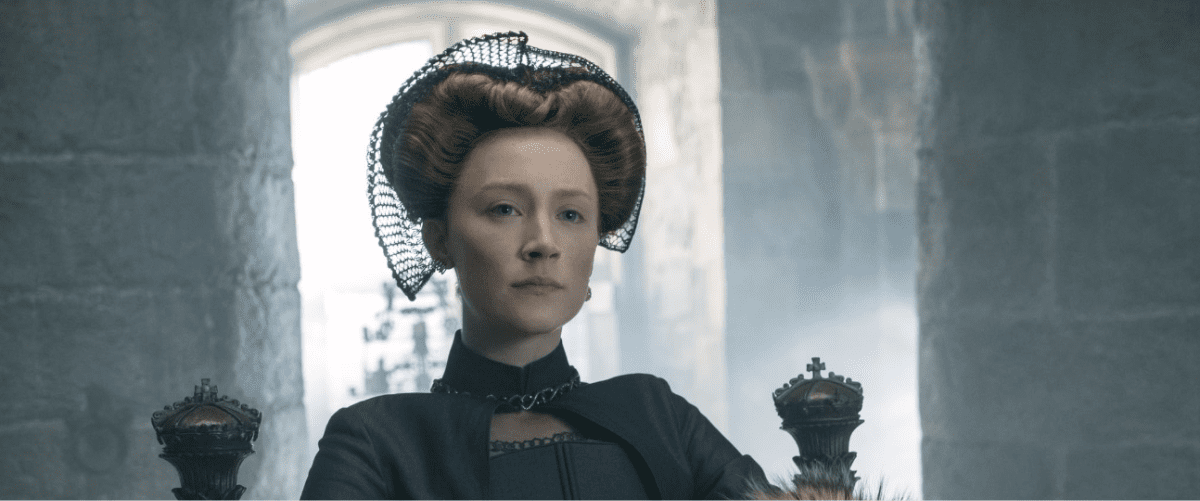
Dr. Elizabeth Norton, an expert on England’s queenship, discussed the real-life relationship between Mary Queen of Scots and Elizabeth I in Mary Queen of Scots (2018).
The film stars Saoirse Ronan as the titular Mary and depicts tensions with her cousin, Margot Robbie’s Elizabeth I, following her return to Scotland in 1561.
Conflict arose from Mary Queen of Scots’ belief that she was the legitimate heir to the English throne through her grandfather Henry VII of England.
Dr. Norton said: “When Mary, the First of England, died, Mary Queen of Scots claimed the English crown. And she did that because Elizabeth was legally illegitimate. She’d been illegitimate by her father, never becoming legitimate again.
“It coloured the relationship for the rest of their lives. It meant that they could never be easy with each other or secure with each other.”
Mary Queen of Scots ruled over Scotland from 1542 until her forced abdication in 1567. This came as a result of the religious and political turmoil in the country following her husband Lord Darnley’s murder and her marriage to Protestant James Hepburn, Earl of Bothwell, the lead suspect.
“Elizabeth does offer Mary advice when it all starts going wrong in Scotland. Elizabeth writes and says, you know, you need to investigate Darnley’s death. It’s really good advice. So she’s not trying to trap her.
“I think Elizabeth was generally furious when Mary was deposed in Scotland and imprisoned.”
Mary spent 19 years imprisoned in various locations across England. In 1586 she received a letter from the Earl of Babington devising a plot to assassinate Elizabeth I and place her, a Catholic, on the throne.
“Had Elizabeth died, Mary would most likely have become Queen of England at any point during her imprisonment, which is something Elizabeth is aware of. I think the film does bring that out because it’s called Mary Queen of Scots, but Elizabeth is a huge character in it.
“There are so many scenes at Elizabeth’s court where she’s engaging with Scotland, she’s engaging with Mary, and I think they capture the relationship pretty well, the fact that it is quite tense. They are rivals.”
The Babington plot was foiled by spymaster Francis, Duke of Walsingham and led to Mary’s execution the following year in 1587.