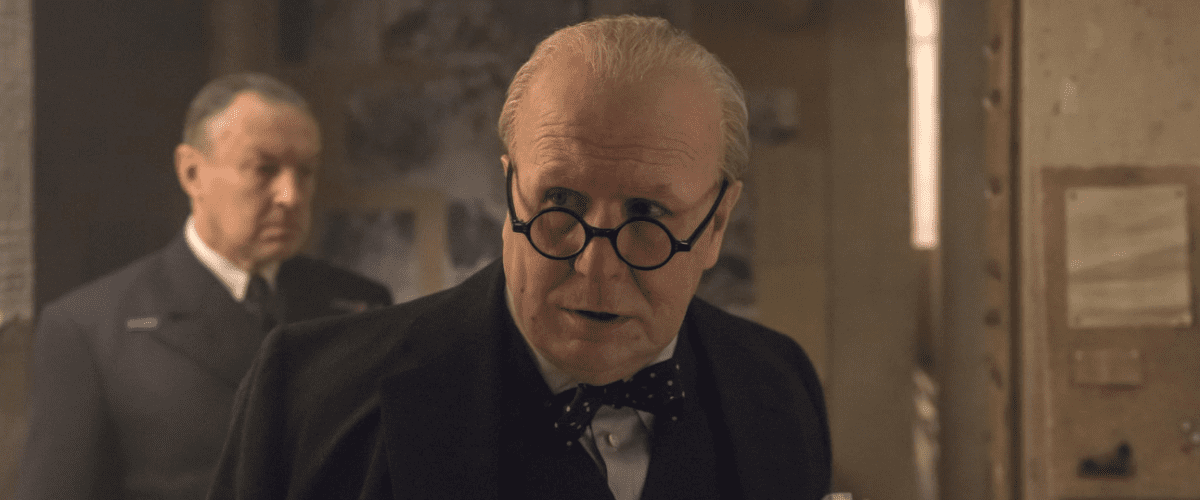
Director of the Churchill Archives Centre, Allen Packwood OBE, explained why Winston Churchill was the subject of two different biopics in 2017.
The films Darkest Hour and Churchill centre on Winston Churchill and his military actions amidst pressure from his British contemporaries and the geo-political tensions of World War Two.
Allen Packwood OBE said: ”I think there was a lot of interest in Churchill around 2017, and I think there are several reasons for that.”
Darkest Hour stars Gary Oldman and follows Churchill’s 1940 ‘War Cabinet Crisis’. This was when England’s War cabinet split over the decision on whether to discuss peace terms with Nazi Germany. Two camps developed with Churchill, who wanted to continue the war, championing one side, and the British Foreign Secretary, Lord Halifax, who preferred negotiation, campaigning for the other.
Churchill centres on Brian Cox’s Winston Churchill 96-hours before the Normandy Landings. Otherwise known as the D-Day landings, this was when the allied forces invaded Normandy as part of Operation Overlord, marking a key turning point in the international conflict.
Packwood continued: “You had just had the sixtieth anniversary of his death. Both of those films would have been commissioned and work would have started at around 2015, at that point, there had been an awful lot of interest and introspection about Churchill’s life.”
Winston Churchill passed away on the 24th January 1965 at the age of 90, Darkest Hour went into pre-production in February 2015, and Brian Cox would be announced as Churchill’s lead in November that same year.
“I think the other reason is perhaps that you’re at a moment where Churchill and that Second World War generation are passing from the stage and so I think that prompts a re-examination of the wartime period.”
Christopher Nolan’s Dunkirk (2017) focuses on the Dunkirk evacuation of 1940 through the lens of a British infantry soldier, demonstrating the strong public interest for World War films.
Darkest Hour premiered at Telluride Film Festival 2017 and was well-received commercially, earning £48m worldwide, and critically, receiving Best Picture and Best Leading Actor nominations at the Oscars, which Gary Oldman won.