Our rating
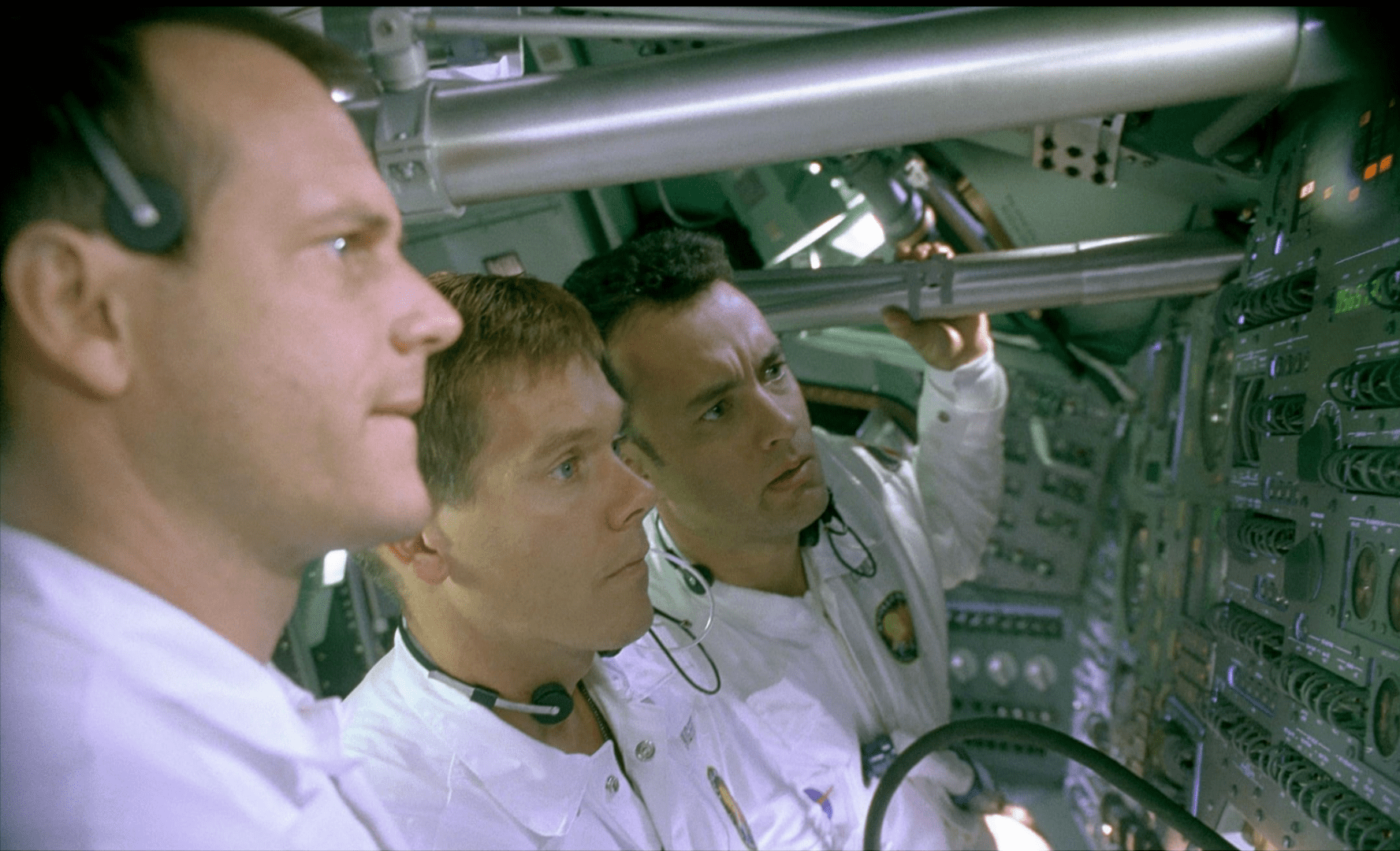
Most space flicks love to float around the majestic wonder of the cosmos. Absolute rubbish. Ron Howard’s Apollo 13 yanks you out of that comfortable daydream and jams you directly into a freezing, carbon-dioxide-choked tin can. By locking the lens on Jim Lovell and his crew, the film shifts away from untouchable NASA mythology and onto the heavy shoulders of three incredibly stressed crew trapped in a cosmic breakdown.
Tom Hanks plays Lovell with a grounded, “we are not dying today” stoicism, while Ed Harris provides a masterclass in bureaucratic grit as a furious Gene Kranz. Kevin Bacon and Bill Paxton excel as the increasingly frantic crewmates left shivering in the dark. The cinematography feels beautifully suffocating, utilising a zero-gravity environment that immediately communicates the terrifying stakes of their vacuum-packed charge. While the final act leans into a predictable, heartbeat-skimming Hollywood climax to milk the re-entry tension, the film’s true brilliance lies in the chaotic, clock-stopping puzzle of human survival. It celebrates the sheer brilliance of engineers on the ground using literal rubbish to save lives.
By amplifying the psychological claustrophobia inside the spacecraft, the filmmakers force the audience to experience the terrifyingly fragile trust required to survive a quarter-million miles from home. It delivers a sharper, much more animated emotional truth that keeps you gripped to the edge of your seat.
The verdict? Would duct-tape again.