From the tombs of Tutankhamun to the sets of Gladiator, Nigel Hetherington has spent over two decades connecting Hollywood to history. Lewis Kennedy meets the man ensuring the big screen gets the past right, and discovers why the truth is always stranger than the conspiracy.
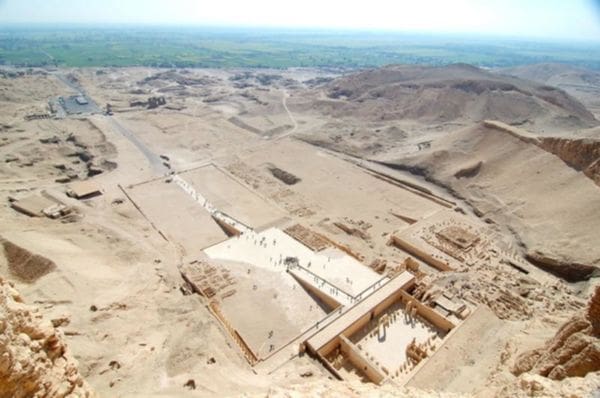
Deep within the golden sands of the Valley of the Kings, a budding archaeologist stood among the winds and whispers of a 3000-year-old dynasty. Nigel Hetherington had recently retrained to follow a deep passion for Egyptology, using his skills to aid coverage for an exhibition on the tomb of Tutankhamun opening in New York. The project was attracting world news attention, and it was a simple request from a CNN reporter to film inside the tomb in exchange for dinner that sparked an idea. His expert knowledge and rare access held immense power in a pre-Google world. The film productions occupying the orange sands of Cairo needed on-hand expertise to truly capture the stories of the past, but connecting the right minds to the right sets was an open challenge. Alongside American co-founder Kelly Kraus, Hetherington seized the opportunity, building a network of historians and academics to consult and inform the big screen.
Now operating Past Preservers for over 20 years, he manages a database of approximately 800 experts who consult, present, or write for major historical screen productions, spanning everything from Ridley Scott’s Gladiator films to deep-dive investigations of the Titanic. The evolution of this process reflects how the mechanics of historical world-building have shifted dramatically over the decades, moving from basic fact-finding to intricate narrative development.
“In the dark ages, people went to libraries,” he recalls. “Producers literally had to spend days researching these things. We would be there as a sort of emotional support vehicle. If they needed to know at what age Tutankhamun died, they wanted it urgently.”
When regional demands shifted following the 2011 Egyptian revolution, Past Preservers adapted, expanding its database to support international historical narratives spanning Greece, Rome, and beyond. In the modern media landscape however, brutal industry cutbacks have forced productions into a deeper reliance on outsourced expertise, fundamentally altering the researcher’s role in early development.
“We’re doing a lot more research roles with companies, mainly because of cutbacks,” Hetherington explains. “The poor performance of streaming companies has meant the media is in quite a bad place.”
This climate has directly reshaped how historical experts are framed on camera, with structural brand demands increasingly overriding academic credibility. “The expert doesn’t really get the meaty stuff anymore,” he notes. “Those roles are normally taken by actors or comedians. They will be Lawrence Fishburne’s Mysteries or The Unexplained with William Shatner. Studios want the brand; they need a name to sell it.”
Cost-cutting has rewritten the financial blueprint of modern historical filmmaking in other ways too. Where productions once flew specialist consultants across the world, they now hire locally, a shift that has quietly reshaped the entire ecosystem of on-set expertise. “A lot of companies started to hire local experts and realised they could save money,” Hetherington says. “But it is a difficult time. A lot of people have left the industry. It’s very rare to get things greenlit. So they tend to just redo old shows, or do a spin-off. It’s all very risk-averse.”
Despite these commercial pressures, the true alchemy of historical storytelling still lives in the relationship between a rigorous production team and a specialist consultant. A good producer, Hetherington argues, is every bit as forensic as the historians they hire. “They really immerse themselves. A good producer will grill someone like me who thinks they know everything on a subject. They’ll say something and I’ll be like, where did you hear that? I’d have to go and Google it.”
Translating deep research into a final cut also demands a strict quality control framework, particularly now that audiences carry instant fact-checking tools in their pockets. “Someone can easily look it up, anyone at home with a mobile phone can look up what you’re saying,” he points out. “We always advise the experts, if it’s a theory, to add a caveat. We get some interesting comments on our YouTube channel, I must say.”
Choosing which historical narratives to greenlight involves balancing evergreen audience obsessions against the narrow preferences of a remarkably small group of industry decision-makers. “It tends to be the whims of the commissioners,” Hetherington explains. “It’s like fashion. When you’re walking down the high street and everything is suddenly yellow, it’s because a tiny handful of buyers all agreed on the colour of the year. We all end up watching things down to the whim of a few people.”
Certain subjects, however, transcend these commercial cycles entirely. World War Two endures. The Tudors, despite feeling distinctly British, command a vast American audience. And Titanic, against all logic, refuses to sink. “I always say, other shipwrecks are available,” he laughs. “It’s crazy, why are we so obsessed with it?”
Ultimately, for Hetherington, the entire enterprise rests on a single, driving belief: that the factual truth of human history is more extraordinary than any myth Hollywood could manufacture. When Bradley Walsh arrived on set convinced by TikTok theories about alien pyramid builders, it was Hetherington’s Egyptologists who spent the shoot dismantling every claim, not to embarrass anyone, but to reveal something far more remarkable underneath.
“We are not out to say, you’re an idiot,” he says. “It’s like, this is incredible. What they did in the past is unbelievable. That’s why people come up with these crazy theories. Because we do look at it sometimes and think, my God, what were they thinking?”