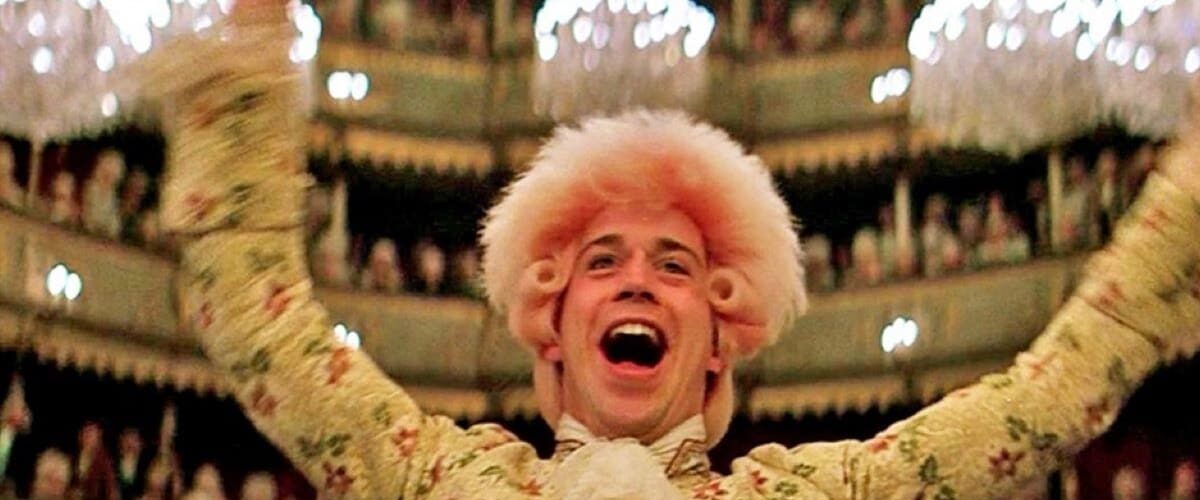
The biopic Amadeus, released in 1984, depicts the life of Amadeus Mozart from his childhood to his last ten years in Vienna, and is the best example of this.
In music, reception often refers to how listeners and audiences perceive, interpret, and respond to music, with aspects such as mental, social and cultural reactions over time.
A key aspect the feature film exacerbates is how the 17th and 18th-century audience responded to his works.
We see a distorted influence and popularity of his operas. In Amadeus, we see Mozart work
heavily on his core pieces, such as ‘The Marriage of Figaro’, ‘Don Giovanni’, ‘The Magic Flute’ and ‘Requiem’.
This gives the assumption that the 18th-century audience only knew Mozart primarily for his operas throughout his ten-year span in Vienna.
However, this was far from true.
Dr Simon Keefe, 57, musicologist and Mozart expert, said: “The first five years of his life [in Vienna] weren’t really opera-dominated at all. They were dominated by instrumental music, predominantly piano concertos and one or two symphonies, and lots of chamber music.
“The last five years of his life, ‘The Marriage of Figaro’, ‘Don Giovanni’, ‘Così fan tutte’, ‘The Magic Flute’, and another serious opera called ‘Clemenza di Tito’, which doesn’t get performed much, but they were all from the last five years of his life.
“It gives you the impression that opera sort of dominated his compositional career, when in fact that’s not the case.”
Throughout the film, Mozart is also in the centre of the pit, conducting with flair and dramatics, such as in ‘The Turkish Finale’ and in ‘Don Giovanni’, but 18th-century audiences saw performances differently.
However, Amadeus did use real locations where 18th-century audiences would watch
performances, such as the Estates Theatre in Prague, where Mozart debuted ‘Don Giovanni’.
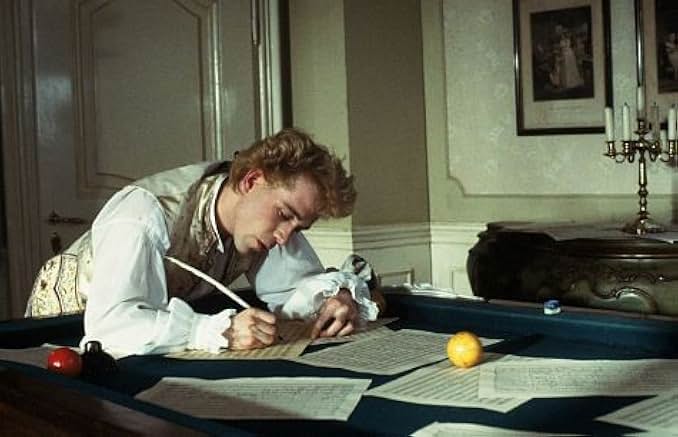
Dr Keefe continued: “The idea of Mozart standing up in the front and actually conducting is
almost certainly not correct, in that he’s in the pit, but he’s also playing the keyboard for the most part.
“It’s likely to have been through the keyboard, as far as we know. So on that side of things,
there’s an absence of attention to detail.”
This is different from how we hear and perceive Mozart in the modern day, with a majority of people listening through various media rather than at opera houses, as Dr Keefe finished and said: “I think Amadeus did a tremendous amount for him, personally, although it’s not as if his stock has ever been low, but his stock certainly increased.
“I think that it was so recognised and so lauded in Hollywood so quickly also meant, he had his moment, his extended moment a year or two in the sun, and it was a film that won Best Film and Best Director, F. Murray Abraham won for Best Actor, and he was up against Tom Hulce for the same, I think Tom Hulce was up for Best Actor as well, which is rare, we have two Best Actors nominations from the same film.
“I think it did a lot to get him to the position where, in some ways, he is the kind of single figure who’s synonymous with classical music, in some people’s eyes. You tell someone who doesn’t don’t know much or anything properly about classical music to name one, they’ll probably pick Mozart.”