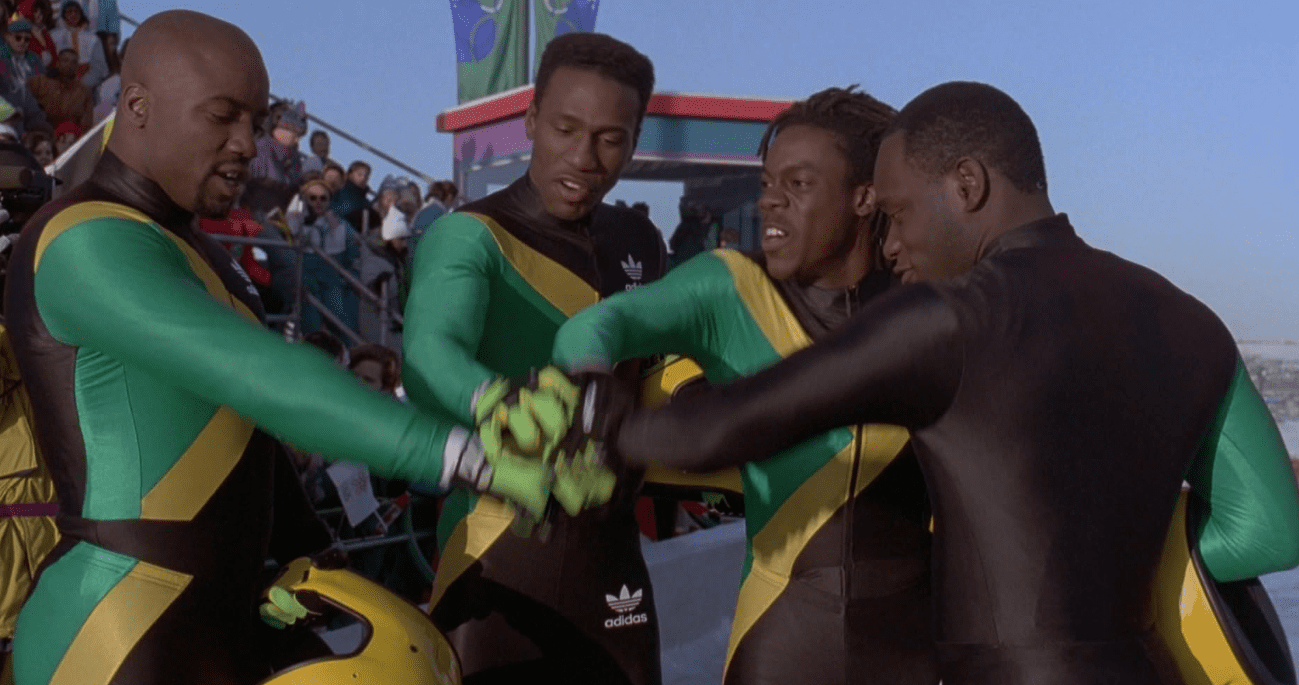
Olympian Devon Harris sat down with us to talk all things Cool Runnings and what it is like to have a major life event immortalized in film.
The year is 1988. The air in Calgary is a biting, crystalline cold that feels like a physical weight—a far cry from the humid, sun-drenched vibrance of Jamaica. On the starting line of the Olympic bobsleigh track, four men prepare to hurl themselves down a twisting tube of ice at speeds exceeding 80 miles per hour. They have no business being here, according to the skeptics. They are from a tropical island and, until a few months ago, had never touched a sled.
This is the moment that birthed a legend. A story so improbable that Hollywood couldn’t help but turn it into a cultural phenomenon. To many, Devon Harris is one of the real-life inspirations for the 1993 Disney classic Cool Runnings. But as I sat down with Harris, it became clear that while the film captured the world’s heart, the true history of the Jamaican bobsleigh team is far grittier, ridiculous, and inspiring than the cinematic version ever dared to be.
A Cinematic Immortality
The intersection of Harris’s life and the silver screen is a fascinating study in “poetic licensing”. When asked how it feels to have his story immortalized by Disney, Harris leaned back with a smile, “It’s very flattering,” he said. “I thought it was entertaining. It was a good human interest story… the kind of movie I would have enjoyed watching even if it wasn’t about my life”. Seeing a part of his life reflected on the big screen was “really cool” and served a purpose beyond mere entertainment: it made the team’s story “immortal”.
While the characters in the movie aren’t direct copies of the original team— with even their names being changed—Harris identifies most with the character Yul Brynner. In the film, Brynner is the bald-headed, passionate visionary who wants to go to Buckingham Palace. “He’s a dreamer, and that’s how I see myself as well… and quite an intense competitor, which is me, definitely”.
For Harris, the film serves a purpose beyond factual accuracy. It is a piece of media that allows his own children to look at the screen and find pride in their family history. One of the most impactful moments for him was hearing his daughter say in passing, “Wow, that’s about my dad”. As he put it, “It doesn’t get any cooler than that”.
The Writers’ Room vs. The Reality
The development of Cool Runnings was a long process that Harris witnessed from the periphery. He recalls spending time with writers early on, where the team shared their experiences while they took copious notes.
“I imagined that after we left the room, they threw away the notes and said, ‘Give me a notepad, let me write something interesting,'” Harris laughs. The reality of the team’s formation was far more structured and less accidental than the plot in the movie.
In the film, the premise is that the athletes were trying out for the Summer Olympics, tripped during their heat, and decided on a whim to try the Winter Games instead. Harris points out a glaring historical inaccuracy that most film buffs miss: in 1988, the Summer and Winter Olympics were held in the same year. If you were trying out for the Summer Olympics, the Winter Games would have already passed.
In real life, Harris didn’t stumble into bobsledding because he failed a track heat. He was in the military, and he didn’t even volunteer for the team trials; his colonel told him to go. He first became aware of the idea in August 1987, and by September, he was at the National Stadium for grueling trials. These trials involved 30, 60, and 100-meter sprints, shot put, and a “push test” with a makeshift sled. “I was exhausted after two days,” Harris recalls.
The film’s timeline also stretches the truth for dramatic effect. In Cool Runnings, the team trains as a four-man unit from the start. In reality, the Jamaican team didn’t even have a full four-man crew until they were already at the Olympics in Calgary.
“The first time we raced a four-man sled was at the Olympic Games,” Harris reveals. They recruited Chris Stokes—who was in Calgary just to watch his brother race—during the second week of the Olympics. They taught him how to push a sled in just three days, and then they competed, clocking the seventh-fastest start time. It is a plot point so “outlandish” and “ridiculous” that Harris believes a movie audience wouldn’t have believed it.
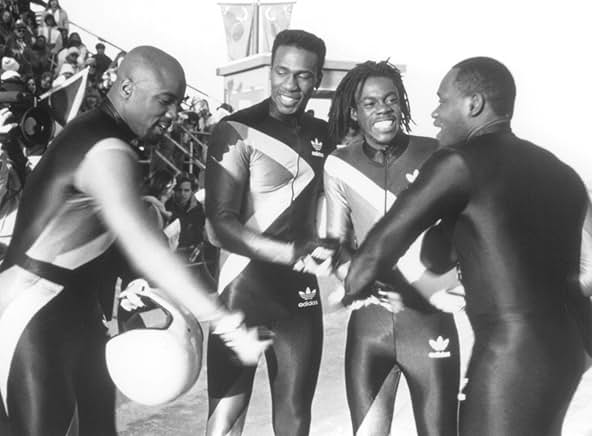
Image Credit: Imagine Films Entertainment/Walt Disney Company – © 1993
Facing the Frost and the Critics
One of the most poignant elements of Cool Runnings is the friction between the Jamaican team and their competitors. However, Harris clarifies that the “racial tensions” depicted on screen were largely a Hollywood invention.
“I can’t honestly say I experienced that myself,” Harris said. Instead, the “discourse” was centered on the sheer oddity of the idea: a tropical island competing in a winter sport. People wondered if they were a “pack of jokers” looking for media attention.
The skepticism of the world didn’t discourage them; it added “fuel on the fire”. Harris describes a gritty determination that mirrors the film’s spirit. Once he was ordered to the trials, his mindset shifted: “I didn’t have another option in my head than to make this team”. It was that absolute necessity of success that drove them forward.
The Legacy of the Crash
Every fan of the film remembers the climactic scene where the sled crashes, and the team carries it across the finish line to a standing ovation. While the “carrying the sled” part was another bit of Hollywood magic, the crash itself was the defining historical moment of their 1988 run.
“Our story is not a comedy, it’s gritty,” Harris says, reflecting on the choice of genre for the film. The reality of hurtling down an ice track with minimal training was terrifying. Harris recalls telling the writers about the initial recruitment meetings in Jamaica, where potential athletes were shown footage of crashes that were “more horrific than you saw in the movie”. Out of 40 people watching, only 20 showed up the next day.
This inspired the scene in which Irving Blitzer is showing potential bobsledders footage of crashes on the ice. Once the video ends and the lights come on nobody is left in the room, showing how real events were taken and exaggerated for laughs.
The grit is what Harris wishes had been explored more deeply. While he enjoys the comedy, he says a drama or a “documentary style” film could have been more accurate as it would have shown the true level of danger they faced. The film “failed to tell the true grittiness of the experience” as he chased a lifelong Olympic dream.
Watching Art Imitate Life
Sitting with Harris today, it’s clear that he has embraced his role as a living piece of history. He remembers being on the set in Calgary, a “surreal” experience where he watched his own life being reconstructed through a lens. He remembers being fascinated by the mechanics of filmmaking, watching the stunt guys and seeing how the bobsleigh runs were filmed.
One particular memory stands out: having lunch with the extras on set. “I couldn’t get a bite in because questions were just coming, left, right, and center,” he says. People were captivated by the “interesting life” he had led. He met the actors—including the legendary John Candy—and felt the weight of the moment. “You can’t ignore the fact that, well, this is about part of my life… I never could have imagined this”.
When I asked him about the iconic lines from the film—”Sanka, you dead?” or “I’m not smoking, I’m breathing”—he laughed. While most were written for the script, he notes that “you dead?” is a common Jamaican phrase. The term “Cool Runnings” itself is a staple of Jamaican culture, used long before the movie adopted it as a title. His personal favorite? “Go Yul Brynner, go chase your palace”.
The Final Push: History vs. Film
As our conversation wound down, I asked Harris what he wants fans of the film to take away from his real-life journey. “Know that it’s not a true depiction of the experience,” he said. “But nonetheless, it does tell the story of four guys who took on this seemingly impossible task… and I would encourage them to use that as inspiration for them to go after their own goals”.
His goal remains the same today as it was on that 1988 icy track: to inspire. Everything he does now is about trying to spark that same determination in others. He recognizes that while the film took liberties with the facts, it captured the “spirit of the team as underdogs fighting to overcome”.
Devon Harris didn’t just break the ice; he shattered the idea of what an Olympian should look like. In the end, the “poetic licensing” of Hollywood is just a shiny wrapper on a core of pure, Jamaican steel.
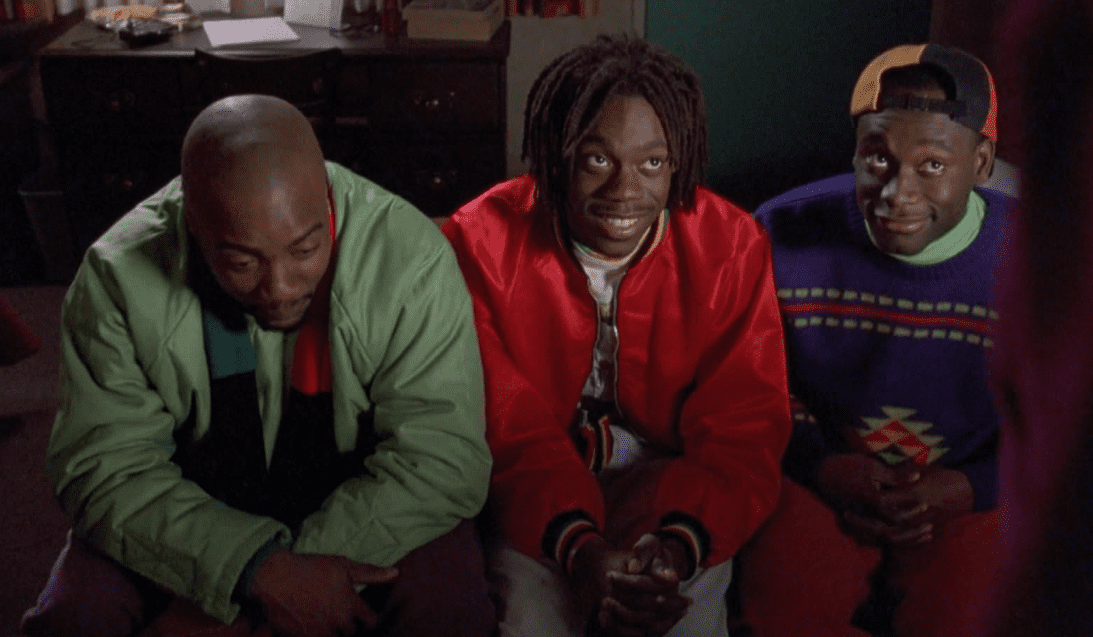
Image Credit: Imagine Films Entertainment/Walt Disney Company – © 1993