Novelist and screenwriter Tom Bullough talks to HistoFlick about writing his first screenplay for Mr. Burton, the joys of seeing characters come to life compared to a novel and the importance of the representation of Wales in cinema.
H: I wanted to ask you first about developing the idea between Richard and Philip. Was that something that came to you naturally or did it take a lot of progression to come along with?
TB: I mean, progression would be, certainly more progression than anything else, essentially in the first case, Josh Hyams came to me and this must be 11 years ago now, I suppose.
I’d known him a little bit for a long time. I knew he read my books and things, and he phoned up and said it’d be interesting to do something about the early life of Richard Burton.
It seemed that there was a bit of seed funding in Wales and that maybe there was a kind of opportunity there and he thought that I might be the right person to kind of take it on.
So I started looking into it and I suppose as something of it, sort of an interesting question in a certain way, given that there have been other films about Richard Burton, about his relationship with Elizabeth Taylor, his relationship with his brother Ivor, and why there hadn’t been one, you know, about how he came to be because it’s such an extraordinary transformation that he underwent.
He really does go in a period of, a couple of years from being a very young, hopeless lad to appearing in the West End to sounding completely different, to having a different name, to attending Oxford University.
When I started digging into it and started speaking to one or two people who’d known him, though, you know, not so many around these days, we did have a chat with Rhiannon and his niece who appears in the film as a young girl and was still around at the time, but also, you know, reading biographies and so forth, I did start coming in to say something that I was particularly engaged with and that I particularly pushed for was, Philip as a character was instantly moving because I suppose in a certain way what you’re looking for in a character is a kind of internal tension and that tension was so apparent with him.
He’s obviously a very sort of talented, ambitious, intelligent man who finds himself trapped in Port Talbot during the course of the war, not doing what he would any longer do.
And I suppose sort of particularly completely unable to express who he actually is as a gay man at that time and I just found his predicament really moving to begin with.
And slowly, slowly, it kind of became apparent through a lot of trial and error that the story was really about their relationship, this very unusual relationship, very affectionate relationship.
I mean, Richard referred to him as his other half in the dedication to a book he gave him once, and a relationship which really kind of endured with a few hiccups throughout Richard’s life.
So it was a progression, but after a while it became, also, I mean, the thing is as well, not to go on about it, but I mean, if you were to look at a story, a vaguely equivalent story like say Billy Elliot, in the case of, which, which is to say like a young working class boy who has these kind of great dreams.
Billy Elliot is fiction and so you don’t know whether Billy Elliot is going to make it.
Whereas, you know, of course, Richard Burton is nowhere near as well known as he once was.
But nevertheless, I mean, you know, you can presume that I suppose anybody who’s going to see it, he’s going to know that he does become successful, So there’s no, there’s no kind of, there’s no jeopardy there either, from a story standpoint.
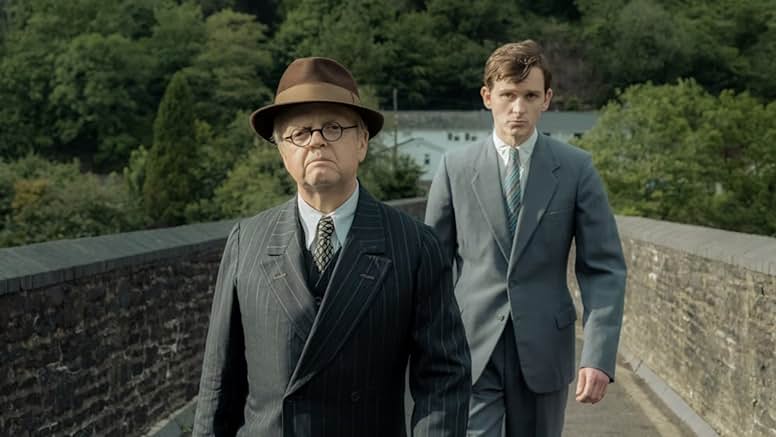
H: What was it like actually seeing someone that you’ve written down come to life on screen, how was that like as an experience for you?
TB: It’s a good question. I mean, watching the rushes, or indeed, you know, just watching the filming, it was an extraordinary sensation.
I mean, the fact is that when you write a novel and you’re really, really into it, I mean, those characters do kind of live in your mind. But yeah, as you say, you don’t get to see them outside and walking around and I have to say it is disorientating.
But you know, I mean, the other thing about it, of course, is that the actors in every moment bring some extra aspect to it, some facial expressions, some turn in the word, some way in which there’s additional meaning that you haven’t thought of yourself or you hadn’t realised was there.
Readers sometimes talk about that kind of thing in regard to, novels, novel characters, though they will see something and which is an entirely legitimate interpretation, but it’s not one that you’d ever thought of yourself, you’re kind of putting characters, you’re putting ideas, you’re putting places in kind of in relationship with one another and the way in which a reader interprets those things is for them to do, but you don’t really get the opportunity to do that yourself, you ought to be part of that process, as it were the kind of reading process.
So, watching in a sense, the actors, take those lines and take those ideas and bring their own life and experience to it, and it’s a wonderful thing when everybody is working together and if somebody, comes up with an idea, why don’t we come from here or why don’t I do it like this or, whatever it might be, and you’re all of 1 mind as we were, this is the right way to do it.
This is the best way to do it, that’s a real joy.
Out of curiosity, were there any moments that were maybe eliminated that you wish had been kept?
There were aspects of the script that we took into production which weren’t kept in the edit. I don’t think that there is a loss really looking at the screen, but I mean looking at the finished film, but I mean it might be that there are things.
So, for example, the beginning of the film that Philip had an earlier protege, Owen Jones
who had, you know, got to RADA and had appeared at the Old Vic with Laurence Olivier and was showing all signs of becoming, you know, a significant actor but was killed in a training accident in the RAF.
And so at the beginning of the film, as we had it initially, Philip is kind of in a state of grief about that and that’s one of his reasons for his reluctance to take on Richard.
So we filmed that stuff and it was great, but the fact is the first cut was 3 hours plus, it’s hopeless. You’ve got to condense, condense, condense, condense, condense to get it to even to two hours.
H: So Toby and Harry, like how did that kind of change it or did it not really change kind of the script that you had?
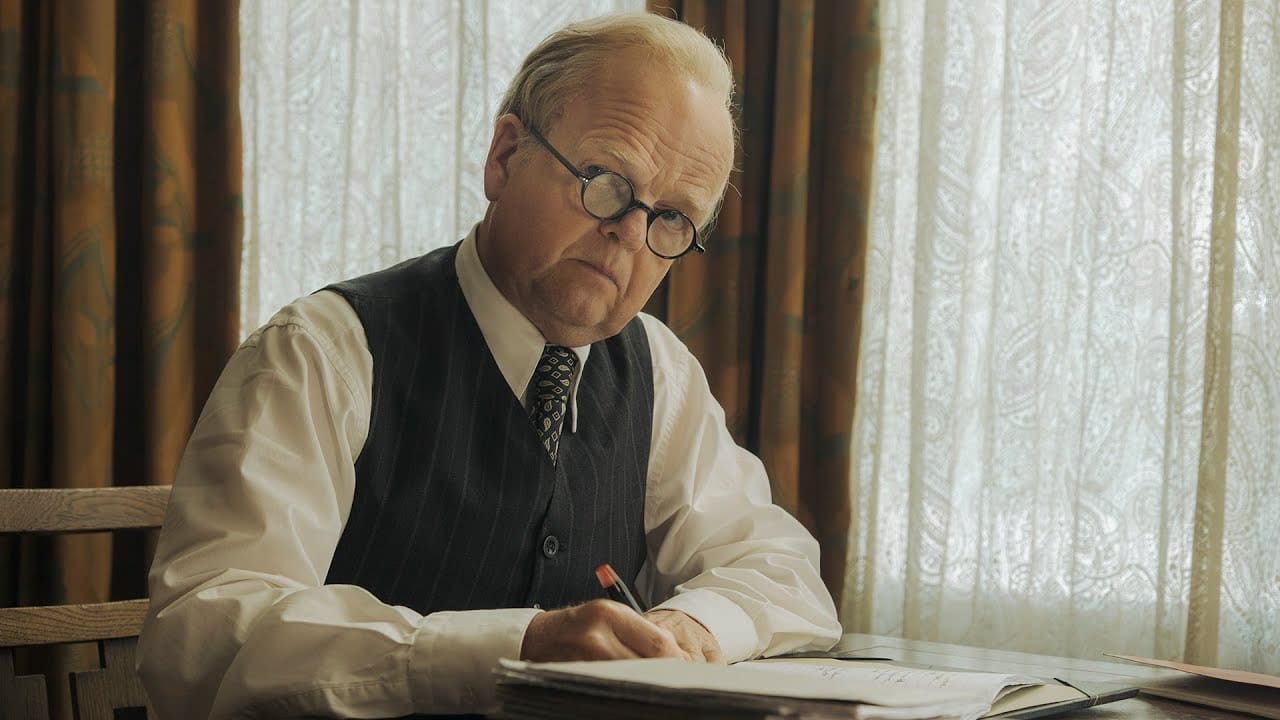
TB: It did change it, I mean, I remember having a meeting with Josh (Hyams) once, maybe four years into sort of starting work on it and I remember saying, oh, Toby Jones would be perfect with this. Wouldn’t it be great?
Partly because of his face, because of what he’s able to do physically and the way in which he’s able to express emotion, which, you know, Philip’s predicament being such, you know, he was he was really unable to express verbally, and also he needed to be somebody who is, you know, well, a character actor, not to put too fine a point on it, because, you know, because the leading man bit is being acted through his his protege, you know.
I mean, for one thing, in reality, Philip was 39 and Toby, by the time that we filmed couldn’t conceivably have passed for 39 so that changes the dynamic between the two characters.
How you then find an actor who’s able to appear both a teenager and a kind of 25 year old accomplished star and the thing is, they’ve got to be able to pin down these subtle differences of speech and everything and be able to switch between those things at will really and watching Harry work was a pretty miraculous process really in itself.
And also, which was interesting, the first script readings that we did with the two of them, we started just with Toby. So this was me, Josh, Ed Talvan and Mark Evans.
When Harry arrived, which was maybe an hour, two hours into, after we’d started, there was this energy that he brought to the room and this energy that he brought to Toby.
And that was just fascinating to watch because that was precisely the sort of energy that the Richard character brought to the Philip character.
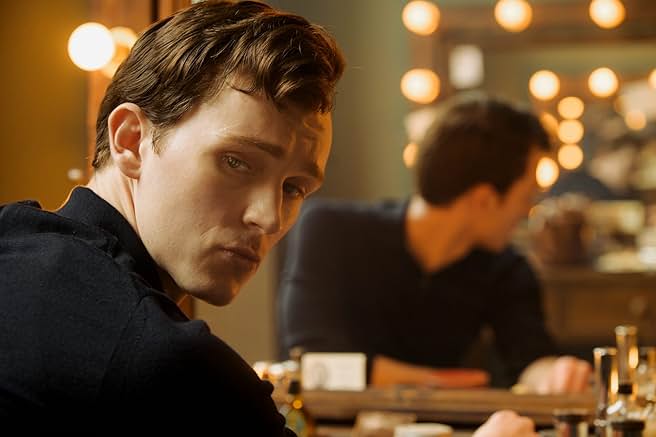
H: How for kind of the off-screen chemistry, you know, contributed to the on-screen chemistry as well?
TB: Yeah, it really did, you could see it like in Harry’s youthfulness and massive passion.
I mean, he worked so hard to get it right and he was so kind of respectful of the process and respectful as well of the fact that this is a Welsh story and he could easily be perceived as an interloper and so forth.
And he was always very kind of respectful towards everybody really, but I think more broadly towards the kind of culture that he was representing.
I mean, he didn’t speak any Welsh or anything, he had to learn to do all of that.
Yeah, so you know that, and then and then once you’re working with the actors, seeing what they’re able to do, what they’re able to able to put across physically or by a gesture or something, you kind of, there was a lot of revision that went on right up to, every day as we were working on it.
I mean, sometimes for just practical reasons, like, we’ve got a very short shoot and perhaps it’ll be raining on one day when it’s supposed to be outside. You’ve got to set everything inside or whatever.
But, seeing how they inhabited the characters, I mean, Toby, he’s a very gifted comic actor and working with him is a huge learning process because he knows his craft so incredibly well.
And as you saw him begin to inhabit Philip, you realized that he was bringing this sort of, very, quiet, dry humor to the role, which wasn’t exactly there in the original script.
And so, we collectively helped build that and develop that because that was what was working at the time, you know, that was, that was the feeling. And so I think you have to be very responsive in the process of doing it.
H: I also wanted to ask just about a specific scene because there’s lots of scenes of the pair kind of going to the valleys and going to the countryside and then practicing their craft. Did you use that as a bit of creative license, maybe a bit of your sort of kind of novel writing now or was that kind of based in history?
TB: Oh, well, when they go up onto Manith Margam, which is the hill behind Port Talbot, that’s basically as true as we could make it. I mean, you know, the film, you know, the film does contain some creative license.
I mean, it’s a story and you have to kind of combine characters to a certain extent and kind of compress the timeline here and there and all of that kind of thing.
But, we were really looking to represent it as accurately as we could and certainly, I mean, that is part of the mixture of things involved in it. I mean, like some of it is just basic history, some of it is filtered through Richard’s stories later on.
So certain things like the way that his father was represented, that was kind of from Richard’s point of view So, you know, another character wouldn’t have come in and seen this kind of great raconteur and heroic figure who Richard perceived, if you see what I mean.
So some of it’s from the point of view of the character and that does change it.
But yeah, from the point of view of going up onto the hills and learning to project and learning to control breathing and that kind of thing, that was very much part of Philip’s process.
H: Is there anything else you would like to kind of mention or reference or talk about that you thought was particularly important?
TB: One of the things that, you know, is very important to me and very important to the others involved, I’d say like Ed and Mark particularly is to be telling, you know, there isn’t there isn’t a huge tradition of film or indeed novels from Wales, which have found much of an audience outside of Wales.
And we’re, both, very keen to try and do that, but also to really try and do Wales justice as a settlement for stories, do the people of Wales justice.
And, that has always been a hugely important part of it for me is it has been in my books and I mean, one of the kind of great pleasures of it really is the extent to which it kind of has been embraced in Wales.
So it’s a fine balance really doing that, kind of thing, some of the kind of, kind of almost sort of anti-Welsh stuff that’s expressed in Stratford.
I mean, there were ways in which we’re very fortunate to kind of mitigate that in a way, so Daniel Evans, who’s one of the one of the joint heads of the Royal Shakespeare Company, is from Swansea and it’s very much in that tradition and also has no hair at all, but plays you know this bouffant head, very kind of establishment Englishman in the film in the form of Anthony Quayle.
I mean, there are ways in which we were really fortunate in the casting and this and that to be able to kind of digest it and to be able to make it palatable or entertaining to people here such that they felt that they were still respected.
So one of the great pleasures about it really has been like going round, cinemas and, film festivals and things like that in Wales and, the kind of pleasure people seem to have felt in feeling that their community, their history is kind of represented respectfully, and because it gives people, it changes the way that people feel about themselves, in much the same way that for Richard’s success, Anthony Hopkins’ success, Michael Sheen’s success, you know, these have changed the way that community feels about itself and feels about its own culture.
And, in its own way, I think that it has managed to do that. So that’s been, perhaps a kind of great pleasure of it.