
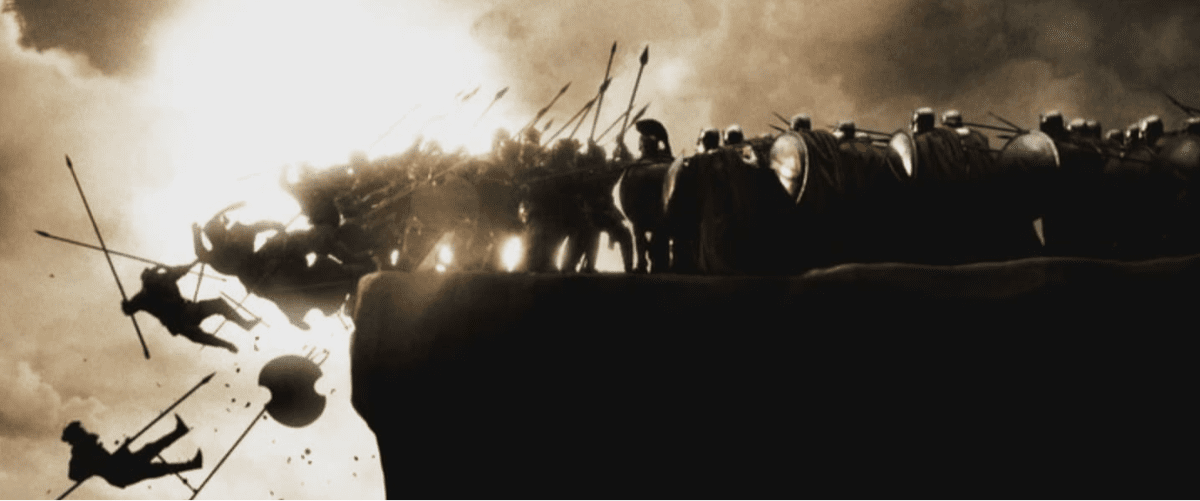
Stephen Hodkinson, classical historian and historical advisor to Kieron Gillen’s 3, discusses how Frank Miller’s source material, and influence on the film 300, misconstrues Sparta.
3, published by Image Comics, was released in 2014 in direct response to Frank Miller’s 1999 novel and covers the darker aspects of Spartan rule.
Miller acted as an advisor and executive producer to the 2007 blockbuster and had significant influence over the film’s production
Prof. Hodkinson said: “The connection between Frank Miller’s graphic novel 300 and the 2007 Zack Snyder film is quite complex. The fact that Miller comes from a comic superhero background affects the way he portrays Spartans a lot.
The focus on King Leonidas is what you would expect of a superhero graphic novel, and likewise, the disdain for non-warriors in 300 comes very much from Miller.”
Before writing 300, which was inspired by his childhood watching 300 Spartans (1962), Frank Miller wrote superhero comics for publishers Marvel and DC.
Hodkinson reiterated: “We also get quite a number of Miller’s prejudices. Homophobic comments, for example, where the Athenians are dismissed as being ‘boy-lovers’ and emphasis on the toughness of Spartan life and the extreme violence that you quite frequently get in superhero comics.
“Likewise, the way that the character Ephialtes is portrayed in the film comes straight from 300. In historical accounts Ephialtes is a normal Greek who turns traitor and informs the Persians of the way around the back of the mountain.”
Ephialtes played a pivotal role in the real-life Battle of Thermopylae, revealing a path around the Greek defences to King Xerxes which ultimately led to victory for the Persian army.
“Miller transforms Ephialtes into a malformed Spartan who should have been discarded at birth according to Spartan law, because of his deformity, but whose parents have taken him out of Sparta and so he survived.
“In many ways Ephialtes is a representative of another comic superhero trope, the malformed villain who’s driven to crime by the maltreatment that he gets because of his disability. For example, the character of the mole man in the 1961 Fantastic Four series.”
The film primarily focuses on the 480 BC Battle of Thermopylae.
“In 300 you also have difficulty understanding how the Spartans really fought because of the ballet-like stylisations, the use of CGI, the comic superhero background and so on.”