On National Hug Your Cat Day, we revisit one of cinema’s most unlikely redemption stories and the ginger tom who made it possible.
There is a moment in A Street Cat Named Bob (2016) where James Bowen, a homeless addict barely keeping himself alive on the streets of London, wraps a makeshift bandage around the paw of a stray ginger cat he’s known for less than a week. He has no money, no stability, no real reason to believe things will get better. Just this cat.
It sounds like fiction. But sometimes the truth is madder than fiction.
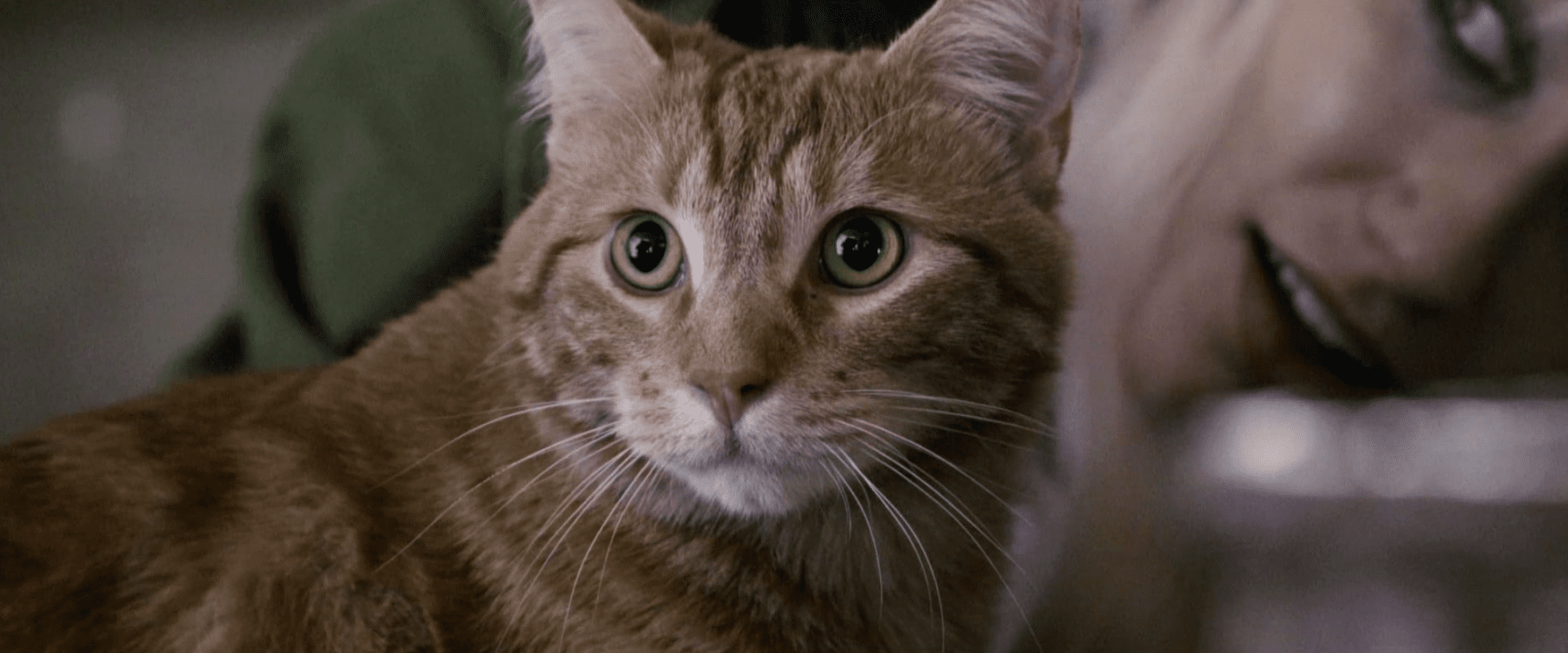
James Bowen was living in sheltered accommodation in Tottenham in 2007 when a battered ginger tom wandered into his life. Bowen was a recovering heroin addict on a methadone programme, busking on the streets of Covent Garden to get by. The cat he named Bob, had a leg wound and nowhere to go. Bowen spent money he didn’t have on vet treatment he couldn’t afford and nursed him back to health, fully intending to let him go once he recovered.
Bob had other ideas.
He followed Bowen to the bus stop. He sat beside him on the tube. He perched on his shoulder while Bowen busked, and in doing so, turned a man the world had largely stopped noticing into someone worth stopping for.
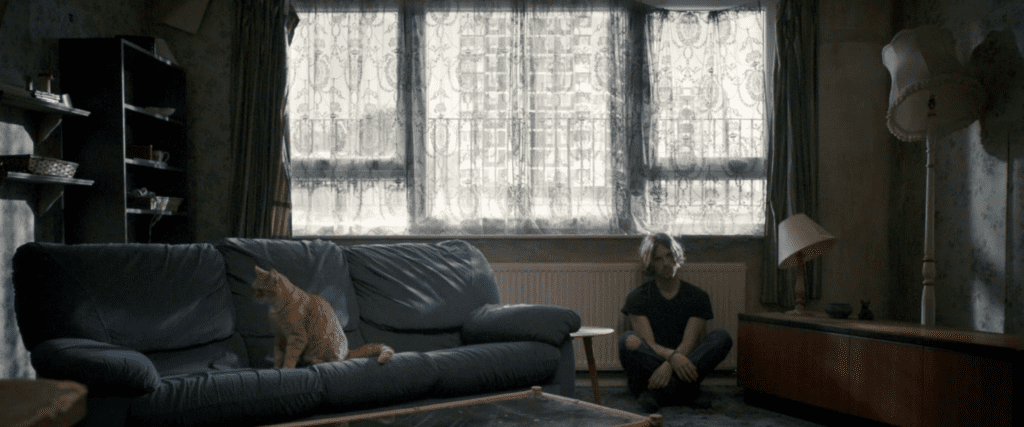
Londoners began dropping money not just into his guitar case, but stopping to stroke Bob, to talk, to come back tomorrow and check he was still there. For the first time in years, Bowen had a reason to show up, and someone was looking out for him.
The story became a book in 2012, then a film in 2016, directed by Roger Spottiswoode, with Luke Treadaway playing Bowen and Bob the cat playing himself.
Today is National Hug Your Cat Day. It is, on the surface, one of those occasions that is genuinely goofy and light-hearted . But Bowen’s story makes a more serious case for what cats, and animal companionship in general, can do for a person in crisis.
It isn’t really about companionship in the way we usually talk about it. It’s about necessity. Bob needed feeding and warmth. He needed Bowen to come home. In giving Bowen something to be responsible for, he gave him something that years of services, programmes, and good intentions had struggled to provide. A mutually fulfilling relationship that every single morning, gave the both of them a reason to get up and go again.
There’s a stability that comes with caring for an animal that is difficult to replicate elsewhere.
No judgement. No conditions. Just presence, and the quiet rhythm of a routine built around another living thing. For someone rebuilding a life from almost nothing, that rhythm is not a small thing.
Bowen himself has said as much repeatedly. Bob didn’t save him in a dramatic, cinematic sense. He saved him incrementally, one day at a time, the way real recovery actually works.
The decision to cast the real Bob alongside Treadaway was not a straightforward one, and it paid off in ways that are hard to fully articulate on paper. There definitely is a feeling when watching the film.
There is a quality to the scenes between Treadaway and Bob that no trained animal double could have replicated.
Bob had spent years on the streets of London with Bowen. He was reportedly a natural on set. Calm under lights, unbothered by crew, entirely comfortable being handled. Treadaway has spoken about how quickly he bonded with him during filming, and it shows. The affection on screen is not performed.
It also meant that A Street Cat Named Bob did something quite rare for a true story movie in the sense that it brought the actual living proof of the story into the frame. This was not a recreation. This was actually Bob.
Bob died in June 2020, hit by a car near Bowen’s home in Hertfordshire. He was thought to be around 14 years old. Bowen’s tribute to him was short and sweet. He said that Bob had saved his life, and that he didn’t know what he would have done without him.
The film became a record of a life that had genuinely happened, with the living, breathing subject right there in the frame, before the world lost him.
That is what the best true story cinema can do. It doesn’t just tell you about a person or an animal. It preserves them. Bowen still had the films, the books, the photographs. But the movie meant audiences around the world had something too. In this case it was 103 minutes of Bob, being Bob, on Covent Garden street corners and London buses and the kind of grey, ordinary days that most films would cut away from.
Redemption stories are easy to be cynical about. Cinema has given us so many of them that the shape of the arc can start to feel like a formula.
What makes Bowen’s story resist that cynicism is Bob. Because he was a real, inconvenient, demanding, affectionate animal who turned up uninvited and refused to leave.
You can’t really write that. But you can be lucky enough to experience it, and wise enough to recognise what it means when it happens.