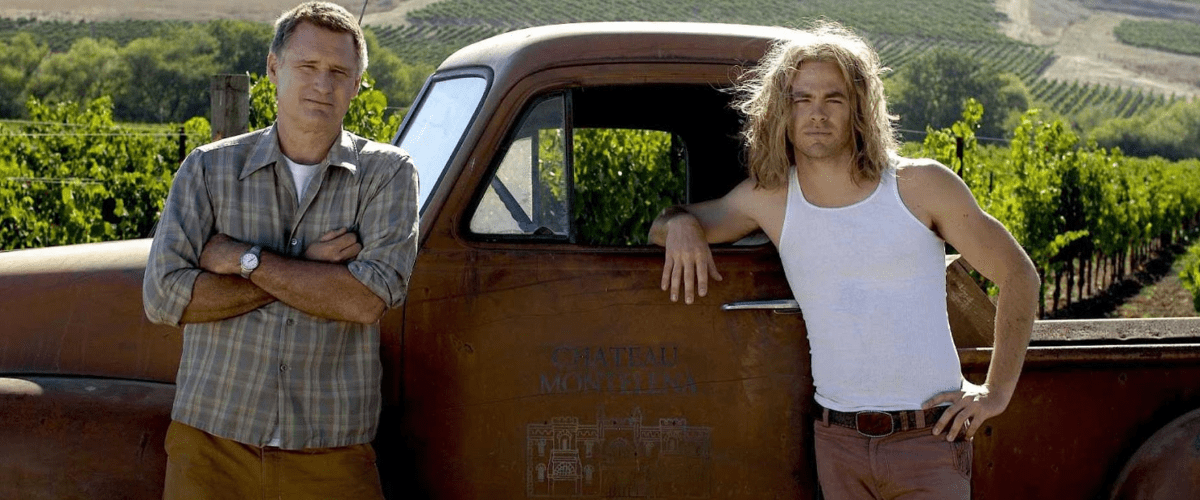
In 1976, A wine Competition took place where American wine from Napa Valley went against French wine. In the competition, the American wine won in both the Chardonnay and Cabernet Sauvignon. This not only caused an upset but also changed the wine landscape for the rest of the world. This day was immortalised as the ‘Judgment of Paris’.
In 2008, the movie Bottle Shock was released, showcasing the true story of the competition and how it came to be, including the wineries involved that took the competition by Storm, such as Château Montelena and Stags’ Leap Winery.
But not all of the story was correct.
Michael Luke, Retired director of House of Townend Winery, said: “I think there were about 11 judges in all, and two of them were American, one was a guy I came to know, Stephen Spurrier and as it turned out in the event, the two non-French judges opinions were discounted, and they only considered the French, and the result, really, as far as the reds was concerned, was a marginal decision that the top wine that they tasted was Californian.
“The view of the French at the time was that the French wine would age a lot better than the Californian wines. In the event, that actually didn’t work out because I became aware of it in 1986, and the American wines again came out on top, this time a little more solidly. It wasn’t marginal. Then in 2006, it was clear-cut.”
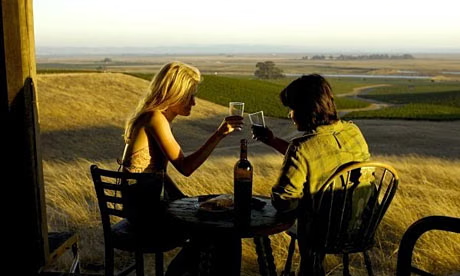
Californian Napa Valley wine has been produced in the country since 1880 and has long been overshadowed by its European counterparts until the event took place around the world, except in France.
“The Californian wines had not only appeared better in their youth, but they also performed a lot better with maturity. The French didn’t like it. In fact, I remember meeting Stephen Spurrier in the noughties, and he said that he’d disclosed this information at the time to a journalist from Time magazine, who published the results.
“Of course, the French were very unhappy, and they banned Stephen from any future tastings that they were holding. None of the French press produced any results at all. As far as France was concerned, it didn’t happen.”
In the film, the Chardonnay turns brown for 24 hours after bottling, a twist that ruins the mood of Jim (played by Bill Pullman).
In reality, Mike Grgich, the real producer of Château Montelena Chardonnay, knew how to deal with this problem; Michael Luks says American wineries focus on science and topography rather than tradition.
“I remember being in this small French estate at the top end of Bordeaux. The winemaker was going through a process, and I said to him.
‘What are you doing? He said, ‘This is something I’ve done for many years, and my father also before him and his father before him. I replied, ‘Yes, but what is it you’re doing?’ He said very slowly again, he repeated what he’d said before, ‘I’ve done this for many years, my father before him, etc.’
“I realised then that he didn’t know what he was doing scientifically, but he did know that it was the right time to do it.
“He knew that it would have a beneficial effect on the wine. The French have been producing wine for hundreds of years, and they have worked based on custom and practise.
“There’s nothing wrong with that, but what it doesn’t do is encourage the enquiring mind to say, ‘What if we do this differently?’ The Californians introduced a more scientific approach to wine as early as the 1880s.”
He continued further, “The French are very keen to concentrate on what they call terroir. They put a great emphasis on where the vineyards are and the soil type that produces the wine.
“The Americans are not so fussed about that. They’re more concerned about the topography, the aspect of the vineyard, the amount of sun that’s received, and principally the sun. For example, in California, they produce wonderful Pinot Noir.”
During the film, Steven Spurrier, played by Alan Rickman, sets the competition up as his wine shop was going out of business. In reality, Spurrier was in an exceptional financial position to set the competitions up, spending 15 to 20 thousand pounds (at today’s market rate) to make the tasting happen.
The untold truth is that this came at a cost for him.
“They don’t know that poor old Stephen Spurrier became persona non grata as a result of releasing the results.”
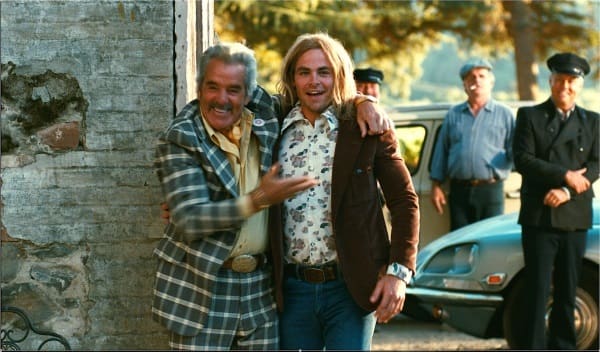
In the film, the all-important tasting is done outdoors, in the picturesque outskirts of Paris, with commotion and spectators gathered around. However, wine tasting is a serious event, and the true event was held inside a hotel in silence.
“Being a sommelier and a master of wine is difficult, as Luke explains further and said: “You have certain courses that you can go on and there’s a basic examination where you receive a certificate and there’s a higher certificate after further study and then the next step is a two-year course which if you’re successful, you receive a diploma and then you move into the stratosphere.
“The Master of Wine examination is an incredible test, not only of academic ability in terms of knowledge but also the palate. Your palate has got to be really quite special, and that only comes with time.
“Very early on, it was a lot easier to get your Master of Wine purely and simply because there was no New Zealand wine, there was no Australian wine and no Chilean wine, there was no South African wine. So all the wine came from Europe and, as we know a little bit, from California, so it was difficult.
“So it’s a tremendous qualification to have, and there’s only about 350 worldwide, whereas if you think of other qualifications, how many surgeons are in the world? Well, many, many thousands. So that’s how exclusive it is.”