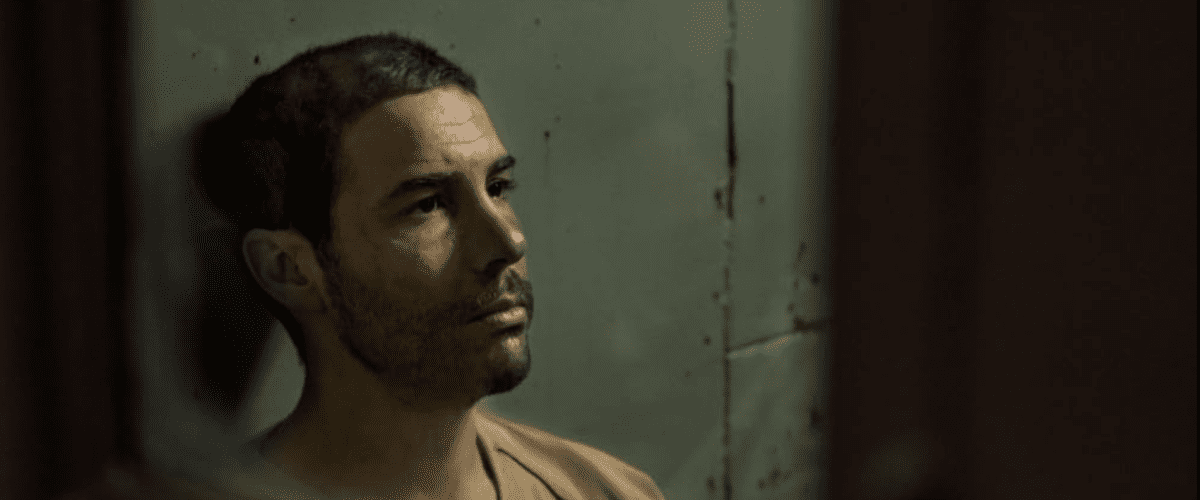
Director Kevin MacDonald shares the challenges he faced when adapting Mohamedou Ould-Slahi’s memoir in the 2021 legal drama The Mauritanian (2021).
Based on the 2015 memoir Guantanamo Diary, the film depicts Mohamedou Ould-Slahi, a Mauritanian engineer, and his fourteen-year imprisonment without charge in Guantanamo Bay.
Held in the USA over false-accusations of organising the 9/11 terror attacks, Slahi would have to endure over a decade of torture before his eventual release in 2016.
Kevin MacDonald said: “Film is a very simplistic medium and you need shortcuts, you need drama…but when you come to the case of Mohamedou Ould-Slahi, you feel a much greater responsibility to be accurate.
“It was very complex, very detailed and very legalistic. We really struggled to get that screenplay to work.”
Mohamedou had travelled to Afghanistan twice in the early 1990s and swore allegiance to the mujahideen before cutting all ties to Al-Quada. The USA argued that Slahi was an ‘enemy combatant’ due to his ties to the terrorist organisation and had since ‘recruited for Al-Qaeda and provided it with other support after his alleged withdrawal in 1992.’
“What had happened to him in Guantanamo and the fact that the American government was still, even when we made the film, refusing to acknowledge the injustice, it was very important that the way we represented Guantanamo was accurate.
“Everything in that film, which is to do with the physical space he was in, how he was treated, tortured, tied up, is all basically a documentary.”
In 2005, Slahi’s family reached out to world-renowned defence lawyer Nancy Hollander through a Parisian firm. Together, with lawyer Theresa Duncan and the American Civil Liberties Union, they spearheaded a public campaign for Mohamedou’s right to a fair trial.
“When it came to the other characters beyond (Mohamedou) and his relationships, we allowed ourselves to not be completely accurate, all the characters existed, everyone is based on reality, but we’ve dramatised, simplified, all the things you often do.”
In 2016, following hundreds of thousands of petition signatures, celebrity testimonies from Maggie Gyllenhaal and Mark Ruffalo and pressures from British Parliament, a panel of US officials would officially clear Slahi for release.