

Alan Turing biographer, Jack Copeland, discusses the massive misconceptions about the World War II British hero who cracked Germany’s Enigma code.
The Imitation Game focuses on Alan Turing, a mathematician, computer scientist, and cryptographer, who is often celebrated in the modern day as the key reason why Great Britain won World War II over Nazi Germany.
Hailed as the father of theoretical computer science, The Imitation Game was released in 2014, detailing his life, achievements, intelligence and his sexuality.
The film showcases Turing, played by Benedict Cumberbatch, as troubled, depressed and antisocial, especially after his hormone treatment due to his persecuted sexuality near the end of the film.
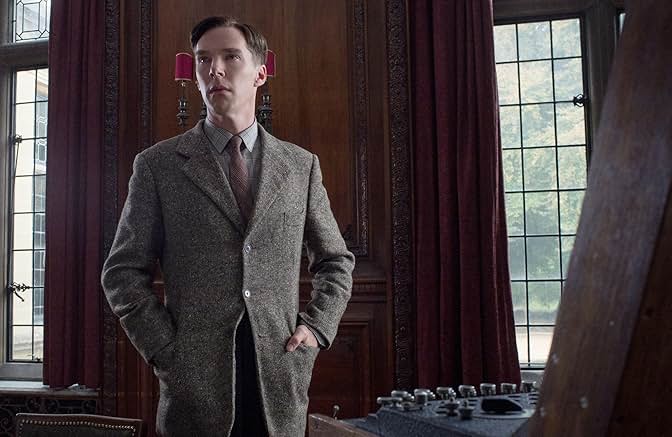
Jack Copeland, an Alan Turing biographer, disagrees with this viewpoint of Turing and said: “They portrayed him as a sad, tragic, defeated character with his brains fried by the hormone treatment, but that simply isn’t true. He showed enormous courage, maintained his sense of humour, and continued doing important work.”
Turing has been credited with some of the most important advancements in the modern day, such as the Turing Test, which is a method used to evaluate a machine’s ability to exhibit intelligent behaviour that is equivalent to or indistinguishable from a human.
He continued: “They had one of the most interesting stories of the twentieth century, a genius at work against Hitler, and instead they made up this alternative story. Why didn’t they just tell this really great story?”
Due to his sexuality as a homosexual, he was arrested in 1951 and later sentenced and subjected to hormone therapy till his death in 1954 from cyanide poisoning linked to suicide.
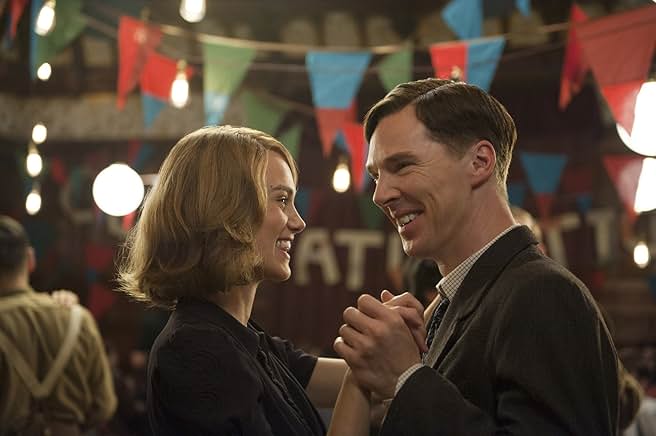
The film touches on this during the opening title, but throughout, a majority of the picture focuses on his relationship with Joan Clarke, played by Keira Knightley.
Richard Dyer, Professor Emeritus of Film Studies at King’s College London, said: “They sort of heterosexualised it.
“It centres on Turing’s relationship with a woman and made it almost seem like that was more important than his sexuality. It was a slightly boring film altogether, really.”
“Tragedy in general is more greatly rewarded. Comedy and light-heartedness are always undervalued critically.”