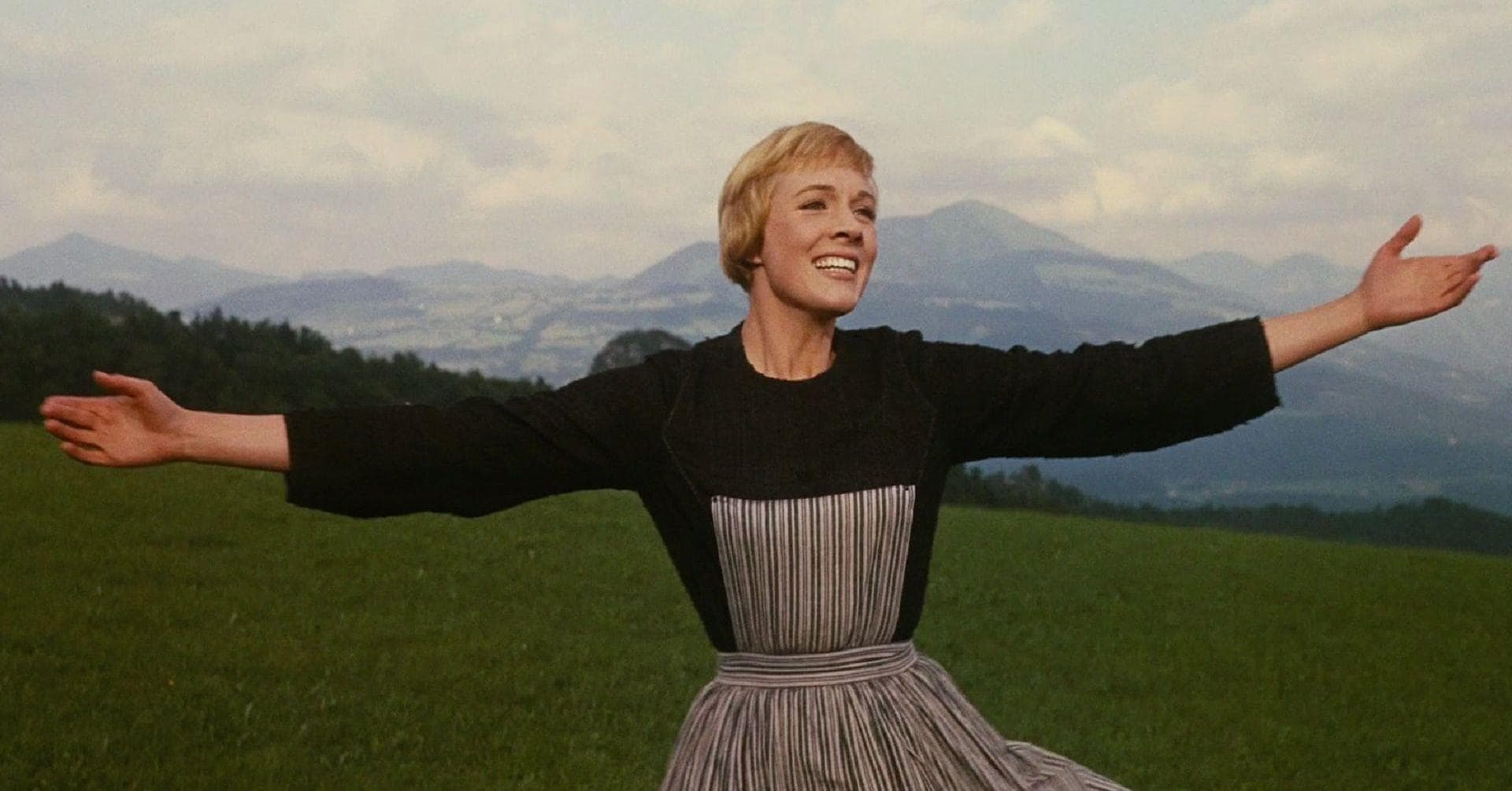
If you can brush past the high-flying singalongs and postcard-perfect Austrian mountains, you’ll find that The Sound of Music tells a story of something darker in its own way. But how, and why, does your favourite model musical avoid the twisted truth of history?
‘The Sound of Music’ is a timeless classic that has transcended generations with its Oscar-winning musicality and warm, family-friendly story-telling. But hidden in the dramatised tale of the Von Trapp family, is something far more sinister. The onset of the German Anschluss in 1938 forced the singers, like many other Austrians, to flee their homeland. The performers eventually settled in the USA on immigrant status, and began touring for audiences across the country. Their story, as told by Robert Wise and Oscar Hammerstein II, has since rung around the globe in iconic soundscapes – You’d struggle to find a UK primary school that doesn’t sing ‘Do Re Mi’ in music class, or a choir unversed in the lyrics to ‘So Long, Farewell’.
But before the singing starts, it helps to know what the family was actually fleeing. For years, Hitler had been pushing to bring Austria into the German fold, two countries with a shared language and shared history that the post-war treaties had kept apart. When Mussolini blocked his first attempt in 1934, it looked like Austria might stay free. Four years later, that hope ran out. On 13th March 1938, German troops crossed the border and Austria was gone. That is the moment The Sound of Music is really about.
Tim Schmalz, Professor of Modern European History from the University of Cambridge, says: “Von Trapp is not your typical Austrian. He’s from a noble family, so it’s not surprising that he would be anti-Nazi and pro-Austrian, conservatives generally were.”
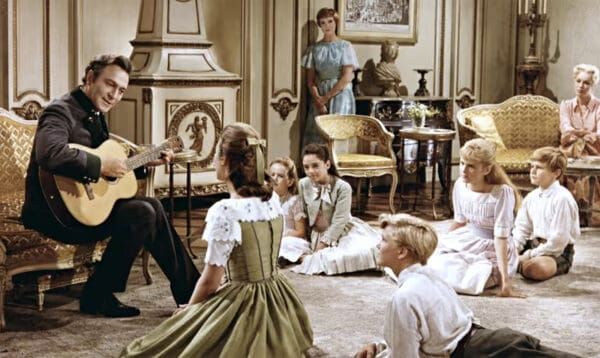
And so he was. Wise, in the 1965 adaptation, places Georg and his family as staunchly nationalist. Their home, the ‘Villa Trapp’, a 22-room mansion, is described as “the only house in the village not hanging the flag of the Third Reich after the Anschluss.”
Georg’s symbolic actions of resistance ramp up further upon return from his honeymoon with Maria, where he receives notification, by telegram, of a personal request from Hitler to take up a role in the German navy. He dissents, despite acknowledging that “to refuse them would be fatal,” instead making the brave decision to “get out of this house and Austria tonight,” and maintaining his loyalty to a free, independent Austria.
And whilst this may be historically accurate of the real Von Trapp family singers, on whom the film is loosely based, Schmalz notes Von Trapp’s rebellious actions to be “exceptional” within the wider political landscape of the time.
He says: “Austrians in regions closest to the Bavarian border, such as Salzburg and with the exception of socialist Vienna, on the whole, were more sympathetic to the Nazi fuhrer.”
In the family’s mid-escape performance at the Folk Festival to a large, adoring crowd, Georg makes parting song to his beloved Austria, singing ‘Edelweiss’. Both a song title and flower, its small white petals have come to symbolise love, purity and durability and is somewhat of a national symbol of Austria: “I pray you never let it die/Edelweiss, Edelweiss, bless my homeland forever.”
And so there seems to be some historical discrepancy. Von Trapp, however charismatic, cannot speak for all of Austria, yet Wise projects the Captain’s rejection of the Anschluss to wider society. It’s unlikely his defiant views were shared by the same crowds of the Folk festival who are depicted booing the mere sight of Nazi officers. In fact, a sweep of historical archives shows an abundance of contemporary newsreels depicting Austrians in Salzburg’s main square waving flags in support of the Anschluss.
Wise on the other hand chooses not to show this, instead parading Nazi officers through the same, empty square, with swastikas draped above. Why?
Schmalz says: “The film is problematic because it’s set in a context where Austria is living under a myth that it is the first victim of Hitlerite aggression, which comes about in 1943 after the Allies issue the Moscow Declaration, stating this, and Austria clings onto this for as long as possible.”
The true reckoning of Austria’s Nazi past therefore, unlike Germany’s, was not unveiled until the 1980s in the midst of the Kurt Waldheim affair, former Secretary General of the United Nations and President of Austria between 1986 and 1992. At this time, it became public knowledge that Waldheim had worked in a concentration camp.
Perhaps then, Wise’s inclusion of historical inaccuracies surrounding the Austrian zeitgeist in 1938 were not intentional, but have only been exposed through time and history’s revisionist lens. Conveniently however, this view also created the opportunity for an archetypal villain in the Nazis, assuming the ‘bad guy’ role in breaking up a perfect love story, as is so often seen in a musical.
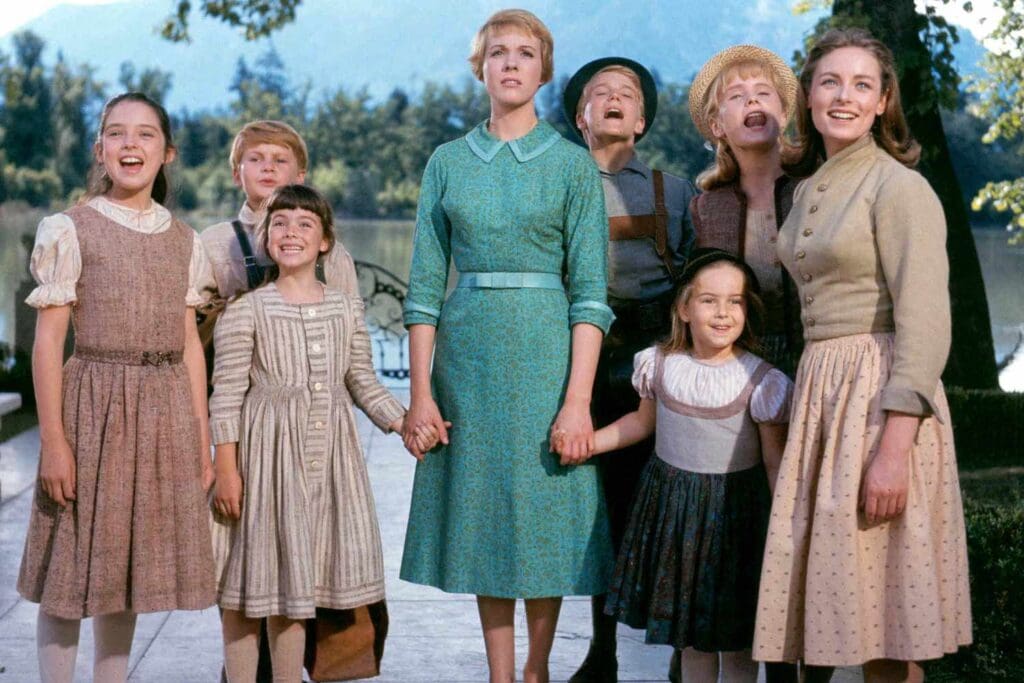
That’s what historian David Isaacs would argue. He says that ‘The Sound of Music’ has an intentionally “simplistic” view on Austrian annexation, which may place a strain on accuracy, but helps to create a family-friendly narrative.
Whilst Instructor at California Baptist University, Isaacs analysed Wise and Hammerstein’s presentation of the Nazi’s “In many ways, the Nazi regime was something so horrific you have to transpose it into something more palatable.”
“Wise, [Richard] Rogers and Hammerstein were building a musical for the masses. You can’t scare the kids, you can’t offend people who still have what happened in their mind, and yet you still need to include that part of the story, so it really is watered down.”
Even the elements of Nazi insignia that are present, from armbands to relatively plain uniforms, are dulled down. Isaacs says: “In many ways, Hammerstein’s job was to make a family-friendly musical, meaning the Nazi imagery that is there resonates differently depending on your age, and I’m sure would’ve resonated more strongly at the time than it might today.”
But what most would agree is that The Sound of Music tells a story well. So well in fact, that it remains the third highest-grossing film of all time (when adjusted for inflation). Maybe then, the conclusion we should draw is that this whole thing was redundant, films are for entertainment after all. But in an age of rampant disinformation and miscommunication, it’s up to us in front of the screen, with the facts we believe to be true, to decipher what is the real truth.