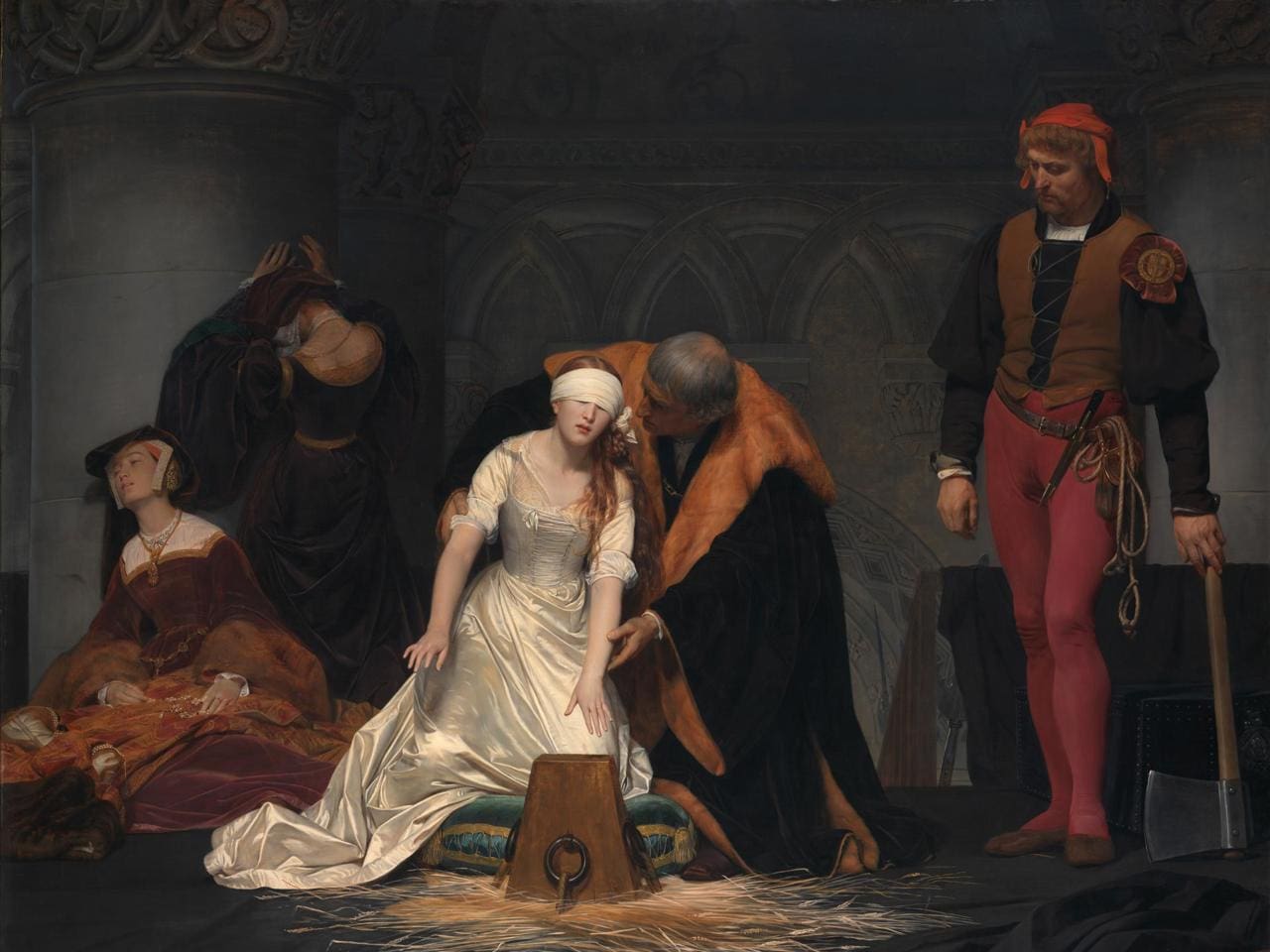
Forty years on from its release, ‘Lady Jane’ (1986) remains the defining screen portrait of one of history’s most overlooked figures. Directed by Trevor Nunn, written by David Edgar, and starring a nineteen-year-old Helena Bonham Carter in her film debut, it tells the story of Lady Jane Grey, Queen of England for nine days in 1533 before being deposed by Mary I and executed the following year. The film launched three significant careers, and quietly became the lens through which most people, when they think about Jane Grey at all, understand her. That is both its achievement and its problem.
“It’s like the whole film is one great big monstrous error. There’s absolutely nothing historically accurate in that film whatsoever. Nothing.”
John Stephen Edwards does not hold back. The American historian has spent twenty-five years debunking the myths surrounding Lady Jane Grey’s birth, life, and burial. Rewatching the 1986 film ahead of our interview simply revived a quarter-century’s worth of familiar frustrations. “Having learned what I’ve learned over the past 25 years,” he says, “I don’t remember my reaction back then, other than thinking there’s some errors in this. But now when I look at it, it’s like the whole film is one great big monstrous error. There’s absolutely nothing historically accurate in that film whatsoever, nothing, and it makes me crazy.”
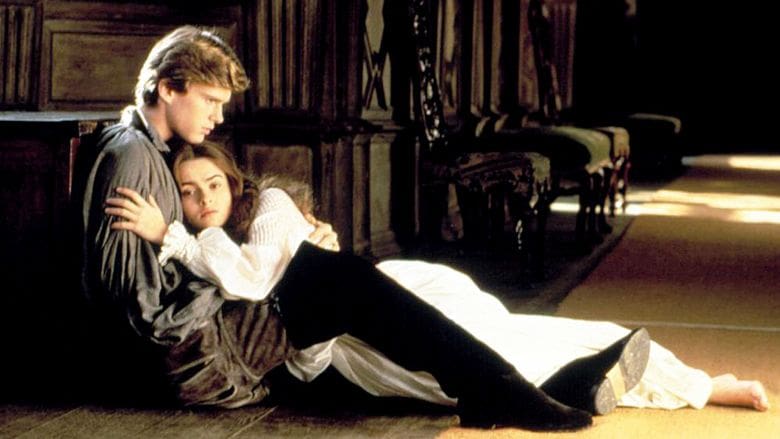
The story David Edgar was asked to tell was not quite history. “The kind of deal was that we would depart from history in that the idea was that Jane was forced to marry Guilford Dudley,” he explains, “and the difference was that an arranged marriage would turn into a love match.”
It is, as he cheerfully acknowledges, the Bollywood model: two people who resent each other discover they complete each other. Edgar’s contribution was to give the romance ideological stakes. Guilford, in his version, is a young man contemptuous of his father’s generation and their enrichment through the dissolution of the monasteries. Jane is a passionate Protestant reformer. “On the principle that the best love stories are about two people completing each other,” Edgar says, “he was feeling and she was thought.”
The device that holds the film together is a shilling. Jane, when she becomes queen, commissions a new coin bearing her face, and that object accumulates meaning as the film progresses, until it reaches the scaffold, where she places it in Feckenham’s hand as her last act. “There is no historical evidence, as far as I know, that any coinages were printed in those nine days,” Edgar admits, “but I invented the idea of the Queen Jane shilling as a kind of ever more freighted metaphor.” It ends, he explains, with Jane on the scaffold “giving the shilling to Feckenham, who was a Catholic priest sent to convert her, who actually had been kind and gentle with her. She gives her head, as it were, to Feckenham.” It is a piece of theatrical thinking rather than historical grounding, and Edgar is honest about that distinction.
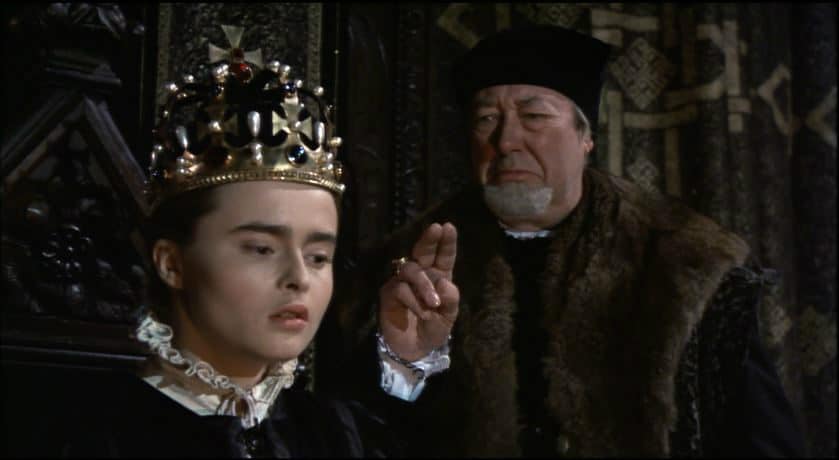
The problem, as Edwards sees it, is not simply that the film takes liberties, as all historical drama does. The deeper issue is what the filmmakers inherited before they even started writing. “What they were working with in 1986 is very different from what we know now,” Edwards explains. “What they had was a historical tradition that had developed out of religious polemics, propaganda, myth making, all sorts of non-historical writing that produced a part of the national myth, if you will.”
John Dudley, for instance, is presented in the film as a scheming villain whose sole aim was to seize the crown through his son. Edwards is direct about where that version comes from. “That’s a product of Marian propaganda. They had to blame someone for everything that had happened, and they couldn’t blame the entire Privy Council, because then they would have no one to rule the country.”
Most significantly, the film misses what Edwards believes was the whole point of the succession crisis: not religion but gender. “The goal was to set aside Mary and Elizabeth both because neither one were married within England,” he argues. “Any woman marrying at that point in time, their husband became controller of that woman’s property, and that would have and did include the crown.”
Jane had been married to Guilford not because of her father-in-law’s ambition, but because she was the highest status woman available who wasn’t already wed to an Englishman. The film, with its focus on the love story, cannot accommodate this reading. It needs Dudley to be a villain and the marriage to be an imposition because that is what the story requires.
Edgar himself, looking back at forty years of retrospect, is candid about what was lost. “I had a lot more about imaginations of the court, people like Arundel, who switched sides, and the bishops,” he says. “There were some very good council scenes”.
Paramount, anxious not to lose the central couple and wary of the running time, cut most of it. The political complexity that might have given the film some of the texture that Edwards missed became, in Edgar’s own summary, a collection of very distinguished British actors visible on screen for approximately ten seconds.
Forty years on, for better and worse, it is still the nine days that most people remember. Whether that collective memory will ever shift remains to be seen. As Edgar himself notes, Jane’s life is ultimately “a wonderful story,” making it inevitable that “sooner or later somebody else is going to make a big film about it”. When that inevitable day comes, the next generation of storytellers will face the exact same choice Nunn and Edgar did four decades ago: whether to surrender to the irresistible pull of a tragic Hollywood romance, or finally brave the complex radical politics of the real Tudor queen.