Nearly half a century ago, Idi Amin ruled Uganda with an authoritarian fist. Kevin Macdonald captured the man in The Last King of Scotland. 20 years on since the film’s release, the story resonates with Forest Whitaker and James McAvoy showing the dark complexities of Amin and his rule.
Idi Amin was the brutal dictator of Uganda between 1971 and ruled Uganda until 1979 after he seized power in a military coup against Milton Obote. In 1998, Giles Foden released a book titled The Last King of Scotland, a fictional work inspired by and embedded with the truth about Amin.
Director and documentarian Kevin Macdonald took on the challenge to adapt this book into a feature film in 2006, to which it was critically acclaimed and brought Forest Whitaker an Oscar in 2007, as well as launching James McAvoy’s career.
20 years since the release, how has the film, the history and Kevin Macdonald changed?
20 years ago, what has changed?
“It was my first feature film, and I’d made a lot of documentaries before that, so I was quite naïve in a good way. I think often the best people’s best work comes when they don’t know the rules they’re meant to be abiding by, and the studio were very keen that we make the film in South Africa.
“I went to Uganda with a producer to do what was meant to be just a creative scout and found the place totally fascinating, going to the parliament, seeing all the places that were mentioned in the script, in the book, then going to South Africa the following week and realised, well, you can’t make this film in South Africa.
“It doesn’t feel anything like it. The people look completely different. Culturally, it’s completely different. Architecturally, it’s completely different. I brought a kind of documentarian’s desire to be superficially truthful.”
How did you staff the film in Uganda?
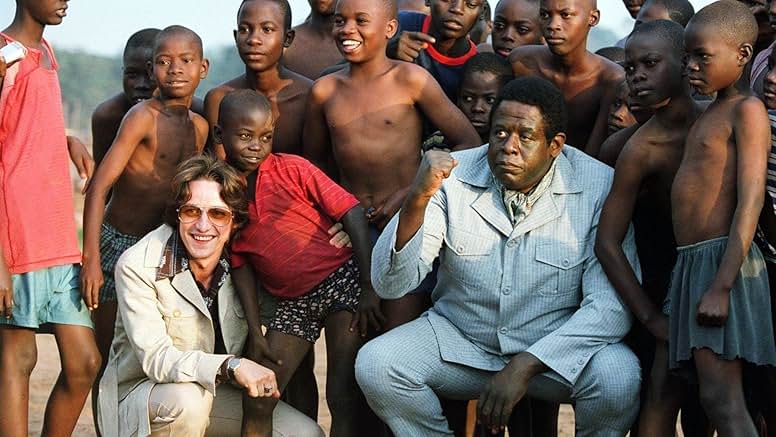
“There was not really any crew to speak of. There’d been like one or two films in the past 20 years. So we ended up training a lot of people as the film became a kind of film school in a way for a lot of Ugandans.
“Hairdressers who worked with us who were just hairdressers who worked in little salons on the side of the road, or electricians were just house electricians. So people who made the costumes were just people who were tailors. It was fascinating, but also time-consuming, frustrating, but a glorious kind of experience in that way.”
How did you get so many permissions for the film?
“We were lucky that Museveni, who at the time was the international world’s sweetheart. Everyone loved what he was doing in Uganda. He was acting on economic reforms, legal reforms and after so many years of dysfunction in the sort of seventies and early eighties, he was seen as a really, really good leader, and he was individually supportive of the film.
“We had a meeting with him, and that enabled us to do all sorts of things we wouldn’t be able to do anywhere else. So we had access to the army for certain days. They came in with tanks.”
What is he like now 20 years on?
“He’s seen as this terrible authoritarian. Corrupt.
“We had lots of government help because they wanted to show ‘this was our terrible past. We’re different now.’ Of course, ironically, they’re not that much different now.”
Since Museveni’s reign, Uganda has seen significant restriction of free expression, systemic corruption, as well as severe terrorist threats and risk along its border with the Democratic Republic of the Congo.
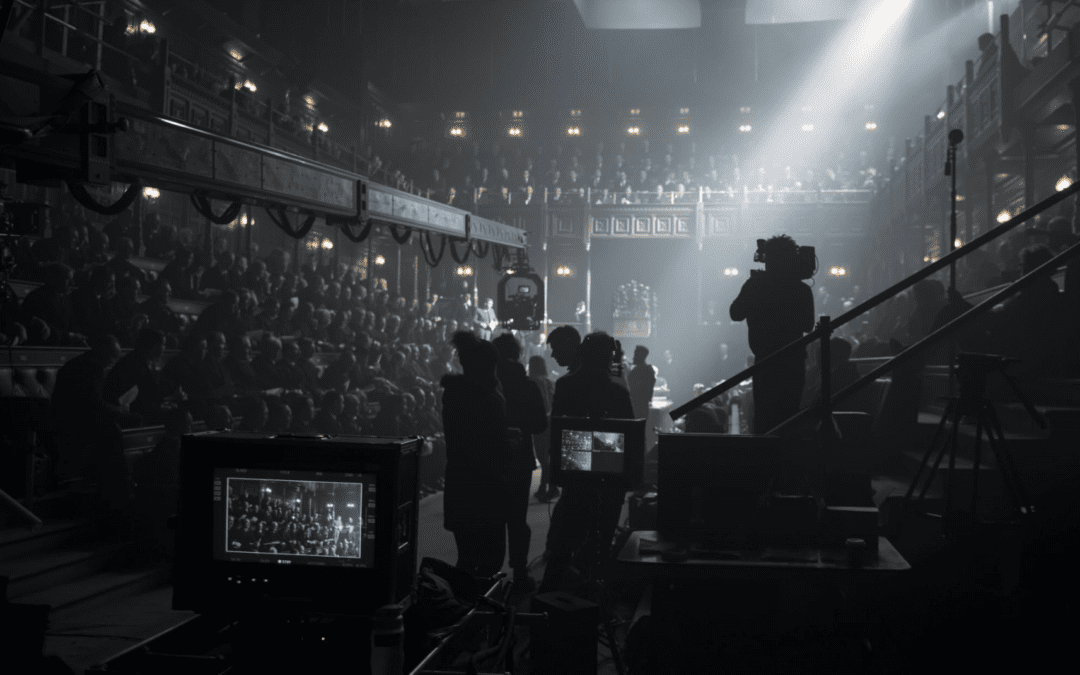
He continued, “We were able to get 4000 extras for one day for a big scene where Idi Amin first appears and gives his speech. We could never do that now. We paid people two pounds and a free meal, but it was bringing a huge amount of money to the economy there, and you wouldn’t be able to do that in Uganda now.
“You wouldn’t be able to film. We filmed at the airport in Entebbe, with access to getting on and off planes. You would never be able to do that now. Things have changed.”
What do you think about Uganda 20 years on?
“I think there was a time in the early seventies when actually there was great optimism in Africa. There was architectural modernism, there was economic relative prosperity. It was just after independence.
“I think it’s very tragic that you look at a lot of African countries, including Uganda, and actually in many ways they’ve gone backwards. There’s a lot, if you’ve been following the latest elections with Bobby Wine, who’s the opposition leader, who’s sort of on the run, in hiding, because he’s under fear of his life.
“History is repeating itself.”
How did Ugandans react to filming?
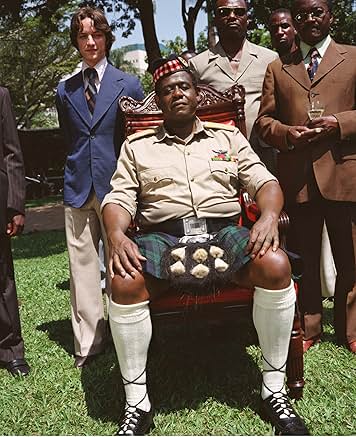
“We were shooting that big speech in a very rural area. We’re talking pre-internet, certainly for Africa, pre-smartphone. People had very basic education even in those sorts of areas. So people have very vague ideas about what they’ve heard about Idi Amin.
“But they had no real idea how old he was. Is he still alive? Is he inside the area? At the time he had died obviously, but rumours were going around that it was the real Idi Amin or it was his son that was coming.
“The idea that we were filming a feature film, people didn’t have a sense of what that meant. So you realised that you were operating in a world where fact and fiction kind of had no clear boundaries between them, and I was reminded of a certain degree of responsibility every day.”
Those who did know about Amin, did they correct you?
“When we were shooting, because there was always somebody on the crew who would say, ‘No, no, he would never have done that.’ and ‘That’s not how they would have said it’, or ‘My uncle was there’ or ‘My mother was killed.’
“People would talk up in the crew to tell you that you were doing it wrong or that the dialogue was wrong.
“I thought it was great; it definitely made the film feel more authentic, but it also meant that you were conscious all the time. I don’t want to misrepresent these people, and their people’s culture.”
The film dives into Ugandan culture, as well as colonialism; how did you juggle that?
“That’s really what the film is about. It’s about the privilege of James McAvoy’s character, and he thinks he can do whatever he likes out there and treat Uganda as his playground without taking any moral position, but he learns to his cost that it is not the case.
“The film is an indictment of colonialism and an indictment of interference and the casual way in which a British person in the 60s or 70s could live in a country like Uganda and influence it and use it as a playground in some ways.
“It’s not a true story as such. It’s embedded in a real culture and a real time with real characters, but also fictional characters. So it’s obviously based on the book, but even then it’s different again than the book. It has some of the scenes in the book in it, but some aren’t.
“James McAvoy’s character is a kind of composite made up of three or four different characters. Bob Astles is the most famous of them, who was Amin’s British right-hand man. There was a Scottish doctor who worked for him for a while and various other people.”
Do you know what Amin was really like?
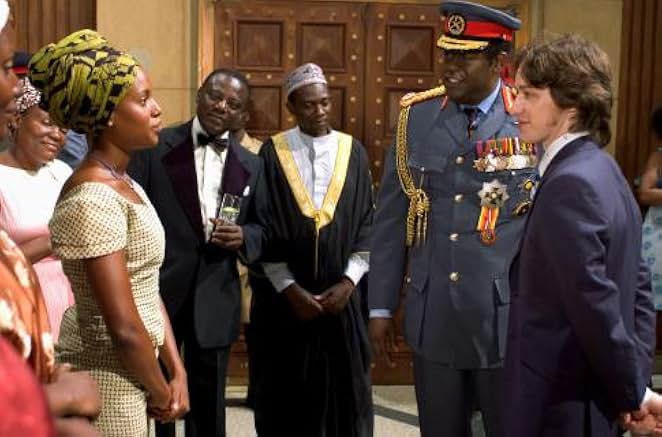
“He was a roto Donald Trump in a funny way; he became a somebody who people loved to hate and who kind of had a certain glamour, even though he was also considered to be vicious, violent, vengeful and barbaric, but also people thought he was funny and it was strange, a bit like Trump.
“People doing sort of fake comedy routines of him, and he was considered to be this hilarious, but ill-educated character. Amin loved showmanship and loved the idea of being a star.
“That’s why he’s such a fascinating character. He’s not stupid. He’s not educated, but he has got a strange dark genius to him.”
Do you think this film could be made today?
“I think people will be very nervous about making a film, which puts a white character at the centre of a story set in Africa.
“But I think that in terms of the implied politics of the film, I think it’s actually very modern. I think because it is about white interference in Africa, the white character is the narrative centre of the film, but he’s not the moral centre of the film.
“I think that the representation within the film is actually quite good. People have over the years said to me, ‘how can you make a film set in Africa with a white protagonist?’ and my answer has always been that this is not a film which glorifies that character.
“It’s a film about the neo-imperialist attitude, which I think is still pretty prevalent if you look at kids going on their gap year to Southeast Asia or probably going to Africa, the way that there’s a sort of like a sense of cultural and certainly economic superiority and the way people behave and the things people will do, which is as relevant now as it was then.
“It became part of the cultural conversation that year when it came out. And I just don’t know if that would happen.
“I think that’s something to contemplate.”
As a Scotman, does the title of ‘The Last King of Scotland’ resonate with you?
“The way that he related so much to the Scots because he saw them as the underdog, that they were the first colonised country and that Uganda and Scotland were joined by this history of oppression under the snooty English.
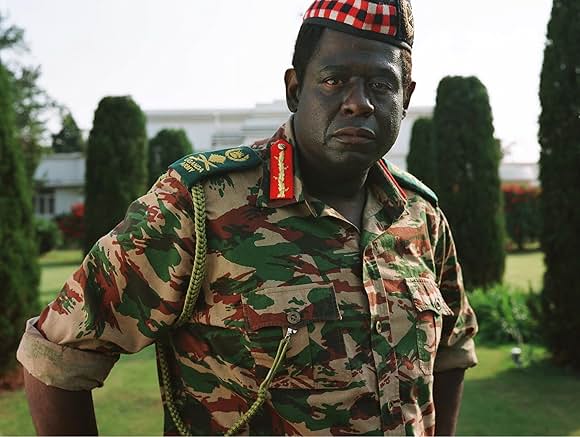
“Obviously that appealed to me as a Scot, and I think it appealed to James and the scene with the Scotland football shirt underneath.”
Did James like that scene?
“James always absolutely loved that scene.
“It’s definitely a Scottish film, a Scottish-centred film. But I mean, obviously Scots were at the centre of the Empire project. That’s where you just have to go around Glasgow and Edinburgh, you see all that money, all that wealth; a lot of it came from not just slavery, but from the Empire in one way or another.”
Do you have any stories about Forest Whitaker?
“He took a method actor’s objectivity to it, and when you’re a method actor, you have to find a way to love your character, and so for Forrest, who is an African-American who had never been to Africa before. It’s a big deal.
“He was turning up in Uganda, and he turned up a month before we started shooting, which is quite rare for an actor, certainly a star, and tried to learn a bit of the local language, learn the eating habits. He took it so seriously; he really felt he had a big responsibility, but he came into it wanting to find the positive side of Amin.”
Was there a positive side to Amin?
“I remember him saying to me when one day he and I were taking a taxi to a meeting somewhere in Kampala. The driver of the taxi sort of said, ‘Oh, you’re making a film about Idi Amin. You know, he was terrible. He killed my whole family. In fact, everyone in my village, I was a baby, and I was the only one who survived.’
“It was this terrible story, and then we got out of the taxi, and Forrest turned to me and said: ‘I don’t know, he was just a baby. How does he know that’s really what happened?’”
What did you say or think?
“I thought, ‘Oh, that’s so interesting’. He’s sort of having to find a way to defend his character, and I think that is what people see when they see the film.
“They don’t just see a two-dimensional villain. I think that they see a human being who has been warped and distorted and pressurised and all the things that have happened to a human being to turn him into this monstrous individual.”
What did that teach you?
“I learned as a filmmaker, as a person, that villains aren’t born like that; they’re made.
“Forrest taught me that, and I hope that that’s what people take from him because I think he is a very human and complex character as presented in the film.”
You scale back the history in film, in favour of the personal side of Amin, is that something you regret 20 years on?
“That history is the backdrop to the personal drama, and obviously in a film, as opposed to a documentary or a history book, you’re always foregrounding the personal drama. That’s what is interesting. That’s what’s interesting for audiences and emotionally engaging for people.
“So I suppose we see his decline into authoritarianism and madness in many ways: jealousy, madness, insecurity, paranoia. Obviously, we don’t go into the fact that this is part of a bigger realignment away from Western Europe and towards Libya and the Soviet bloc.
“But that’s the story behind what we’re showing, but I guess we show that as allied to, you know, the personal drama of him destroying his country, killing his wife, and becoming crazier and crazier.”
This was the start of a career for you in historical filmmaking about these figures. Does something about historical filmmaking appeal to you?
“Well, it might just be that I have a shortage of imagination, so I like real characters and real stories. I think because I’m just really curious about human character and all the different forms of the human character.
“So making documentaries about singers or people that I’m interested in is a way of sort of examining in a deep psychological way that individual and maybe relating their psychology and their life to their work.
“I’m endlessly curious about it.”