Vera Brandes is the reason the world was blessed with The Köln Concert by Keith Jarrett, leading it to become the best-selling solo album in jazz history and the best-selling piano album. But that’s not the interesting story; Köln 75 shows us how an 18-year-old Vera made it happen. HistoFlick spent an evening with her to see if we could find the truth, the exaggerations and the behind-the-scenes.
Most musical biopics focus on the artist, but Köln 75 focuses on the true hero of the story.
Vera Brandes has done it all, from setting up events and her own record company to now researching how music can heal.
This all started when she was 18, and she hasn’t stopped since; Köln 75 is only the start of her story
What was it like watching a stranger become you?
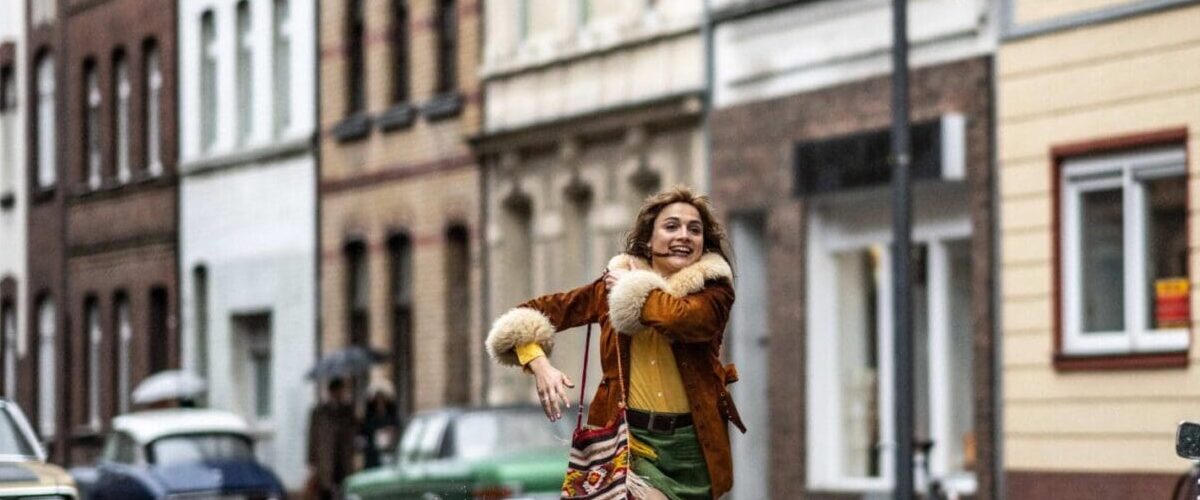
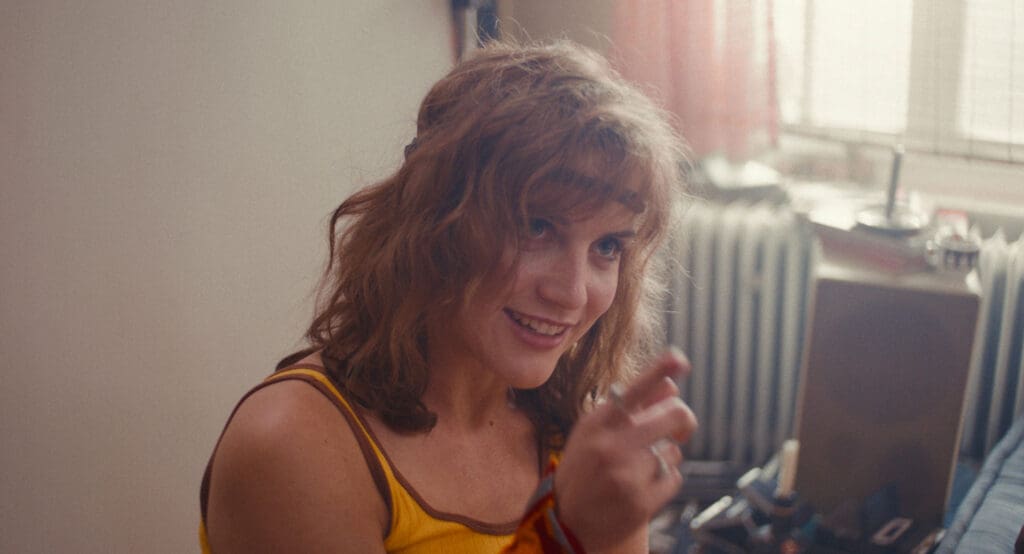
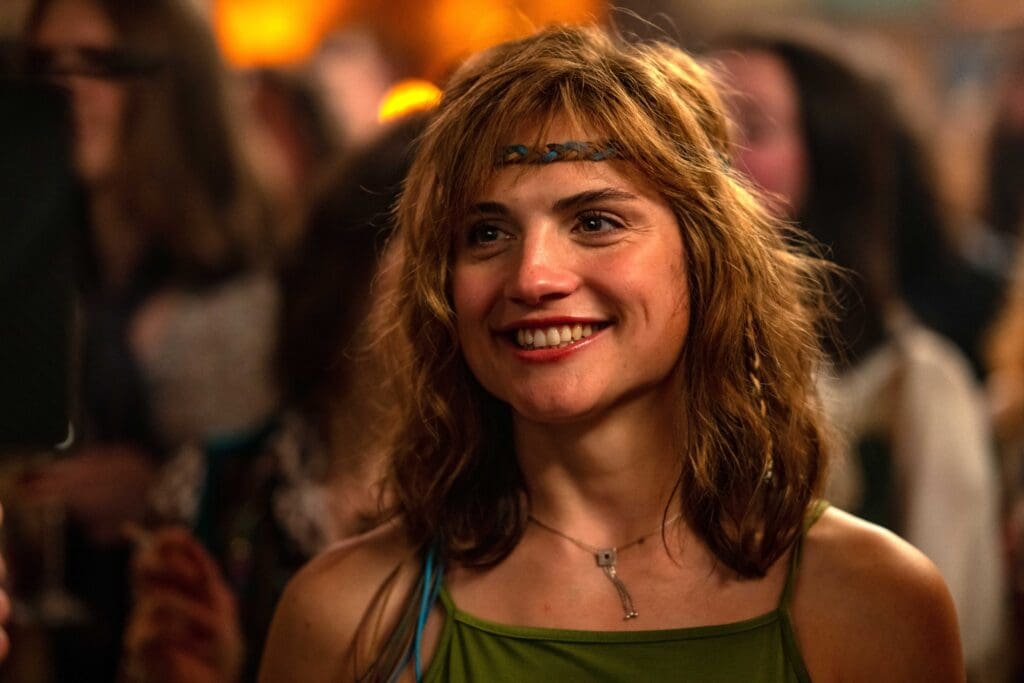
“I always say Mala [Emde] is the better version of the original Vera because she knows how the story ends. I did not.
“She knows that there was a happy ending, and so there is more charm in her, in her action, in her words and in her face.”
Was Mala stressed to play you?
“She was probably stressed because she was scared that I would not like how she played. And I, unexpectedly for her, I appeared on the first day of shooting, and she thought, ‘Oh my gosh, she’s now going to look at me, and she won’t like it, and they’re going to fire me right on the spot.’
“The first day they shot was the scenes with her father, and the actor that plays my father looks like the twin of my brother; maybe he had a little bit more weight around his waist, but in terms of the stature, the size, the hair, the hairdo, the hair colour, the face, it was like it really could be him.
“So it was triggering a lot of things in me, because in my real life, my brother is standing in the footsteps of my father, in terms of criticising everything I’m doing, questioning everything I’m doing, not giving me any credit, not giving me any acknowledgement, always criticising me.
“So when I saw them play the scene, it triggered so many things that were not only vivid in the past, but that are still vivid in my life. After seeing that, I had to leave.”
Was it a visceral reaction?
“I cramped up from the bottom of my feet. I felt that fear crawling up my bones; I was really afraid of my father. I think in the film it comes across as if I’m really courageously standing up to him.
“I did courageously stand up to him, but this was compensating for my really profound fear. So I left the shooting place where they were filming, and didn’t return the next day. “
What did Mala think?
“Mala was afraid I left because I didn’t like what she was doing.
“Then I spoke to her on the phone, and I said, ‘Mala, you’re doing such an amazing job’, and she was totally relieved.
“She also won the first prize for Germany’s best female actor of the year, elected by the German Actors Guild. In other words, her colleagues were convinced that this was an exceptionally well-played role.”
Were there any scenes that weren’t real?
“There was one scene that didn’t happen. I didn’t pick up a strange man in a bar and take him home.
“I didn’t do these things when I was young, even though the 70s were the pre-AIDS era, it was all about women’s liberation, and people had a much more relaxed relationship than they do now.
“There was a conversation with Ido [Fluk], but I think Ido put it in because it was clear that the artists I work with were always in a totally professional relationship. I would not mix things.
“Maybe he put that in because he wanted to say ‘this girl didn’t achieve what she achieved because she had private relationships with the artists’.”
Any other scenes?
“I told Ido about the laughing gas and my father’s office, and there are scenes where we’re trying this out.
“That has actually not happened, but it was also a conversation I had with Ido where I was telling him that not only was sexuality a totally liberal thing, but that many people were trying out lots of different drugs in the 70s.”
How did you feel about the scenes of the Köln Opera taking place in Poland?
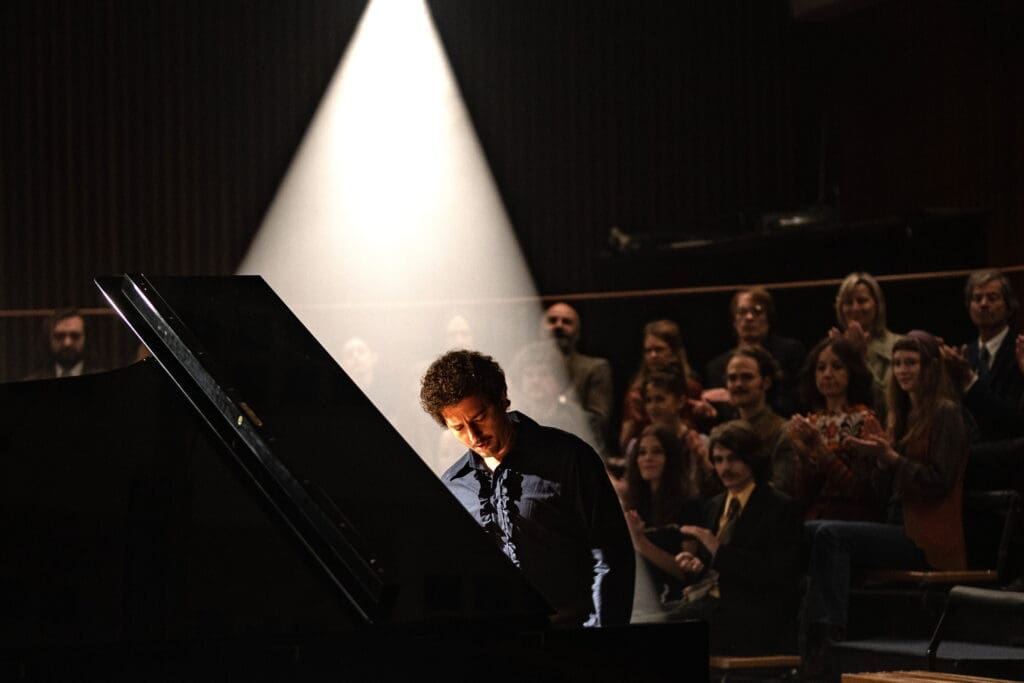
“I think it is much better to do it the way that they did it. They tried to do what I told Ido was going down historically, but they couldn’t because it was taking place on a parking lot at the Köln Opera, which doesn’t exist anymore.
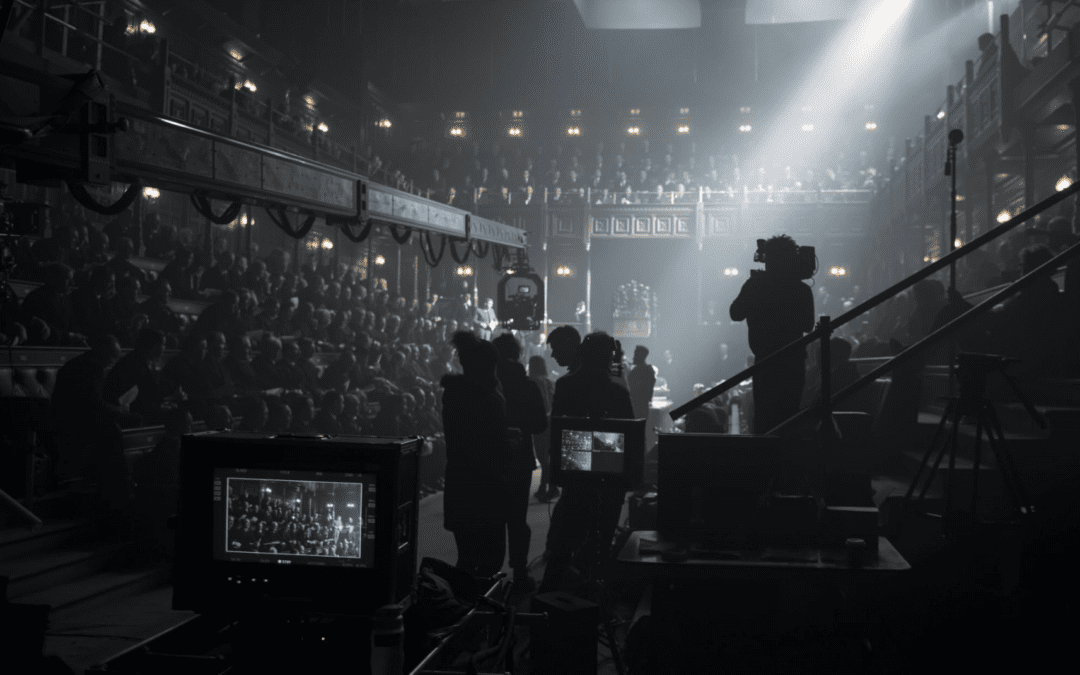
“Also, because the Köln Opera had been under construction for the past 10 years, we had to shoot all of that indoor stuff of the Köln Opera in Poland.
“So that was, logistically, technically, visually, we didn’t have a chance to do anything close to the original scene. So, Mala and Ido worked on that scene endlessly, and I’m very happy with the result.”
Is this why the movie has had such international acclaim?
“The movie is so great. The acting is fantastic. The dialogues are wonderful.
“The music appeals to an audience even today because it showed what was going on, not only in that niche world of jazz, but what was going on musically in the rest of the world.
“The city of Cologne is involved in this cultural explosion in all areas. So, I think that the film really grabs the degree of liveliness that was really infectious. This is not a boring story.”
The film takes place in 1975 in West Germany. Do you feel like you were a part of something larger at the time, or were you just trying to get the piano fixed?
This was a time where politics and music and art mixed, there was no separation. The real Campi [Bar and Ice Cream Parlour], which is where Ronnie Scott and Vera meet, the real [Gigi] Campi was an Italian designer, Italian jazz producer, promoter, architect, political activist.
“Gigi Campi played a very important role in Germany and in Köln. It all happened just a short walk from the central building of WDR, which is like the central European equivalent to the BBC. In that place, from early morning to after midnight, you could see the international avant-garde top people.
“Juliette Greco could be standing next to Andy Warhol, to Heinrich Böll, to German politicians, and we were discussing everything at that Campi counter, about the political scenarios, and the artists were really very close.”
So you were very politically active?
“I was a part of the leading team of an initiative called Artists in Action, and there was not one single thing where we didn’t get involved in.
“We were on stage protesting, making concerts, whether it was for the peace movement or the anti-nuclear power or the disarmament, like anything you could imagine, including getting rid of laws that would prohibit homosexuality or abortion and all of these big topics that were discussed not only in Germany, but internationally.”
After producing and promoting events, you became a researcher. Do you think the seeds of the scientist that you were going to become are already in the film?
“I was totally fascinated to observe what music can do to people. This fascination is the reason why producing and promoting music is a business and can be done as a serious profession
“But I was fascinated to find out why music has such a profound effect, not only on people individually, but also collectively. That was something that I was totally amazed by, and I remember that only a few years later, these questions were discussed with journalists and artists, and I didn’t stop asking about it.
“I had put it in my head that when I was 65 I would retire from being a record company owner, I would research music effects and find out in what circumstances what different kinds of music can do to people and obviously things turned out differently, because that wish was apparently so strong.
“I didn’t want to wait until I was 65 after I had a major car accident.”
Can you elaborate?
“After I had the accident, the woman I shared the hospital room with was a Buddhist, and she had just had a very serious thyroid operation. She was visited by her Buddhist friends twice a day in the morning, afternoon, or evening, and they chanted a mantra, a healing mantra.
“That healing mantra also affected me because I was supposed to be flat on my back, don’t bend, don’t turn, don’t move, kind of a thing between 10 and 14 weeks and I was out of the hospital in two weeks, which doctors had not ever seen before.
“I had also alternative techniques applied to myself, a Japanese method called Jin Shin Jyustu. I didn’t know whether it was the Buddhist chanting of the healing mantra or the Jin Shin Jyustu, or if it was the combination of the two.
“I felt that it needed to be researched, because it would be so beneficial for people to know this and could be applied to them. At that point in my life, there was no return; going into research was the only thing I wanted to do.”
Did it pay off?
“I was the head of the Music Medicine Research Programme at the Paracelsus Medical University in Salzburg for more than 15 years, and also was the Vice President of the International Association of Music and Medicine.
“So it became my life, and I’m very thankful for that.”
If your own 18-year-old self could see you watching Mala on screen, what do you think would surprise her the most?
“The fearlessness. I mean, as I said before, there was nothing fearless about me. Retrospectively looking at things, I was probably suffering from quite an extensive anxiety disorder, and that I had the guts to do what I was doing was retrospectively valued as a compensation because I did not want to allow these obstacles to ruin my life or to prevent me from creating what I wanted to create.
“So I didn’t; I never took no for an answer. I never took impossible as something that was like a final judgement about anything.
“I was really determined. I really didn’t want to take no for an answer ever.”
Describe the night of the concert
“Totally magic. Totally true. And there was so much love in the air. I mean, this was so ultra emotional. Everybody was touched in the core of their being.
“It was a transcendental phenomenon that concert. Keith Jarrett managed to overcome the setbacks that he was suffering from his pain. I don’t know how he managed to play as heartfelt and as beautiful under those conditions.
“There were a gazillion angels in the room that helped him out and that were sitting on his shoulder. I think he was so exhausted that some divine force helped him because he really didn’t want to disappoint the audience.”
Finally, what is your best advice for another 18-year-old ready to risk everything for their dream?
“I would say don’t think about it too long, because that may result in you not doing it. So just grab your heart with both of your hands and jump, even though you don’t know if the water is deep enough.”