From family feuds to face paint, we explore the scenes from your favourite historical films that never actually happened, and ask if cinema’s very own storytelling is keeping history alive, or distorting it beyond recognition.
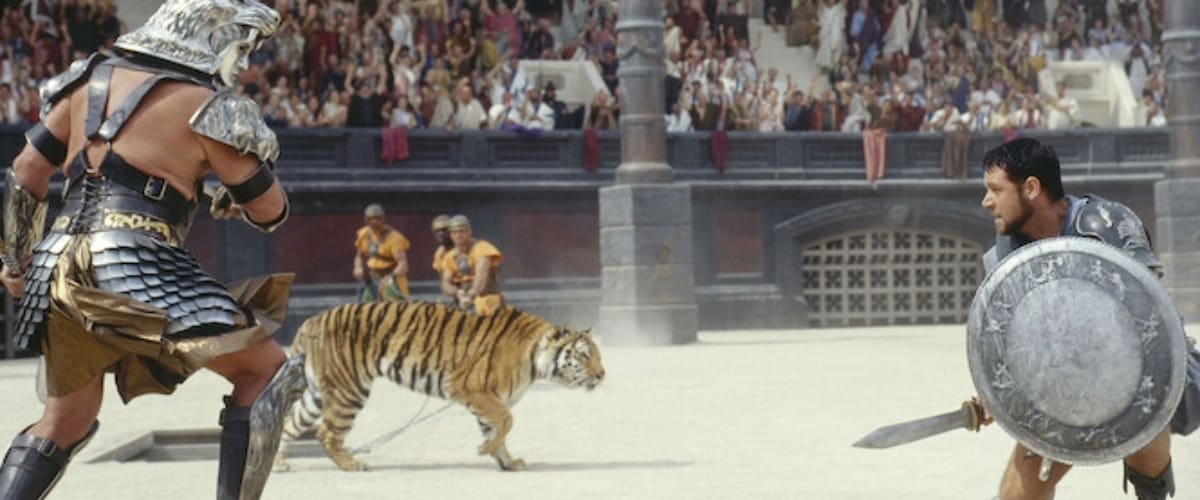
“Your faults as a son is my failure as a father”. Joaquin Phoenix’s superbly executed Commodus in Gladiator (2000) faces his father in an emotionally fuelled confrontation over the throne.
What follows is the murder of Aurelius, a scene of captivating struggle and lust for power, spinning the wheels of motion for arguably cinema’s most iconic speeches.
“I am Maximus Decimus Meridius…Commander of the Armies of the North…father to a murdered son, husband to a murdered wife, and I will have my vengeance.”
When we think of a film depicting Ancient Rome, or even a historical film in general, Ridley Scott’s Gladiator is always one of the first. HistoryHit ranks it as the third-best historical film of the last fifty years. It swept up five Academy Awards, BAFTAs for Best Film and Editing, and continued dominance at the Golden Globes.
But Marcus Aurelius died of the plague, in the middle of nowhere on the outskirts of Vienna at 58, and Russell Crowe’s Meridius was purely fictional.
Similarly, in Mary Queen of Scots (2018), we see a secret meeting between Mary and Elizabeth I as Mary needs military aid to reclaim Scotland. They meet in a barn covered in sheets, separating them, symbolising the tension and emotional reality that the film fed on. It symbolised that no matter how much they wanted to see each other, their status wouldn’t let them.
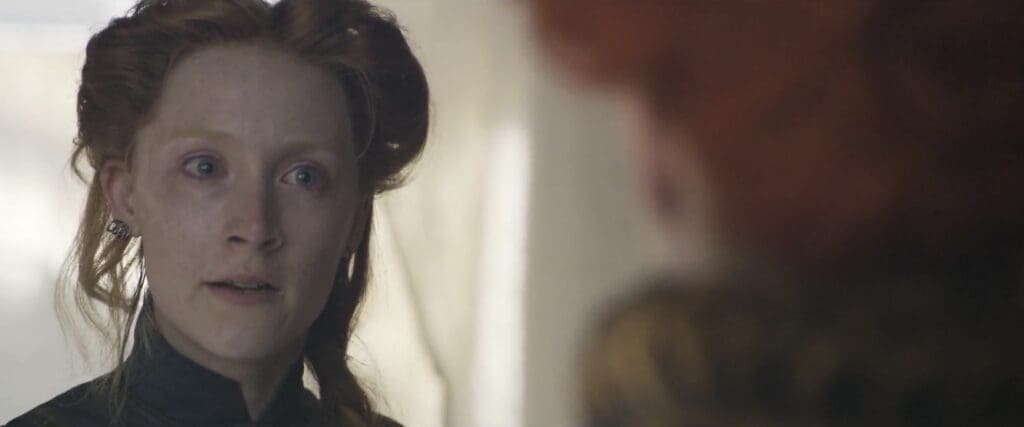
However, as you’ve probably guessed, they never actually met, despite being cousins and such important figures. Director Josie Rourke put them in the same room to help grasp the emotional situation that was so important for the plot, stating she felt that there was no other way to present this connection.
Many people argue that this is wrong, that it’s a twisted perversion of rewriting history, and that, because film is the most powerful medium of storytelling that we have, it’s twisting the truth.
It could also be argued that moments like these in cinema aren’t obliterating history; they’re keeping the very beauty of it alive.
Without films like these, many people may not have even thought about Ancient Rome or 200AD, or really think about Mary Queen of Scots, or her incredibly troubled emotional and political sibling relationships.
For the most part, movies become a stepping stone to delve deeper into what history was really like, to form links, comparisons and end up helping viewers love a subject they otherwise wouldn’t have known about.
Andy Murphy is a film enthusiast who’s watched and produced discourse on hundreds of historical films. He talked about his time and conversations with directors, the association that historically different scenes have with his love for sci-fi, and his full support of filmmakers going above and beyond the traditional past.
“I don’t think that films would be the same if directors didn’t dare to change history a bit. Change probably isn’t the right word, but you talk about the Gladiator and the difference there was in that, and it’s a perfect example.
“Probably one of the greatest films of all time that we would have never had if Scott weren’t as inventive as he is. I’m by no means his biggest fan, but he’s proven that taking risks has made him one of the directory greats.”
“I think what was so strong about Gladiator was the characters, and the way that they had you rooting against Commodus so much, and you sit there and you’re suddenly on the edge of your seat about half an hour later when Russell Crowe makes that infamous speech and the guards behind him come swarming in and you don’t know what’s going to happen next,” he said.
“Even to the end, you’re kept entertained all the way,” he adds.
On the flip side, Ridley Scott has come under scrutiny from historians and film critics alike for some of his films. Particularly through his use of Joaquin Phoenix as the titular character in Napoleon (2023).
As was the case with his overly obsessive temperament, something Scott was very passionate about making clear.
This also tied in with his portrayal of Napoleon as a fragile and vulnerable man, an emotional side which many people didn’t like, with criticisms also coming from the fact that not a huge amount of emphasis was placed on his many conquests, that earnt his name and made him the figure he is today. All of this to which Scott replied with the words: “shut up”
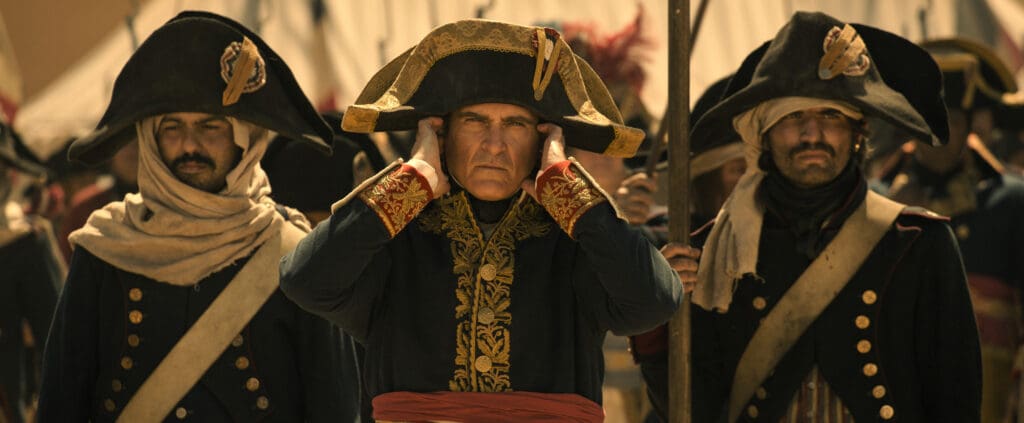
“I think there were parts of that film in particular that people had every right to be unhappy about. I’ve talked a lot about how change can be made, but the flags of the regiments weren’t entirely accurate, and that is something I think has to be done properly, and I think it’s something with Scott and the people behind the scenes,” Murphy said.
When asked if he agreed that film was the most powerful and modern medium of storytelling, he said: “I don’t think it’s an understatement at all. I think history brings film to life, and in the most powerful way too, giving faces to all these people you’d otherwise just read in a textbook when you’re 15 in a history lesson, and you can’t quite put two and two together of what’s actually going on and when it’s happening. And that’s also where a lot of credit needs to go to the costume and the set designers.”
“I’ve read on some of Scott’s best costume designers, David (Crossman) and Janty (Yates), and the work that they had to put in in such a short time for the Gladiator Sequel that came out last year, and it’s really quite something, they had to mass produce thousands of costumes for all the soldiers and obviously for Mescal and Pedro Pascal’s character, which looked really well put together.”
“So going back to the point of history keeping cinema alive, it’s not just the directors, and you could actually make the argument that these people do just as much, with a lot of responsibility on every one of them.”
“I draw parallels to sci-fi in a way – it’s not always about what’s the most accurate, but what translates to creating the best art, and what people want to watch the most. People don’t want to watch Aurelius die of the plague; they want to see a villain of a son that the film has created.”