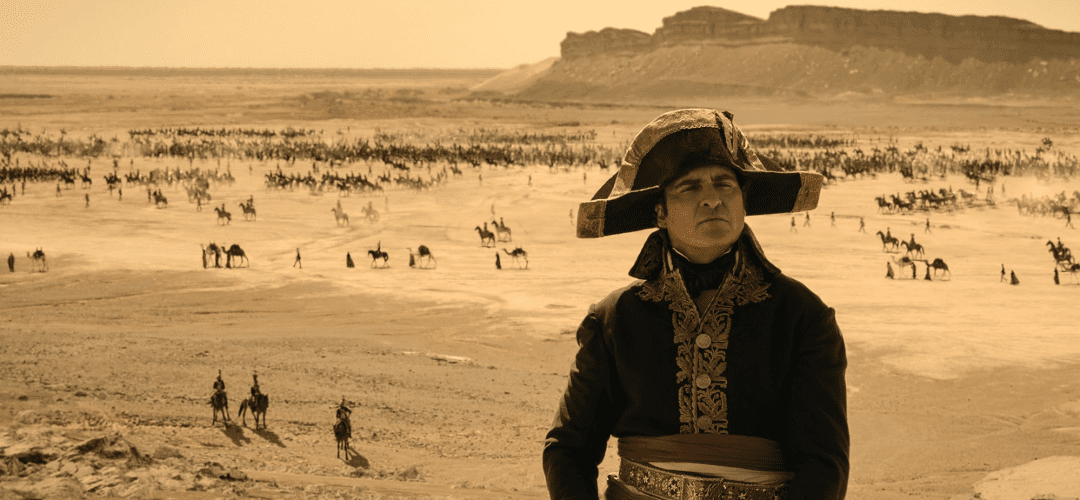
For over a century, filmmakers including Ridley Scott, Stanley Kubrick and Martin Scorsese have wanted to capture Napoleon Bonaparte on screen. Yet, despite hundreds of attempts, millions of dollars, and some of cinema’s greatest minds, the true complexities of the man behind the famous silhouette continue to elude the camera.
Napoleon Bonaparte may be the most portrayed historical figure in cinema history. It’s widely believed that there have been 194 portrayals of the French emperor, from silent epics, lavish Hollywood dramas and gigantic Soviet spectacles, all attempting to capture the Corsican who reshaped Europe.
Yet for all the millions of dollars, thousands of extras in battle scenes, and critically acclaimed actors in starring roles, historians still argue that cinema has never truly captured him.
“One would have thought that representations of Napoleon in film would have gotten better over the decades,” historian Andrew Roberts, Baron Roberts of Belgravia says. “But in fact they seem to have gotten worse.”
There may be no historical figure more dramatically irresistible. Napoleon is simultaneously a military genius, revolutionary, reformer, tyrant, propagandist and a romantic hero. He is someone who rose from relative obscurity on Corsica to dominate continental Europe before dying on a remote Atlantic island.
The Irresistible Myth
“Most people encounter Napoleon through the Napoleonic legend,” says historian Alexander Mikaberidze, professor of Napoleonic studies at Louisiana State University. “From a distance, he looks irresistible.”
That contradiction between man and myth has fascinated filmmakers for more than a century. From Kubrick and Coppola to Gance and Scott, directors have repeatedly attempted to capture Bonaparte’s charisma, ambitions and contradictions on screen.
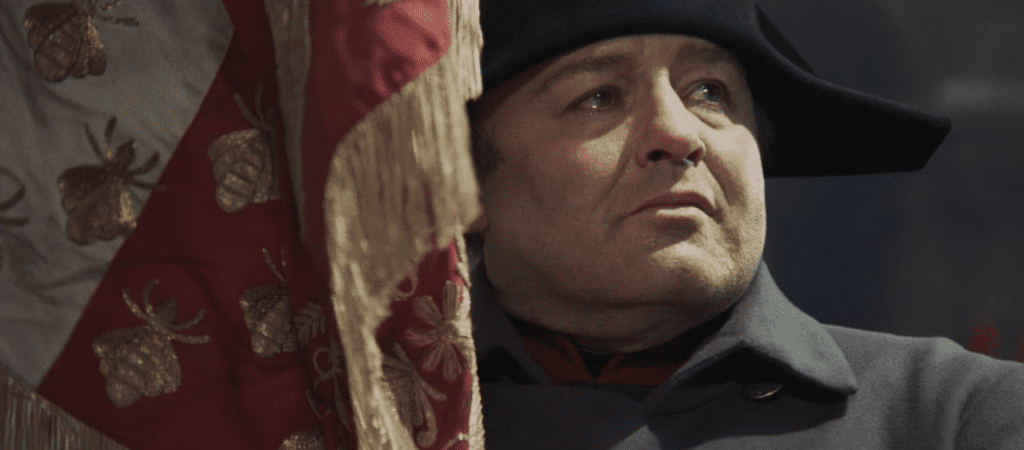
Napoleon’s appeal to filmmakers has never been difficult to understand. His life seems more like epic fiction than reality. His life is ready-made for dramatisation, rising from an obscure outsider on Corsica to crowning himself emperor of France (twice), redrawing the map of Europe (twice), before ultimately dying in exile on a remote Atlantic island (having escaped the first time).
“We encounter Napoleon as a kind of romantic figure,” Mikaberidze says. “This titan bestrode the globe for about twenty years, who tried to accomplish extraordinary things. There is a certain romanticism to his life. He comes from an obscure island, from a small, impoverished family, and here he is creating the greatest empire Europe has seen since Charlemagne.
“There is such a complexity to him that I think it should fascinate you. If someone says Napoleon, you can instantly picture him, and in that sense, even in defeat, ultimately, Napoleon wins the most important battle that he fights. The battle to be remembered.”
But whilst Napoleon himself was able to curate so much of the mythology that surrounds him, cinema has spent more than a century struggling to effectively translate that mythology to the screen.
A Cinematic ‘Excretion’
For chief Napoleon biographer Andrew Roberts, the issue is not simply historical inaccuracy, but a deeper failure to capture the nuances of Napoleon’s personality, particularly in Napoleon (2023).
“The Ridley Scott movie was an excretion,” Roberts says bluntly. “It could so easily have been extremely good if it had a screenwriter and a historian. Scott is obviously a great filmmaker, and he had $300 million to throw at this, so he could have created something wonderful. But he failed in pretty much every area.”
Roberts is particularly critical of Joaquin Phoenix’s portrayal of the emperor. He argues that Phoenix “plays Napoleon as a character you wouldn’t follow in a million years, he’s a sort of Hamlet-like figure rather than a leader.”
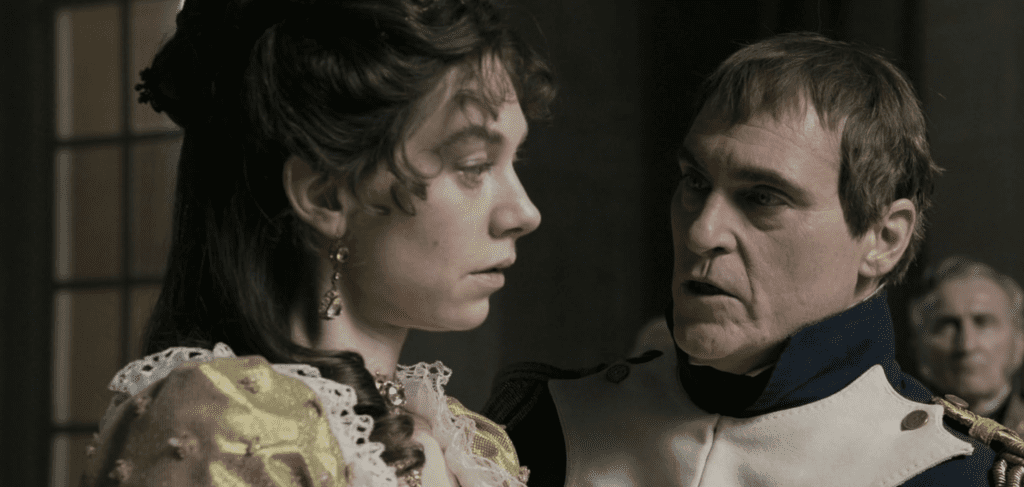
Part of the issue, Roberts suggests, lies in the film’s decision to frame Napoleon’s entire career through his relationship with Josephine. “Scott has decided to try to explain the whole of Napoleon’s career, including his military campaigns, in terms of his love affair with Josephine,” he says. “Which is so historically ludicrous that it hobbles the rest of the movie.”
The Elemental Emperor
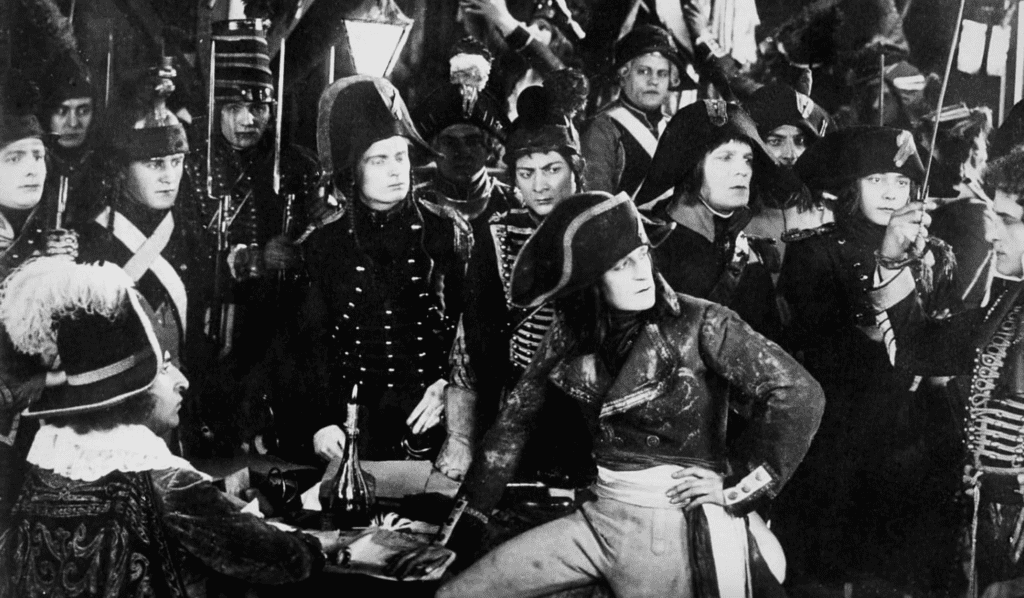
Yet Roberts does not believe cinema is entirely incapable of capturing Napoleon. He points instead to earlier portrayals that understood something more essential about the emperor’s magnetism. Rod Steiger’s performance in Waterloo remains, in his view, one of the strongest screen interpretations, while Abel Gance’s Napoleon (1927) still comes closest to capturing the spirit of the young Bonaparte.
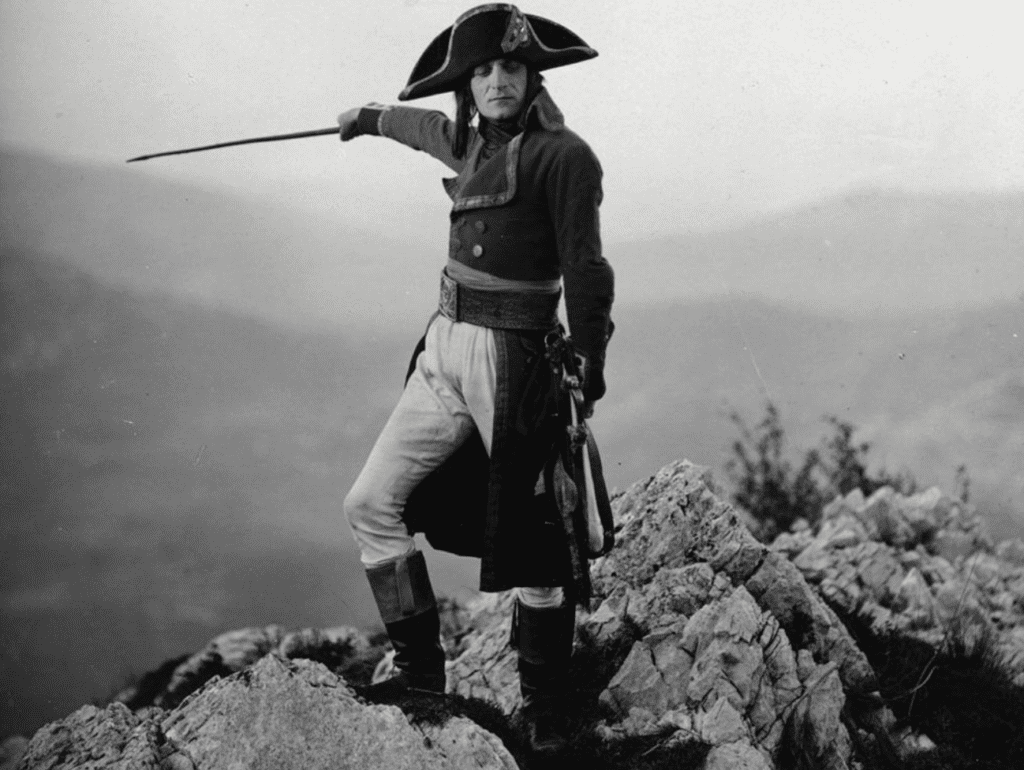
“It gets the elemental side of the emperor,” Roberts says of Gance’s silent epic. “It’s really more the young Napoleon than the later one, but it captures the basic elements of Napoleon’s personality in a way that Joaquin Phoenix completely fails to do.”
For Roberts, the power of Gance’s film lies not necessarily in strict historical precision but in its understanding of Napoleon’s force of character. Made nearly a century ago, the silent epic approaches Bonaparte less as a conventional historical figure than as a revolutionary phenomenon.
“Napoleon with a live orchestra is one of the great cultural experiences of the early part of the twentieth century, in my view. I love that”, he says, recalling a screening at London’s Southbank Centre.
What Gance understood, Roberts suggests, was that Napoleon could not simply be played as an awkward or inward-looking figure. Gance’s film comes closest to capturing Napoleon because it embraces the mythology surrounding him, rather than trying to dismantle it.
The Impossible Scale
Even so, Gance’s vast, five and a half hour silent epic only manages to capture part of the story. For Alexander Mikaberidze, the central problem facing any filmmaker attempting to tackle Napoleon is the scale of the man’s achievements.
“When he’s in exile, he famously says, ‘What a novel my life is’,” Mikaberidze says, “and there is a great truth to this, because looking at his life, it’s hard to believe how much he’s able to accomplish in just fifty years.”
The challenge, he argues, is that Napoleon’s legacy stretches far beyond the battlefield spectacles that most films gravitate towards. In just over a decade in power, Napoleon transformed French administration, law, education and government while simultaneously waging continent-shaping wars. Trying to compress all of that into a single film inevitably forces directors into simplification.
“Can we really expect a movie to convey the magnitude of this man’s accomplishments in two or three hours?” Mikaberidze asks. “It’s impossible. One side is the Napoleonic legend that portrays him as this great progressive figure. Now there is the other side of it, the black legend, that looks at him in a more critical lens.”
Mikeberidze describes him as “the last of the Enlightenment despots, obsessed with administration, reform and centralised power. But he also understood that in order to lead men, you have to win their hearts and minds. You have to convince them that what they are doing is actually what they want to be doing.”
Such was his magnetism that Roberts questions whether any single film could ever truly contain Napoleon at all. He recalls a discussion with the legendary Martin Scorsese about the challenge of bringing the emperor to the screen, something even Scorsese himself ultimately stepped away from.
“Martin Scorsese told me that he was considering making a movie about Napoleon,” Roberts says, “but decided actually that Napoleon was too big a figure for the silver screen, which is probably true if you’re trying to capture his entire life in one movie.”
Roberts knows the scale of the challenge better than most. “I couldn’t do it in less than a thousand pages,” he says of writing his own biography of Napoleon. “And it’s very difficult to put a thousand pages into a three-hour movie.”
The Image vs. The Man
Even so, Roberts does not believe that portraying Napoleon effectively is impossible, but that filmmakers may be approaching him the wrong way.
“It presumably could be possible if you’re doing it in a series of movies,” he says. “Or a television series. You’d also need to have three or four different players playing the main part. The young Napoleon would have to be a specifically different person from the emperor, who would also have to be completely different from the one who dies on Saint Helena.”
Despite the failures and dilutions of many portrayals, Roberts doesn’t believe Napoleon’s hold on popular imaginations is fading. “He’s one of those evergreen historical characters that people will be interested in forever,” Roberts says, comparing him to Julius Caesar and Alexander the Great.
Perhaps that is why filmmakers continue to return to him. Napoleon Bonaparte remains instantly recognisable, his hat, his silhouette, his hand tucked into his coat. But, as Mikaberidze observes, “it is the man behind that silhouette that is less known.” Two centuries after his death, cinema is still trying to find him.