From a quaint little bookstore in Camden to a legacy that revolutionised the boundaries of activism forever, the story of the LGSM group supporting a tiny mining village in Wales feels almost too good to be true. Here, Lewis Kennedy peels back the story imagined on screen and uncovers the true impact that solidarity has in the face of adversity.
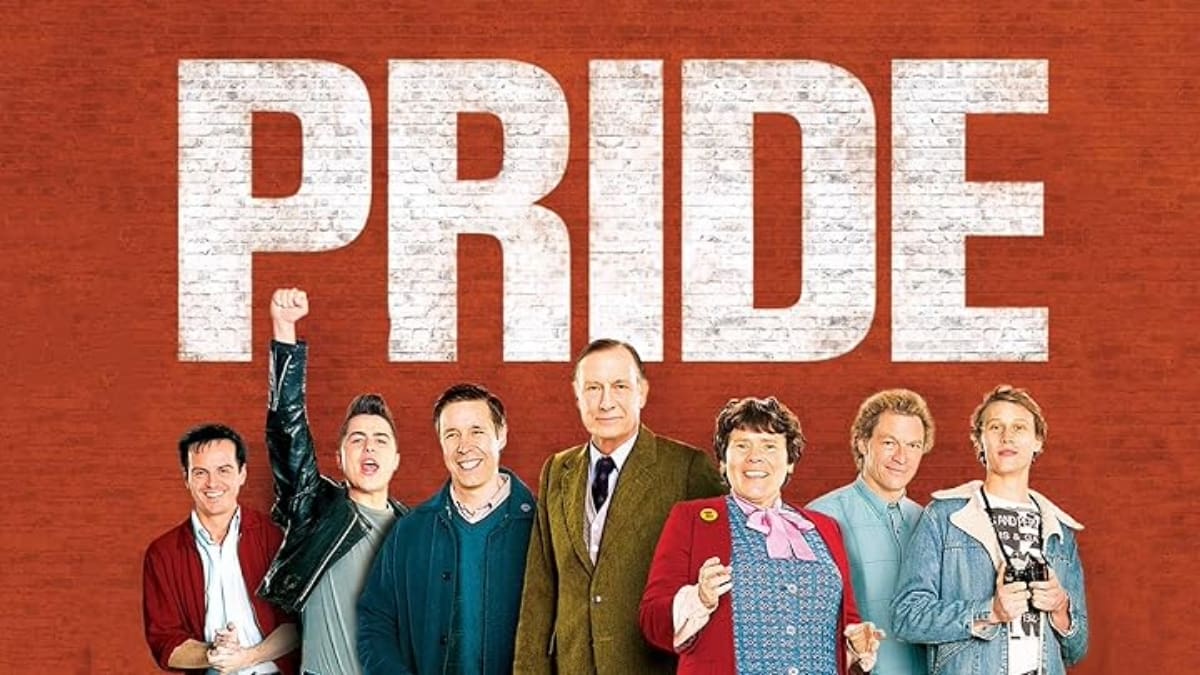
The beloved film ‘Pride’, released in 2014, captured hearts across the world with its fairytale retelling of a lesbian and gay activist group showing support for the miners’ strike in 1984. Screenwriter Stephen Beresford, who had initially dismissed the story as nothing more than a ‘gay myth’, pitched the concept to producers as a last-ditch movie idea. The resulting film showcases themes of prejudice, uncertainty, and immovable solidarity brilliantly. Its ability to place this beautiful story of unlikely companionship and unwavering belief within the context of a deeply homophobic Britain, struggling with union strikes and the terrifying whispers of an AIDS epidemic, is beyond admirable. Yet, the true legacy it left behind warrants a deeper look. In a time of growing prejudice and hate today, what can be learned from a group of people standing with buckets outside a bookshop?
Speaking with Tim Tate, journalist and author of the book ‘Pride’ (published three years after the motion picture), he shared his valuable firsthand experience of interviewing the key players. While the film does tackle issues around homophobia and AIDS, Tim noted that the cinematic lens required some softening. “Oddly, though, I think it glossed over the wretched history of discrimination against gay men and women in Britain,” he said. “I know other books do a much more thorough job to highlight this than I was able to, but I hope that I managed to bring some of this out and explain, in the LGSM members’ own words, how this impacted their lives.”
Alongside this, Tim spoke on the differing political views within the group, proving that a shared enemy does not automatically equate to a shared worldview. “LGSM, from everything its members told me, was not a monolithic or homogenous organization. It was certainly left-oriented, but within that broad spectrum there were diverse backgrounds, opinions, and views as to political strategy.” Coming from a heterosexual background, Tim stressed the importance of understanding these political nuances. “Naively, perhaps, I had assumed that due to their lengthy shared history of official persecution, all gay men and women were by and large liberal or left-wing. But most importantly for the ‘Pride’ book, the interviews I conducted clearly showed a very real divide between many of LGSM’s male figures and their lesbian colleagues.” While the film touches on this tension lightly through comedic scenes of female members attempting to create splinter groups, the reality was more frustrating. “There was a very clear feeling from many of the women that their views and experiences were deemed less important than those of men,” Tim noted.
When conducting his interviews, Tim faced the difficult reality that key figures like Mark Ashton and Hefina Headon had passed away long before the film was made. It was of utmost importance that these leaders were captured flawlessly. “They were two among many less-celebrated heroes from LGSM and the South Wales communities,” he shared. “I hope the book gives some of them, at least, their rightful spotlight.” Regarding whether the Hollywood adaptation failed to achieve true character translation, the journalist was complimentary: “The movie nailed many of the characters very well indeed. Sure, there were occasional exaggerations and the consolidation of some individuals into one character; but by and large, the film was true to their story.”
To truly decide if the on-screen adaptation held true, you have to find someone entrenched in the very beginnings of the drama. Mike Jackson, co-founder, secretary, and torchbearer of LGSM, spoke on the true legacy and the surreal experience of being illuminated on the silver screen. Mike, portrayed in the film by Joe Gilgun, spent three and a half years advising and perfecting the story with Stephen Beresford. During development, Mike even called a meeting with the original LGSM, decades after it had disbanded, hailing a call to arms to get the story of “Pits and Perverts” broadcast globally.
When asked about the feeling of seeing himself on screen, Mike laughed, noting he simply “wanted to feel like you’re a nice person.” Sharing the experience of working on the script, he drilled down on the importance of trust. “When I first met him, he was coming from quite a middle-class background. He couldn’t just walk in,” Mike explained. “And he’s a clever man, so the first half an hour when I first met him, he talked about himself. Not because he’s an egomaniac, but he realized he had to put his cards on the table to say who he is and why he’s doing this.”
The struggle with retelling real stories, especially within living memory, is that everyone involved has a fiercely protected perspective. Mike highlighted Stephen’s meticulous methods in navigating this minefield. “He was terribly concerned to not make any mistakes, to be as accurate as possible, because he’s making a movie about living people; not just one person, but the whole group of people, us, the people in South Wales. You get even the slightest details wrong, it could destroy somebody’s personality, destroy their lives.” Mike recounted the relief felt by the young director once the film was done, claiming Stephen told him: “I’m never gonna make a f*cking movie about live people ever again. Dead ones. That’s for me. Dead people can’t sue you.”
Because a film’s primary intention is to entertain, condensing stories is inevitable. The character Bromley, played by George MacKay, was an amalgamation of various members’ struggles with identity. His growth from an insecure youth to a man beaming with tremendous self-confidence by the end of the film made him Mike’s favorite character, despite Bromley never actually existing.
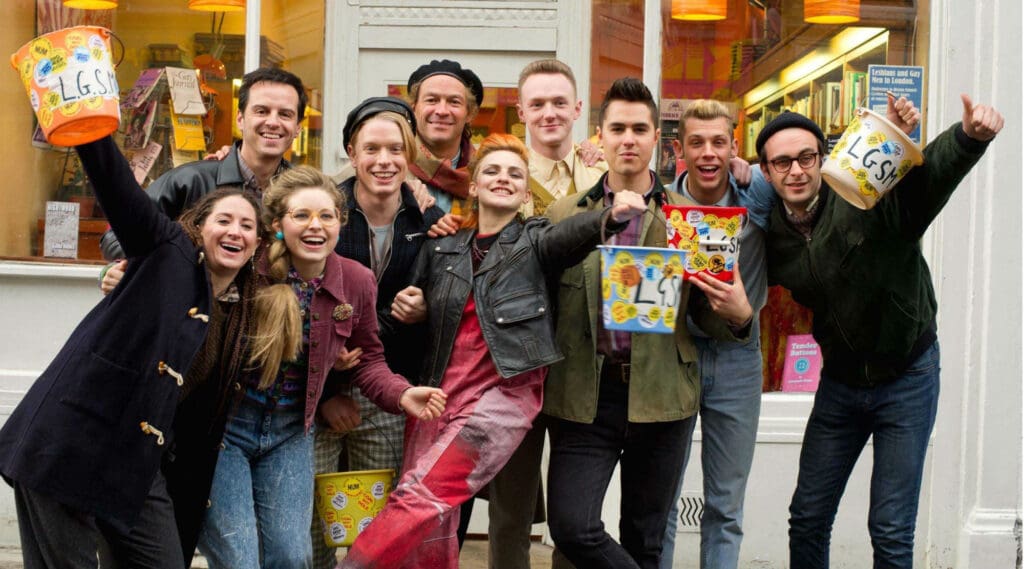
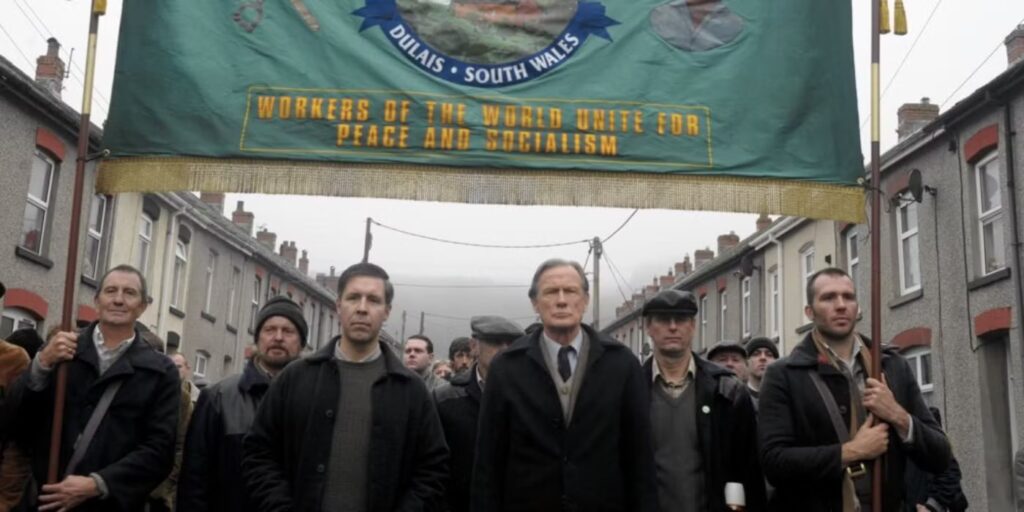
Where the film actively veers from the truth is the depiction of Welsh hospitality. While the film shows a tense, awkward first encounter at the Dulais community hall, Mike describes the reality as entirely welcoming, attributing the niceties to the stern, no-nonsense miners’ wives. With 27 LGSM members arriving (as opposed to just the 8 in the film), Mike recalled the eager ears of the community as they shared drinks and discussed everything from living in London and hair dye, right down to the logistics of sex. He put this easy curiosity down to the working class’s wonderful ability to simply cut to the chase.
The awkward cinematic encounters were nearly completely fictionalized. Mike shared that the miners actively asked the LGSM to sit with them instead of the traditional union workers. “They’d say, ‘we don’t want them bloody Socialist Workers Party or union people sitting with us. All they do is talk bloody politics. We’re living politics everyday. We want to have a drink.’” Mike believes the personal, human relationships they built created a far greater solidarity than “having abstract arguments about the nuances of Leninism” ever could.
While ‘Pride’ stands as an incredible testament to solidarity, Mike still holds a bittersweet feeling regarding the actual fight. The film celebrates the alliance, but the lived reality for LGSM was watching the mining pits ultimately close. Still, the group achieved the impossible: forcing the National Union of Mineworkers to block-vote in favor of gay and lesbian rights at the 1985 Labour Party conference. A Party Mike described as being previously “f*cking riddled with homophobia, racism, and sexism.”
The devastation of the strike’s failure is something Tim Tate witnessed firsthand. Living in West Yorkshire as a young reporter, he saw the fallout. “I had seen the communities around me wrecked by Thatcher’s reckless and cruel economic policies,” Tim explained. “The Miners’ Strike was an extension of her cynical calculus: that Britain’s manufacturing base, and the communities associated with it, could be sacrificed on the altar of her economic dogmatism.” Yet, it wasn’t until his work on the ‘Pride’ book that Tim recognised the severe, granular poverty of the striking communities. “I didn’t then fully realise just how perilous the financial position was for families, Interviewing women like Sian James opened my eyes, belatedly.”
For Mike, the triumph of solidarity is still shadowed by the grief of the era. “We lost that fight, and we live with the consequences of your generation,” he reflected bluntly. “I mean, I’m sure you’re painfully worried your generation is f*cked as a result of those bastards in our generation who didn’t stand by the miners, who couldn’t foresee what was happening.”
Yet, the fighting spirit never faded. While Mike later began a career as a horticulture lecturer, he has spent recent years speaking at hundreds of events and donating thousands to charities across the globe. He still sees a fierce desire in the youth today. “People always ask how we started, how do I become an activist?” he said. “You cannot start a movement by yourself. They start with two people having a conversation and deciding to take action.”
It is near impossible to ignore the impact LGSM has had on society, and Stephen Beresford did an incredible job elevating that legacy to something untouchable on screen. ‘Pride’ is not just a movie to inspire the next generation to believe in themselves; it is an honoring tribute to the battles of the past, and a perfectly preserved blueprint for the fights of the future.