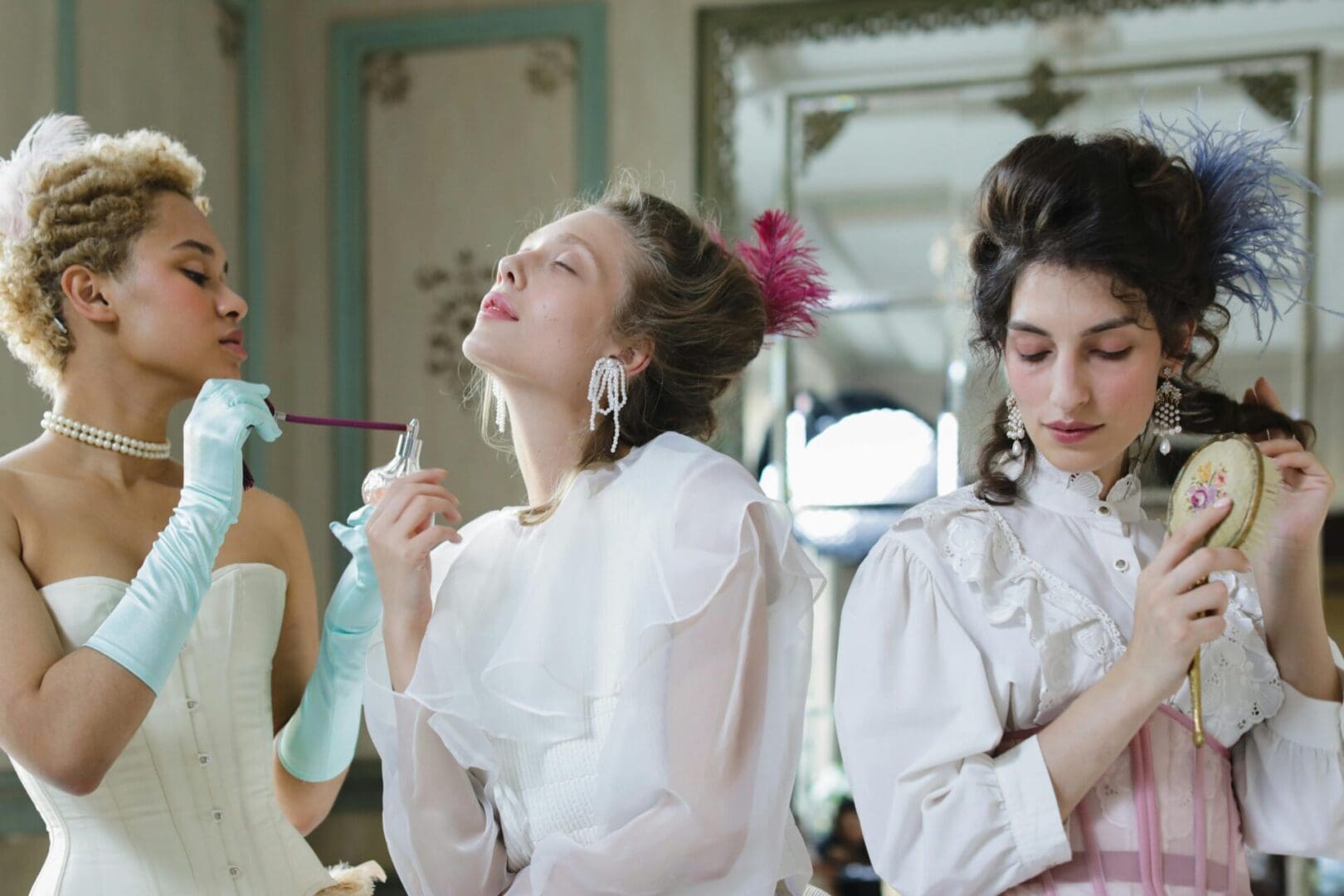
Have you ever settled into a lavish Regency ballroom scene, only to be pulled out of the 19th century by a pair of perfectly laminated eyebrows or a “beach wave” that looks more Malibu than Marylebone? You aren’t imagining it. We are currently haunted by the “Modern Ghost”—the inescapable presence of 21st-century beauty standards lingering in films that are supposed to be set hundreds of years ago.
From Bridgerton to Marie Antoinette, the “vibe” is increasingly beating out the history books. To understand why we can’t seem to leave our contouring kits in the present, we spoke to fashion expert Amelia Woodside and hair and makeup (HMU) specialist Emily Street.
The “Pretty Privilege” of the Protagonist
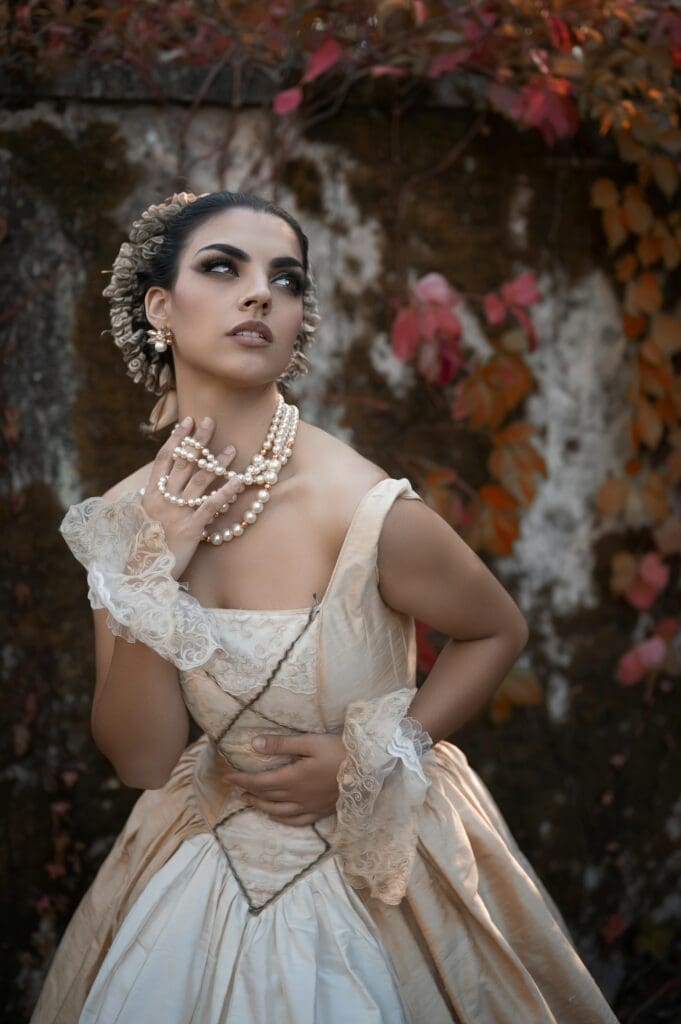
The most glaring trend in historical cinema is that the more important a character is, the more modern they look. While background extras might sport the period-accurate sallow skin or frizzy, pinned-up hair of the era, the Duchess at the centre of the frame often looks like she’s just stepped off a red carpet.
“Main characters typically are conventionally attractive,” says Amelia Woodside. “Aesthetically, they are more appealing on camera—’photogenic.’ More attractive actors tend to get more roles, probably following the lines of pretty privilege.”
Emily Street notes that this creates a visual shorthand for the audience. “When a character has a more ‘modern’ appearance, the audience subconsciously perceives them as someone from this time period,” she explains. This is especially true with hair. While historical styles were often stiff, held in place by fat-based pomades or rags, modern directors crave movement. “Modern filmmaking loves hair that moves; it creates a romantic feel and catches light beautifully,” Street adds. “Historically, hair down was seen as childish or improper, but today, it’s visually romantic and sensual.”
The Battle of the Bust
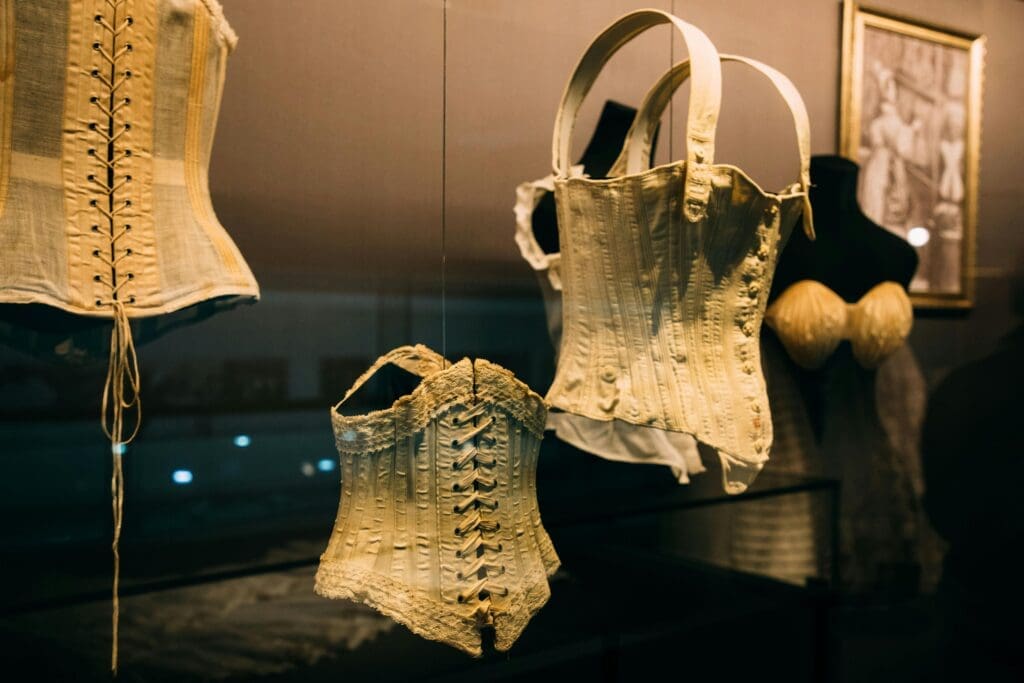
One of the biggest clashes between then and now lies in the silhouette. The historical corset (or stays) was designed to create a specific, often conical or “wasp-waist” shape. Yet, modern films often compromise on this, opting for what Woodside calls the “bra-molded” bust.
One of the biggest clashes between then and now lies in the silhouette. The historical corset (or stays) was designed to create a specific, often conical or “wasp-waist” shape. Yet, modern films often compromise on this, opting for what Woodside calls the “bra-molded” bust.
“Historically, corsets pushed up the bust and tightened the waist to enhance womanly figures,” Woodside explains. “Designers today often favour what the modern woman wants. Corsets are uncomfortable, and they are now associated with a ‘trashy’ silhouette that is considered undesirable by the modern woman.”
It isn’t just about comfort; it’s about what we find “sexy.” Woodside points out that while a plump figure or exposed ankles were once the height of provocation, a modern audience wouldn’t register them as such. To make a character appear sexually appealing to a 2026 viewer, designers emphasize the breasts and bottom, even if it defies the physics of the era’s undergarments.
The “Filtered” Past: Why We Fear the Truth
If a director gave us 100% accuracy, would we even want to watch it? Both experts agree that certain historical realities are simply “unwatchable” by modern standards. At the top of the list? Blackened teeth.
“People have been brought up being told they need clean teeth,” says Street. “Dirty teeth are gross and disgusting to us.” Woodside agrees, noting that if an audience can’t find a character conventionally attractive, there is a fear they won’t empathize with them.
Then there is the issue of skin. While the 18th century loved matte, lead-heavy powders, we are currently obsessed with the “dewy” look. Street explains the struggle of balancing “red-carpet skin” with historical reality: “You need to make the actress look healthy in the eyes of the audience. People see uneven, textured, pale skin and see it as someone who is unhealthy rather than normal.”
The Rise of “Shoppable” History
The pressure to modernize isn’t just coming from the director’s chair—it’s coming from the high street. With the rise of “Regency core,” costume designers are increasingly aware that their silver-screen creations might end up as fast-fashion collections.
“Fashion is a reflection of current global sensations,” Woodside notes. “We will definitely be seeing ‘Regency-core’ in fast fashion—square necklines, tighter waistlines, and a lot of ruffles. There is a pressure to produce ‘shoppable’ looks.”
Accuracy vs. “The Vibe”
While shows like Harlots are praised by experts for their grit and accuracy, the blockbuster “period drama” is increasingly moving toward a curated aesthetic. Films like Sofia Coppola’s Marie Antoinette (2006) famously prioritized a pastel-soaked “vibe” over dates and facts.
“Within film, there is always an element of ensuring it is pleasing to the eye,” says Woodside. “Directors sacrifice certain realities to meet aesthetic standards and use colour palettes to set the tone of social class.”
Ultimately, the “Modern Ghost” exists because cinema is a mirror, not just a window. We want to see ourselves in the past, and apparently, that means bringing our “beach waves,” our dewy skin, and our 21st-century gaze along for the ride.