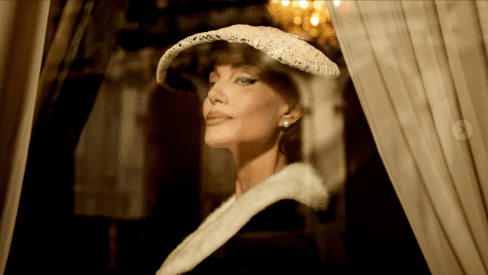
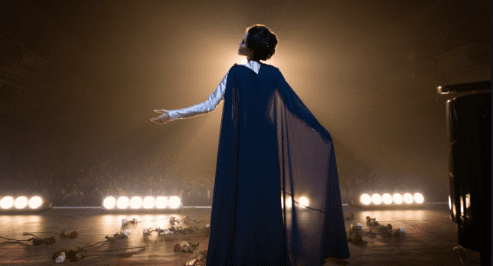
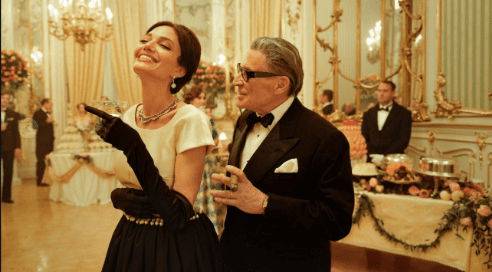
The curtains rise on a Paris draped in sepia and silence. In Pablo Larraín’s 2024 film Maria, we see a woman who has become a haunting of her own making. Angelina Jolie, in a performance of bone-deep stillness, portrays Maria Callas as a “reclusive, tragic ghost,” wandering the Rive Droite in a drug-addled haze, fueled by pills and the echoes of her lost high notes.
It is a stunning cinematic vision. But for Karl van Zoggel, the man who has spent decades breathing life into the historical record of the world’s greatest soprano, the film is a beautiful, if blurry, reflection of the truth.
As the founder of the Maria Callas International Club, Van Zoggel has spent years sifting through the domestic diaries of her staff and the medical files of her doctors. To him, the “Mad Diva” trope of the film obscures a much more human—and perhaps more tragic—reality.
The “Mandrax” Mirage
A central pillar of the movie is Maria’s relationship with a fictional interviewer named Mandrax—a hallucination born of her addiction to the sedative of the same name. While Larraín uses this to explore Maria’s psyche, the real Callas was far from a rambling shut-in.
“I don’t think that Callas walked as a hallucinatory, drug-addled person through Paris,” Van Zoggel explains. According to accounts from her loyal staff, Bruna and Ferruccio, her final months weren’t spent in a surrealist dreamscape but in the quiet, mundane rhythms of a retired woman. She spent her nights battling insomnia by watching Lucille Ball and old Westerns, playing cards with her servants, and making long-distance phone calls.
More importantly, the real Callas hadn’t given up. In the summer of 1977, just months before her death, she was telling interviewers she planned to record again in the autumn. The film gives us a woman resigned to her end; history gives us a woman still trying to find her voice.
The Medical Mystery: It Wasn’t Just Heartbreak
Cinema loves the idea of a singer who “loses her voice” because her heart is broken. In Maria, the silence is a psychological byproduct of her abandonment by Aristotle Onassis. But the medical truth is far less poetic.
Van Zoggel points to dermatomyositis, a rare inflammatory disease diagnosed in 1975 by Dr. Mario Giacovazzo. “He ascertained that the larynx and the vocal cords were affected,” Van Zoggel notes. This wasn’t a metaphorical loss of song—it was a physical disintegration.
While the film suggests her decline was a choice or a trauma, the reality was a grueling medical struggle involving prednisone and deteriorating muscle tissue. Callas didn’t stop singing because she was sad; she stopped because her body was failing her.
Rewriting the Legend
For the sake of drama, Maria takes several creative leaps that Van Zoggel finds “a pity,” particularly the recurring theme of a forced abortion.
“This is not correct,” Van Zoggel asserts. “I have published details on what happened with the birth and death of the baby boy Omero Lengrini on March 30, 1960. He lived for only hours.”
By turning a tragic loss of a child into a narrative of forced termination, the film misses a chance to show a different side of the Callas-Onassis relationship—one defined by shared grief rather than just cruelty.
The Woman Behind the Fur
So, who was the real Maria in those final Paris days? If you strip away the hallucinatory interviewers and the cinematic ghosts, you find a woman who was remarkably, almost stubbornly, ordinary.
“Off the stage,” Van Zoggel says, “she was a rather common and simple woman who tried to make the best of her life.” She wanted a husband, children, and a quiet home. She found herself instead in a grand apartment with two small dogs and a loyal butler, haunted not by hallucinations but by the simple disappointment of an unreciprocated love.
Larraín’s Maria is a triumph of atmosphere, and Jolie captures the striking, statuesque presence of the diva perfectly. But as Van Zoggel reminds us, the real Maria Callas didn’t need a fictional interviewer to tell her story. Her life—marked by physical illness, the loss of a child, and a stubborn hope for a comeback—was already operatic enough.